More
    Home Blog Page 16

    What Is Internet Marketing? Definition, Strategies, Benefits & Tips.

    Internet Marketing

    In the wide field of digital marketing, internet marketing stands as a fundamental strategy for businesses aiming to thrive in the online landscape.

    Understanding the essence of Internet marketing is important for brands seeking to leverage the vast opportunities presented by the Internet world.

    This article provides a comprehensive exploration of Internet marketing, unraveling its fundamentals, strategic advantages, and evolving trends.

    Whether you’re a seasoned marketer navigating the ever-changing digital landscape or a business owner looking to expand your online presence, this blog post on internet marketing aims to provide actionable insights in leveraging various online channels, such as websites, email marketing, social media, and search engines, to reach and engage your target audience effectively.

    By the end of this article, you’ll not only understand the fundamentals of Internet marketing but also gain practical strategies to optimize your online efforts and achieve measurable success in the competitive Internet world.

    What Is Internet Marketing?

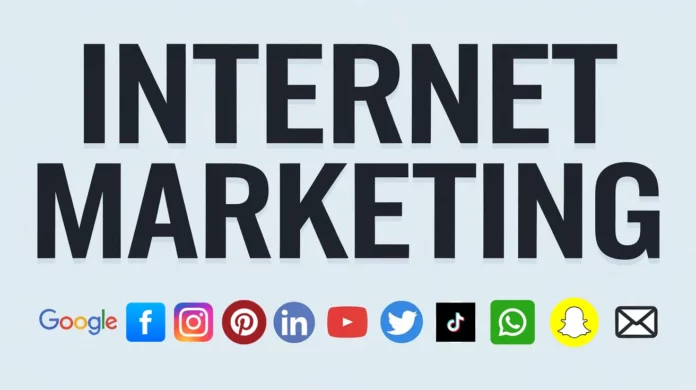
    Internet marketing, also known as online marketing, refers to the marketing strategy that leverages Internet channels to promote and sell products or services.

    It encompasses various strategies such as social media marketing, content marketing, email campaigns, SEO, and paid advertising.

    Internet marketing harnesses the power of the internet to reach a wide audience, engaging potential customers across websites, social platforms, and search engines.

    It focuses on creating compelling online experiences, enhancing brand visibility, driving traffic, and ultimately converting leads into customers.

    This dynamic and multifaceted approach adapts to evolving technology and consumer behaviors to maximize online presence and achieve marketing objectives.

    Why Is Internet Marketing Important?

    Here is why Internet marketing is important:

    1. Constant Online Presence On The Internet.

    Maintaining a continuous online presence is essential in today’s digital landscape.

    Internet marketing ensures that businesses are always accessible to potential customers, irrespective of time zones or geographical locations.

    Through websites, social media platforms, and various online channels, companies establish a 24/7 presence, allowing customers to engage, inquire, or make purchases at their convenience.

    This constant visibility nurtures brand recognition, trust, and customer loyalty, playing a pivotal role in staying ahead in a competitive market where online presence is a cornerstone of success.

    2. Sell Your Products And Services Online.

    The internet has revolutionized commerce, enabling businesses to showcase and sell their products or services to a vast online audience.

    Through e-commerce platforms, digital storefronts, or online marketplaces, internet marketing facilitates seamless transactions, providing customers with the convenience of browsing and purchasing from anywhere at any time.

    This capability to conduct business online not only expands market reach but also opens new revenue streams, making it imperative for businesses to capitalize on Internet marketing for sustained growth.

    3. Cost-Effectiveness.

    Compared to traditional marketing methods, internet marketing offers a cost-effective approach for businesses of all sizes.

    Digital marketing tools and platforms often come with lower entry barriers, allowing even small businesses to compete on a global scale within reasonable budgets.

    Moreover, targeted online advertising, social media promotions, and email campaigns enable precise audience segmentation, optimizing spending and maximizing returns.

    This cost-effectiveness ensures that marketing efforts yield significant results without exorbitant expenses.

    4. Global Reach.

    One of the paramount advantages of Internet marketing is its ability to transcend geographical boundaries.

    Businesses can extend their reach beyond local markets and access a global audience.

    Strategic use of SEO, content marketing, and targeted advertising helps penetrate diverse markets worldwide.

    This global outreach not only fosters brand exposure but also unlocks opportunities for international expansion and growth, making internet marketing indispensable for businesses eyeing a global presence.

    5. Instant And Highly Measurable Results.

    Unlike traditional marketing, internet marketing offers instant and measurable results.

    Analytical tools provide real-time insights into campaign performance, website traffic, conversion rates, and customer engagement.

    This immediacy allows businesses to adapt strategies on the fly, optimizing campaigns for maximum impact.

    The ability to measure and analyze results in real-time empowers marketers to make data-driven decisions, ensuring that resources are allocated efficiently for optimal outcomes.

    6. High Return On Investment (ROI).

    The measurable nature of Internet marketing enables businesses to track and quantify their return on investment accurately.

    By analyzing key performance indicators, businesses can assess the effectiveness of their marketing strategies and channels.

    The ability to identify high-performing tactics and allocate resources accordingly ensures that marketing budgets are utilized for maximum ROI.

    This transparency and ability to attribute results directly to marketing efforts make Internet marketing a highly favorable and rewarding avenue for businesses seeking substantial returns.

    7. Straight Real-Time Communication Route Between You And Your Client.

    Internet marketing facilitates direct and instantaneous communication between businesses and their clients.

    Through social media, live chat features, email, and interactive content, companies can engage with customers in real-time.

    This direct communication not only fosters relationships and builds trust but also allows businesses to address customer concerns promptly, enhancing overall customer satisfaction.

    This immediate and transparent interaction strengthens the bond between businesses and their clientele, establishing a responsive and customer-centric approach.

    8. Highly Targetable.

    Internet marketing allows for precise targeting of specific demographics, interests, behaviors, and locations.

    Through advanced targeting options in digital advertising platforms, businesses can tailor their messages to reach the most relevant audience segments.

    This high level of targeting ensures that marketing efforts resonate with the intended audience, increasing the likelihood of engagement and conversions.

    The ability to reach the right audience with tailored content makes Internet marketing an invaluable tool for efficient and effective marketing campaigns.

    9. Personalization Capabilities.

    Personalization is a key factor in modern marketing, and the Internet provides the tools necessary for personalized communication.

    By leveraging customer data and behavior, businesses can deliver customized experiences, content, and recommendations to individual customers.

    Personalization goes beyond addressing customers by name; it involves understanding their preferences and providing tailored solutions.

    This personalized approach enhances engagement, builds stronger connections, and cultivates customer loyalty, making Internet marketing an essential strategy for nurturing lasting relationships with customers.

    10. Easy And Convenient Conversions.

    Internet marketing streamlines the conversion process, making it seamless and convenient for customers to take desired actions.

    Whether it’s making a purchase, signing up for a newsletter, or filling out a form, optimized user experiences across online platforms facilitate easy conversions.

    Clear call-to-action buttons, user-friendly interfaces, and simplified checkout processes enhance the customer journey, increasing conversion rates.

    The ease of conversion in Internet marketing contributes significantly to a positive customer experience, ultimately driving business growth and success.

    What Are The Popular Internet Marketing Strategies?

    Here are some of the popular Internet marketing strategies:

    1. Blogging.

    Blogging is a great internet marketing strategy, offering a platform to share valuable and informative content regularly.

    Through blog posts, businesses can address industry trends, provide solutions to common problems, offer insights, and establish thought leadership within their niche.

    Blogs serve as a hub for quality content, driving traffic to websites through SEO-optimized articles and attracting a loyal readership.

    By consistently delivering relevant and engaging content, businesses can nurture relationships with their audience, encourage interaction, and establish credibility, ultimately driving conversions and brand loyalty.

    2. Affiliate Marketing.

    Affiliate marketing involves collaborating with affiliates or partners who promote products or services in exchange for a commission on sales.

    Affiliates utilize various channels such as websites, blogs, social media, or email marketing to drive traffic and conversions to the business.

    This performance-based marketing model benefits both parties—the business gains increased visibility and sales without upfront costs, while affiliates earn commissions for successful referrals.

    Effective affiliate marketing programs rely on building relationships with reliable affiliates, providing them with compelling promotional materials, tracking performance metrics, and offering fair incentives to drive conversions.

    3. Search Engine Optimization (SEO).

    SEO remains a cornerstone of online marketing strategies. It focuses on optimizing a website’s visibility in search engine results organically.

    This involves enhancing various aspects like on-page content, keyword research, meta descriptions, and HTML tags to improve a website’s ranking on search engine results pages (SERPs).

    Quality content creation plays a pivotal role in SEO, aiming to provide value to users while incorporating relevant keywords strategically.

    Additionally, link building—acquiring high-quality backlinks from reputable websites—enhances a site’s authority and visibility.

    SEO strategies constantly evolve due to search engine algorithm updates, emphasizing user experience, mobile-friendliness, and relevant, authoritative content to rank higher in search results.

    4. Content Marketing.

    Content marketing revolves around creating and distributing valuable, relevant, and consistent content to attract and engage a target audience.

    The content can be blog posts, articles, videos, infographics, podcasts, and more.

    The primary goal is to offer valuable information, entertain, or educate the audience while subtly promoting products or services.

    Effective content marketing involves understanding the target audience’s preferences, pain points, and interests to tailor content that resonates with them.

    Distributing content across multiple channels, such as social media platforms, websites, email newsletters, and guest posting on authoritative sites, amplifies its reach and impact.

    Engaging and shareable content not only attracts new prospects but also nurtures existing customer relationships, fostering trust and loyalty.

    5. Social Media Marketing.

    Social media marketing leverages social platforms like Facebook, Instagram, Twitter, LinkedIn, and others to reach and engage with a target audience.

    It involves creating compelling content tailored for each platform, engaging with followers, running targeted advertisements, and analyzing metrics to refine strategies.

    The key is understanding each platform’s demographics and user behavior to craft relevant content and engage effectively.

    Paid advertising on social media allows precise targeting based on demographics, interests, behaviors, and more, maximizing the reach and impact of marketing campaigns.

    Building a community, fostering conversations, and providing value through social media content contribute to brand visibility, customer loyalty, and increased conversions.

    6. Email Marketing.

    Email marketing remains a powerful tool for nurturing leads, retaining customers, and driving conversions.

    It involves sending targeted and personalized emails to a subscriber list, delivering valuable content, promotions, updates, and relevant information.

    Effective email marketing focuses on segmentation and personalization, ensuring that the content resonates with recipients based on their preferences and behavior.

    Automation tools allow marketers to create drip campaigns, trigger-based emails, and targeted sequences, streamlining communication and engagement with subscribers.

    Analyzing open rates, click-through rates, and conversions helps refine strategies for better engagement and higher ROI.

    7. Influencer Marketing.

    Influencer marketing involves collaborating with individuals who have a significant following and influence within a specific niche or industry.

    These influencers promote products or services to their engaged audience, leveraging their credibility and trust to drive brand awareness and conversions.

    Collaborations can range from sponsored posts, product reviews, endorsements, to brand partnerships.

    Identifying the right influencers whose values align with the brand and resonate with the target audience is crucial for successful campaigns.

    Authenticity and transparency in partnerships are key to building trust and credibility with the audience, leading to effective influencer marketing campaigns.

    8. Pay-Per-Click Advertising (PPC).

    PPC advertising allows marketers to display ads on search engines or other platforms and pay a fee each time the ad is clicked.

    Platforms like Google Ads and Bing Ads offer advertisers the ability to bid on keywords relevant to their target audience.

    Advertisers can create highly targeted campaigns, control budgets, and track performance metrics in real-time.

    Display ads, text ads, remarketing campaigns, and shopping ads are among the various formats available in PPC advertising.

    Successful PPC campaigns require thorough keyword research, compelling ad copy, effective bidding strategies, and continuous optimization to maximize ROI and conversions.

    9. Video Marketing.

    Video marketing has surged in popularity, offering an engaging and versatile way to connect with audiences.

    Platforms like YouTube, TikTok, Instagram, and Facebook are ideal for sharing video content.

    Brands utilize videos for various purposes, including product demonstrations, tutorials, behind-the-scenes glimpses, testimonials, and storytelling.

    Video content allows for creativity and authenticity, enabling brands to convey messages effectively and evoke emotions.

    Live streaming has also gained traction, offering real-time interaction and engagement with audiences.

    With the increasing consumption of video content, businesses can leverage this medium to boost brand visibility, engagement, and conversion rates.

    10. Search Engine Marketing (SEM).

    SEM encompasses paid advertising strategies to increase a website’s visibility in search engine results through paid advertisements.

    While PPC (Pay-Per-Click) advertising is a key component of SEM, it also includes other paid search initiatives like display advertising, remarketing, and shopping ads.

    Businesses bid on keywords relevant to their products or services, and ads are displayed to users searching for those terms.

    SEM allows for precise targeting, ad customization, and real-time performance tracking, enabling marketers to optimize campaigns for better ROI.

    Combined with SEO efforts, SEM can enhance a brand’s online presence, drive immediate traffic, and boost conversions by reaching potential customers actively searching for related products or services.

    How To Do Internet Marketing?

    Here are the steps to start Internet marketing:

    1. Define Your Goal.

    Begin by defining clear and specific goals for your internet marketing strategy.

    Whether it’s increasing website traffic, generating leads, boosting sales, or enhancing brand awareness, setting SMART (Specific, Measurable, Achievable, Relevant, Time-bound) goals provides direction.

    Each goal should align with your overall business objectives, guiding your marketing efforts towards measurable outcomes.

    For instance, if the goal is to increase sales, strategies might focus on optimizing conversion rates, targeting specific audience segments, or launching promotional campaigns aimed at driving purchases.

    2. Find Your Target Audience.

    Identifying your target audience is crucial in Internet marketing.

    Conduct thorough market research to understand the demographics, preferences, behaviors, and pain points of your potential customers.

    Develop detailed buyer personas to accurately represent your target audience segments.

    This understanding allows you to tailor your content, messaging, and advertising efforts to resonate with specific audience groups.

    By aligning your marketing strategies with the needs and interests of your target audience, you can significantly increase engagement and conversion rates.

    3. Decide On A Platform.

    Choosing the right platforms is essential to effectively reach your target audience.

    Different platforms cater to various demographics and user behaviors.

    Consider the nature of your business, the type of content you’ll be sharing, and where your audience is most active.

    Whether it’s social media platforms like Facebook, Instagram, LinkedIn, or content-driven platforms like YouTube or blogging sites, select the platforms that align with your marketing goals and resonate with your audience.

    4. Develop a Comprehensive Strategy.

    Craft a holistic and comprehensive internet marketing strategy that integrates various digital channels cohesively.

    Your strategy should encompass content creation, SEO, social media marketing, email campaigns, and paid advertising.

    Each component of the strategy should align with your defined goals and target audience.

    A well-thought-out strategy allows for synergy between different marketing tactics, ensuring a unified and effective approach toward achieving your objectives.

    5. Manage Your Budget.

    Budget management is critical in Internet marketing.

    Determine a realistic budget allocation based on your goals, audience, and chosen platforms.

    Allocate funds for advertising, content creation, tools, and any additional expenses.

    Regularly monitor and adjust your budget as needed based on the performance of campaigns and the return on investment (ROI).

    Prioritize high-impact areas while ensuring that resources are distributed sensibly across various marketing initiatives to maximize outcomes within your financial constraints.

    6. Balance Between Free And Paid Digital Services.

    Leverage a mix of free and paid digital services to optimize your internet marketing strategy.

    While paid advertising can offer immediate visibility, organic methods like content marketing, SEO, social media engagement, and email campaigns can significantly impact brand visibility without direct expenses.

    Striking a balance between these approaches ensures sustainable growth and long-term success while making the most of available resources.

    7. Optimize For Mobile.

    Incorporate mobile optimization into your internet marketing strategies.

    With an increasing number of users accessing content via mobile devices, optimizing your website, emails, advertisements, and content for mobile responsiveness is crucial.

    Ensuring a seamless user experience across various devices and screen sizes not only improves engagement but also positively impacts search engine rankings, as search engines prioritize mobile-friendly content.

    8. Keyword Research.

    Keyword research is foundational for effective SEO and content creation.

    Find the keywords and phrases that your audience uses to search for products or services like yours.

    Tools like Google Keyword Planner, SEMrush, or Ahrefs can assist in discovering high-value keywords with optimal search volumes and competition levels.

    Integrating these keywords strategically into your website content, blog posts, and advertising campaigns enhances visibility, driving organic traffic and improving search engine rankings.

    9. Iterate Based On Measurable Analytics.

    Regularly analyze the performance of your internet marketing campaigns through analytics.

    Metrics like website traffic, engagement, click-through rates, and conversion rates offer valuable insights.

    Use tools like Google Analytics or social media analytics to track and interpret these data points.

    By reviewing analytics, you can identify strengths, weaknesses, and areas for improvement, allowing you to refine your strategies and optimize future campaigns for better results.

    10. Analyze, Optimize, and Adapt.

    Continuously analyze the effectiveness of your internet marketing efforts.

    Assess the impact of your strategies against predefined goals and KPIs.

    Based on the analysis, optimize your campaigns by adjusting elements such as content, targeting, ad formats, and timing.

    Adapt your strategies based on changing market dynamics, emerging trends, and evolving consumer behaviors.

    This iterative process of analysis, optimization, and adaptation ensures that your internet marketing efforts remain relevant, effective, and aligned with your business objectives.

    Some Tips To Help You To Become A Successful Internet Marketer.

    Here are some tips to help you become a successful internet marketer:

    1. Know Your Audience.

    Understanding your audience is the bedrock of successful Internet marketing.

    Delve deep into the demographics, behaviors, preferences, and pain points of your potential customers.

    Create detailed buyer personas to better grasp their needs and motivations.

    This knowledge empowers you to tailor marketing strategies that resonate with specific audience segments.

    When you intimately understand your audience, you can craft personalized and targeted campaigns that genuinely connect, fostering stronger relationships and higher engagement.

    2. Create High-Quality and Relevant Content.

    The cornerstone of effective Internet marketing lies in creating content that captivates and adds value.

    Focus on delivering content that educates, entertains, or solves problems for your audience.

    Whether it’s articles, videos, infographics, or podcasts, prioritize quality over quantity.

    Engage your audience with compelling storytelling, practical insights, and relevant information.

    Meaningful and high-quality content not only attracts attention but also establishes credibility and trust, positioning you as an authority in your niche.

    3. Tailor Your Content.

    Customize your content to suit different platforms and audience segments.

    Each platform has its unique audience demographics and preferences.

    Tailor your content style, tone, and format to fit the platform you’re using, be it concise and impactful for social media or comprehensive and informative for blog posts.

    Additionally, personalize your content to cater to various buyer personas within your target audience.

    Tailoring content ensures maximum relevance and resonance, amplifying engagement and conversion rates.

    4. Leverage Social Media Platforms Effectively.

    Utilize social media platforms strategically to engage with your audience.

    Determine which platforms your target audience is most active on and tailor your content accordingly.

    Foster genuine interactions, respond to comments and messages promptly, and create meaningful conversations.

    Leverage social media advertising to reach specific demographics, amplify your reach, and drive targeted traffic to your website or landing pages.

    Building an active and engaged community on social media contributes significantly to brand visibility and customer loyalty.

    5. Embrace Email Marketing and Automation.

    Email marketing remains a powerful tool for nurturing leads and engaging customers.

    Craft personalized and targeted email campaigns based on customer behavior, preferences, and lifecycle stages.

    Implement automation to send relevant content, personalized recommendations, and follow-ups, enhancing customer relationships and driving conversions.

    Email marketing, when done effectively, allows you to deliver timely and tailored messages that resonate with your audience, boosting engagement and retention rates.

    6. Search Engine Optimization (SEO).

    Master the fundamentals of SEO to enhance your online visibility and ranking on search engine results pages (SERPs).

    Conduct thorough keyword research to understand user intent and optimize your content accordingly.

    Focus on both on-page and off-page SEO elements, including meta tags, backlinks, and user experience.

    A robust SEO strategy improves organic traffic, boosts brand credibility, and positions your content higher in search engine rankings, increasing visibility to your target audience.

    7. Measure and Analyze Performance Metrics.

    Regularly analyze the performance of your internet marketing campaigns through metrics like website traffic, conversion rates, engagement, and click-through rates.

    Utilize tools like Google Analytics to track and interpret these data points.

    Evaluating performance metrics offers valuable insights into the effectiveness of your strategies, enabling you to identify strengths, weaknesses, and areas for improvement.

    Data-driven decision-making allows for continual optimization and refinement of marketing efforts.

    8. Optimize for Mobile Experience.

    In today’s mobile-centric world, optimizing your online presence for mobile devices is imperative.

    Ensure your website, emails, and content are mobile-responsive, providing a seamless user experience across different devices and screen sizes.

    Mobile optimization not only improves user engagement but also positively impacts search engine rankings, as search engines prioritize mobile-friendly content.

    Tailoring your strategies for mobile users enhances accessibility and responsiveness, catering to the preferences of a diverse and mobile-oriented audience.

    9. Cultivate Authenticity and Build Trust.

    Authenticity and trust are paramount in Internet marketing.

    Be transparent, genuine, and consistent in your brand messaging and interactions.

    Engage authentically with your audience, respond to feedback, and address concerns openly.

    Building trust fosters lasting relationships with customers, increasing brand loyalty and advocacy.

    Authenticity in your marketing endeavors creates a strong foundation for sustained success.

    10. Foster a Community and Engagement.

    Create a sense of community around your brand by encouraging interactions and fostering engagement.

    Start conversations, hold live events, and encourage user-generated content.

    Engage with your audience through polls, contests, and Q&A sessions.

    Fostering a community not only strengthens brand loyalty but also amplifies brand advocacy, as satisfied customers become brand advocates, promoting your business organically.

    11. Focus on Customer Experience and Feedback.

    Prioritize delivering exceptional customer experiences across all touchpoints.

    Collect and act on customer feedback to improve products, services, and overall experiences.

    Personalize interactions, address queries promptly, and strive to exceed customer expectations.

    A positive customer experience contributes significantly to brand perception, loyalty, and advocacy, crucial elements in internet marketing success.

    12. Be Flexible.

    Flexibility is crucial in navigating the ever-evolving landscape of Internet marketing.

    It involves the readiness to adapt strategies, tactics, and approaches based on emerging trends, market shifts, or new insights.

    Being flexible allows marketers to pivot swiftly, seize emerging opportunities, and address challenges effectively.

    It’s about embracing change, experimenting with new ideas, and optimizing strategies to remain responsive to evolving consumer behaviors and industry developments.

    13. Be Consistent.

    Consistency in Internet marketing is more than just maintaining a regular posting schedule.

    It encompasses delivering a unified brand voice, message, and quality across all channels consistently.

    Consistency builds credibility, reliability, and trust with your audience.

    It strengthens your brand’s identity by making it more recognizable and memorable.

    By consistently meeting audience expectations with quality content and experiences, businesses establish a strong foundation for lasting relationships with their customers.

    14. Personalize.

    Personalization in Internet marketing involves leveraging customer data and insights to tailor experiences, content, and recommendations for individual consumers.

    It goes beyond addressing customers by name; it’s about understanding their preferences, behaviors, and needs to deliver highly relevant and targeted interactions.

    Personalized marketing efforts enhance customer engagement, loyalty, and satisfaction, leading to increased conversions and long-term relationships with customers.

    15. Prioritize Continuous Learning and Adaptation.

    In the fast-paced world of Internet marketing, ongoing learning and adaptation are imperative.

    Prioritizing continuous learning involves staying updated on industry trends, new technologies, and evolving best practices.

    It includes attending workshops, courses, and industry conferences to acquire new skills and insights.

    Adaptation is equally crucial, as it involves applying newfound knowledge and insights to refine strategies and stay ahead in a constantly changing digital landscape.

    16. Long-Term Focus.

    A long-term focus in Internet marketing involves cultivating strategies and approaches that prioritize sustainable growth and relationships over immediate results.

    It’s about nurturing brand equity, fostering trust, and building enduring relationships with customers.

    Instead of short-term gains, a long-term focus involves investing in initiatives that yield lasting results, focusing on brand loyalty, and consistently delivering value to customers.

    17. Stay Ethical and Compliant.

    Ethical and compliant practices are foundational in Internet marketing.

    It involves respecting user privacy, honoring opt-in/opt-out preferences, and complying with industry regulations and standards.

    Adhering to ethical principles ensures transparent and trustworthy interactions with customers.

    It not only safeguards your brand reputation but also fosters credibility and trust, nurturing positive relationships with your audience while promoting a responsible and respectful approach to marketing endeavors.

    Conclusion.

    Internet marketing remains the cornerstone of modern business strategies, offering unique opportunities to reach and connect with global audiences.

    Throughout this article, we have discussed in depth the multidimensional field of Internet marketing, which covers diverse strategies such as blogging, affiliate marketing, social media marketing, search engine optimization (SEO), email marketing, and more.

    By adopting Internet marketing techniques, businesses can enhance their online presence, drive targeted traffic, and develop meaningful relationships with customers.

    As algorithms evolve and consumer behavior changes, it is important to adapt and stay informed about emerging trends.

    Investing in Internet marketing ensures a competitive edge in the digital landscape, leading to business growth and success.


    What Is Search Engine Marketing (SEM)? Definition, Strategies, Benefits & Drawbacks.

    Search Engine Marketing (SEM)

    In the field of digital marketing, search engine marketing (SEM) stands as a powerful tool for businesses to enhance their online visibility, attract targeted traffic, and drive conversions.

    Understanding the fundamentals of search engine marketing is essential for brands seeking to navigate the complex landscape of online advertising effectively.

    This article provides a comprehensive exploration of search engine marketing, unraveling its core principles, strategic advantages, and evolving trends.

    Whether you’re a seasoned marketer adapting to the dynamic world of search engines or a business owner looking to maximize your online presence, this blog post on search engine marketing aims to provide actionable insights into leveraging platforms like Google Ads and Bing Ads to reach your target audience and achieve your business goals.

    By the end of this article, you’ll not only understand the fundamentals of search engine marketing but also gain practical strategies to optimize your campaigns, drive traffic, and boost conversions in the competitive digital marketplace.

    What Is Search Engine Marketing (SEM)?

    Search Engine Marketing (SEM) refers to a digital marketing strategy that aims to increase a website’s visibility in search engine results pages (SERPs) through paid advertising.

    It involves tactics like pay-per-click (PPC) campaigns, where advertisers bid on keywords to have their ads displayed prominently in search results.

    SEM also encompasses techniques like optimizing ad copy, targeting specific demographics, and managing budgets effectively to maximize ROI.

    Unlike SEO, which focuses on organic ranking, SEM relies on paid methods for immediate visibility.

    It’s a dynamic and data-driven approach that enhances brand exposure, drives traffic, and boosts conversions by strategically targeting audiences searching for relevant products or services.

    How does Search engine marketing work?

    Search Engine Marketing (SEM) operates on the principle of showcasing ads prominently within search engine results pages (SERPs) to attract potential customers.

    It functions through paid advertising, predominantly utilizing the pay-per-click (PPC) model.

    Advertisers bid on keywords relevant to their offerings, and when users search for these terms, the search engine displays the ads—typically above or alongside organic results.

    The ad placement often depends on bid amount, ad quality, and relevance.

    SEM involves crafting compelling ad copy and utilizing targeting parameters like demographics, location, and devices to reach specific audiences.

    Once ads are live, they accrue costs only when users click on them, hence the name PPC.

    The success of SEM relies on continuous optimization: refining ad content, adjusting bids, and analyzing performance metrics to enhance campaign effectiveness.

    This dynamic process ensures ads reach the right audience at the right time, driving traffic, conversions, and maximizing the return on investment (ROI) for advertisers looking to boost visibility and engagement with their offerings.

    What is the difference between search engine marketing (SEM) and search engine optimization (SEO)?

    Search Engine Marketing (SEM) and Search Engine Optimization (SEO) are distinct yet interconnected strategies in digital marketing.

    SEM involves paid advertising to gain visibility in search engine results pages (SERPs), using tactics like pay-per-click (PPC) campaigns.

    Advertisers bid on keywords, and their ads appear prominently in SERPs, garnering immediate visibility and traffic.

    On the other hand, SEO focuses on organic methods to enhance website visibility.

    It revolves around optimizing website elements, creating quality content, and earning backlinks to improve rankings in unpaid search results.

    Unlike SEM, SEO doesn’t involve direct payment for clicks; it emphasizes long-term strategies to increase organic traffic and site authority.

    While SEM offers immediate visibility through paid ads, it requires a budget and is dependent on ongoing investment.

    SEO is a more gradual process, emphasizing content quality and technical optimizations for sustainable, unpaid traffic.

    Both SEM and SEO are integral components of a comprehensive digital marketing strategy, offering different approaches to boost online visibility and drive traffic to websites.

    What are the benefits of search engine marketing?

    Here are some advantages of search engine marketing (SEM):

    1. Targeted Reach and Increased Visibility.

    One of the primary advantages of SEM is its ability to target specific audiences effectively.

    Through keyword optimization and ad targeting, SEM allows businesses to reach users actively searching for products, services, or information related to their offerings.

    With platforms like Google Ads, advertisers can select relevant keywords that trigger their ads to appear when users search for those terms.

    This targeted approach ensures that the ads are displayed to an audience already interested in the products or services being promoted, increasing the likelihood of engagement and conversions.

    Moreover, SEM offers enhanced visibility, as ads appear prominently on search engine results pages (SERPs), positioning the business in front of potential customers at the precise moment they’re looking for relevant information or solutions.

    This visibility boosts brand awareness and drives qualified traffic to the website, leading to higher chances of conversions.

    2. Measurable and Trackable Results.

    SEM provides comprehensive metrics and analytics, enabling advertisers to measure the performance of their campaigns accurately.

    Key performance indicators (KPIs) such as click-through rates (CTR), conversion rates, impressions, and return on investment (ROI) can be tracked in real-time through analytics tools provided by platforms like Google Ads or Bing Ads.

    This level of detailed data allows marketers to evaluate the effectiveness of their campaigns and make data-driven decisions for optimization.

    By analyzing performance metrics, businesses can identify successful strategies, refine ad copies, adjust bidding strategies, or optimize landing pages to improve campaign performance.

    The ability to track and measure results in SEM empowers businesses to allocate budgets more effectively, ensuring that resources are allocated to strategies that yield the best returns, thereby maximizing the overall effectiveness of marketing efforts.

    3. Flexibility and Control Over Campaigns.

    SEM offers unparalleled flexibility and control in managing advertising campaigns.

    Marketers have the autonomy to set budget limits, bid strategies, and schedule ads based on their preferences and business objectives.

    They can adjust bids in real-time, allocate budgets to specific campaigns or keywords, and pause or resume campaigns as needed.

    This level of control allows for immediate responsiveness to market changes, seasonal trends, or shifts in consumer behavior.

    Additionally, A/B testing different ad copies, landing pages, or targeting strategies is easily achievable in SEM.

    Marketers can experiment with variations to determine which elements perform best, optimizing campaigns for higher engagement and conversion rates.

    The ability to fine-tune and customize campaigns according to performance metrics ensures efficient use of resources and maximizes the impact of advertising efforts.

    4. Cost-Effectiveness and High ROI.

    Search engine marketing offers a cost-effective advertising solution compared to traditional methods, primarily due to its pay-per-click (PPC) model.

    With PPC, advertisers only pay when users click on their ads, making it a performance-based pricing model.

    This means businesses pay for actual engagement or visits to their website, making the ad spend more efficient.

    Furthermore, the ability to set budgets and bidding strategies allows marketers to control costs and avoid overspending.

    Additionally, the measurable nature of SEM enables precise tracking of ROI.

    By analyzing conversion data and attributing it to specific keywords or campaigns, businesses can calculate the exact returns generated from their SEM efforts.

    This level of transparency in measuring ROI allows for better decision-making in allocating resources and optimizing strategies to maximize returns on marketing investments.

    5. Geotargeting and Localized Advertising.

    SEM platforms offer sophisticated targeting options, including geotargeting, which allows advertisers to target specific geographical locations.

    For businesses aiming to reach local audiences, this feature is invaluable.

    Localized ads can be tailored to appear for users within a certain radius of a physical store or in specific regions where the business operates.

    This precision targeting ensures that the ads reach relevant audiences, increasing the likelihood of driving foot traffic to brick-and-mortar locations.

    It’s particularly beneficial for small businesses looking to attract local customers.

    Additionally, geotargeting can be combined with other demographics and behavioral targeting parameters to further refine the audience, ensuring ads are delivered to the most relevant and potential customers within a specific location.

    6. Quick Results and Immediate Impact.

    Compared to some other marketing strategies, search engine marketing can yield relatively quick results.

    Once campaigns are set up and activated, ads can start appearing on search engine results pages (SERPs) almost immediately, provided they meet the platform’s guidelines and approval processes.

    This immediacy enables businesses to swiftly increase their online visibility and reach their target audience without extensive lead times.

    For businesses looking for immediate traffic, conversions, or brand exposure, SEM can be an effective tool.

    Quick access to real-time data and analytics also allows for rapid adjustments to campaigns, ensuring that marketers can react promptly to optimize performance and drive better results in a shorter timeframe compared to many other marketing channels.

    7. Enhanced Branding and Competitive Advantage.

    SEM contributes significantly to brand visibility and recognition.

    Consistent appearances of ads on search engine results pages reinforce brand presence and create brand familiarity among users.

    Even if users don’t immediately click on the ad, repeated exposure to the brand can positively impact brand recall and influence future purchase decisions.

    Moreover, in highly competitive industries, SEM enables businesses to compete effectively, regardless of their size or market share.

    With strategic keyword targeting and compelling ad copies, smaller businesses can appear alongside larger competitors on search engine results, leveling the playing field and allowing them to capture the attention of potential customers.

    8. Adaptability and Scalability.

    SEM strategies are highly adaptable and scalable, allowing businesses to adjust and expand their campaigns according to their evolving needs and goals.

    Whether a business aims to expand into new markets, launch new products or services, or modify targeting parameters, SEM provides the flexibility to accommodate these changes swiftly.

    Scaling campaigns to reach broader audiences or increasing budgets to capitalize on successful strategies can be done seamlessly within SEM platforms.

    This adaptability enables businesses to respond to market trends, consumer behavior shifts, or seasonal demands effectively, optimizing their marketing efforts for maximum impact and growth.

    9. Access to Valuable Data Insights.

    SEM platforms provide extensive data and insights into user behavior, preferences, and interactions with ads.

    Through analytics tools, marketers can gain valuable information about which keywords drive the most traffic, which ads perform best, and what actions users take after clicking on an ad (such as conversions or specific page visits).

    This data is invaluable for refining marketing strategies, optimizing campaigns, and making informed decisions to improve overall performance.

    It allows marketers to understand audience behavior, identify trends, and tailor their messaging or targeting to better resonate with their target demographic.

    10. Integration with Other Marketing Channels.

    SEM can complement and integrate with other digital marketing channels seamlessly.

    For instance, by aligning SEM efforts with search engine optimization (SEO) strategies, businesses can reinforce their online presence and maximize visibility on search engine results pages.

    Additionally, SEM can be integrated into broader digital marketing campaigns, such as social media marketing or content marketing, creating a cohesive and synchronized approach to reaching and engaging audiences across multiple touchpoints.

    This synergy between different marketing channels enhances overall marketing effectiveness and amplifies the impact of each channel, resulting in a holistic and comprehensive marketing strategy.

    What are the drawbacks of search engine marketing?

    Here are some disadvantages of search engine marketing (SEM):

    1. Cost-Per-Click (CPC) Expenses Can Add Up Quickly.

    One prominent disadvantage of search engine marketing is the potential for high costs, particularly in terms of Cost-Per-Click (CPC).

    With SEM platforms like Google Ads, advertisers bid on keywords, and the cost is incurred every time a user clicks on their ad.

    Popular and competitive keywords often have higher CPC rates, making it challenging for businesses with limited budgets to compete effectively.

    Moreover, clicks don’t guarantee conversions, meaning that advertisers may end up paying for clicks that don’t translate into desired actions, impacting the overall return on investment.

    The continual adjustment of bids to stay competitive can escalate costs, and without careful monitoring and optimization, campaigns may become financially burdensome for businesses.

    2. Ad Blockers and Ad Blindness Impact Visibility.

    A significant drawback of search engine marketing is the rise of ad blockers and ad blindness, which can limit the visibility of paid advertisements.

    Many users install ad blockers to enhance their online experience by avoiding intrusive ads.

    This means that even well-crafted SEM campaigns may not reach a portion of the target audience.

    Additionally, ad blindness occurs when users unconsciously ignore or overlook ads, particularly those displayed at the top of search engine results.

    As a result, the effectiveness of SEM campaigns may be compromised, and businesses might struggle to achieve the desired exposure despite investing in paid advertising.

    Advertisers need to adapt and find creative ways to engage users or risk losing a portion of their potential audience to these challenges.

    3. Dependency on Platform Algorithms and Policies.

    Search engine marketing heavily relies on the algorithms and policies set by the platforms, such as Google or Bing.

    Changes to these algorithms can significantly impact the visibility of ads and the overall performance of SEM campaigns.

    For instance, a sudden algorithm update might alter the ranking criteria, causing a shift in the visibility of ads and affecting the success of previously effective campaigns.

    Moreover, platforms often update their policies, leading to stricter guidelines for ad content.

    Advertisers must stay informed about these changes to ensure compliance and avoid the risk of ad disapprovals or account suspensions.

    The dependency on ever-evolving algorithms and policies introduces an element of uncertainty and requires constant adaptation, which can be challenging for businesses to navigate.

    4. Limited Long-Term Benefits and Sustainability.

    Search engine marketing provides quick and measurable results, but its benefits may be limited in the long term.

    Unlike organic search engine optimization (SEO), which focuses on building sustainable visibility over time, SEM relies on ongoing investments to maintain visibility and traffic.

    Once an advertiser stops funding their SEM campaigns, the associated benefits also diminish.

    This lack of sustainability poses a challenge for businesses, especially those with tight budgets or those seeking a more enduring online presence.

    Balancing short-term gains with long-term strategies becomes crucial to achieving a comprehensive digital marketing approach.

    5. Fierce Competition and Bid Wars.

    The competitive nature of search engine marketing can lead to bid wars, especially for high-demand keywords.

    Businesses in competitive industries may find themselves in a constant battle for ad placement, driving up CPC rates and making it challenging to achieve a profitable return on investment.

    Smaller businesses with limited budgets may struggle to compete with larger enterprises in these bidding wars, leading to a less favorable position in search engine results.

    Navigating this intense competition requires strategic keyword selection, thorough market analysis, and continual optimization to make the most of the available budget and enhance campaign effectiveness.

    6. Ad Fatigue and Decreased Effectiveness Over Time.

    SEM campaigns run the risk of ad fatigue, where target audiences become desensitized to the same advertisements over time.

    This phenomenon can lead to a decline in click-through rates and overall campaign effectiveness.

    Advertisers must regularly refresh ad creatives, tweak messaging, and optimize targeting parameters to combat ad fatigue.

    The constant need for adaptation can be time-consuming and requires a nuanced understanding of consumer behavior.

    Without proactive management and regular updates, SEM campaigns may become less impactful, diminishing the overall return on investment.

    7. Lack of Control Over User Experience.

    One significant disadvantage of search engine marketing is the limited control advertisers have over the user experience after clicking on an ad.

    While the ad itself can be optimized to drive clicks, the landing page or website the user is directed to might not align with their expectations or needs.

    If the landing page fails to provide relevant information or a seamless experience, users are more likely to bounce off without taking the desired action, resulting in a wasted click and a potential loss of conversions.

    Achieving continuity between ad messaging and the landing page experience is crucial, but it can be challenging to ensure consistency across various websites and pages.

    8. Vulnerability to Click Fraud and Invalid Clicks.

    Click fraud remains a concern in search engine marketing, posing a threat to the effectiveness of campaigns.

    Click fraud occurs when individuals or automated bots click on ads with malicious intent, such as depleting an advertiser’s budget or sabotaging competitors’ campaigns.

    These invalid clicks can skew campaign metrics, inflate costs, and reduce the overall return on investment.

    While search engine platforms implement fraud detection measures, they might not catch every instance of click fraud, leaving advertisers vulnerable.

    Mitigating this risk requires vigilant monitoring of campaign performance, analyzing click patterns, and implementing click fraud prevention tools or services to minimize the impact of fraudulent clicks.

    9. Time-Consuming Optimization and Management.

    Effectively managing search engine marketing campaigns requires continuous optimization and monitoring.

    This ongoing process involves analyzing data, adjusting bids, refining ad copy, testing different targeting strategies, and optimizing landing pages for better conversion rates.

    The time and effort required for these tasks can be significant, especially for businesses with limited resources or inexperienced marketers.

    Striking a balance between campaign management and other business priorities becomes crucial.

    Additionally, the learning curve for mastering SEM platforms and optimization techniques can be steep, making it challenging for beginners to navigate effectively.

    10. Ad Disclosure and Trust Issues.

    Amid growing concerns about online privacy and transparency, search engine marketing faces challenges related to ad disclosure and user trust.

    Many users are becoming more discerning about ads and may prefer organic search results over paid advertisements.

    Advertisers must be transparent about their promotional content and adhere to advertising guidelines to maintain user trust.

    Failing to disclose ads properly or using deceptive practices can lead to negative perceptions among users, affecting brand reputation and potentially reducing the effectiveness of SEM campaigns.

    How to Create an SEM campaign strategy?

    Here are the steps to create a search engine marketing strategy:

    1. Keyword Research and Analysis.

    Keyword research serves as the cornerstone of a successful SEM strategy.

    Begin by identifying relevant keywords and phrases that align with your business, products, or services.

    Utilize keyword research tools like Google Keyword Planner, SEMrush, or Ahrefs to discover high-volume and low-competition keywords.

    Look for terms that potential customers are likely to use when searching for your offerings.

    Long-tail keywords are better because they are more specific and have a higher conversion rate.

    Additionally, analyze competitors’ keywords to gain insights and identify gaps in your keyword strategy.

    Incorporate a mix of primary, secondary, and long-tail keywords into your content and ad campaigns to improve visibility and attract targeted traffic to your website.

    2. Create Compelling Ad Copy and Landing Pages.

    Crafting compelling ad copy and optimizing landing pages are crucial aspects of effective SEM.

    Develop concise, persuasive ad copy that includes relevant keywords and entices users to click.

    Highlight unique selling propositions, benefits, and calls-to-action (CTAs) to encourage engagement.

    Make sure that your ad copy aligns with the landing page content to provide a seamless user experience.

    Design landing pages that are optimized for conversions, with clear and relevant information, compelling visuals, easy navigation, and prominent CTAs.

    Tailor landing pages to match users’ search intent and deliver the information or solutions they seek.

    Employ A/B testing to experiment with different ad copies and landing page variations, refining them based on performance metrics to enhance effectiveness.

    3. Targeted Campaign Structuring and Optimization.

    Structuring SEM campaigns with precision is essential for reaching the right audience and maximizing results.

    Organize campaigns into well-defined ad groups based on themes, products, or services.

    This allows for better control over budgets, keywords, and ad variations.

    Utilize targeting options provided by the advertising platform, such as location targeting, demographics, device targeting, and audience segmentation, to refine your campaign’s reach.

    Continuously monitor campaign performance metrics like click-through rate (CTR), conversion rate, cost per click (CPC), and return on ad spend (ROAS).

    Regularly optimize campaigns by adjusting bids, refining targeting parameters, pausing underperforming keywords or ads, and experimenting with ad formats to improve overall performance.

    4. Implement Conversion Tracking and Analytics.

    Implementing robust conversion tracking and analytics is imperative to measure the effectiveness of your SEM efforts.

    Set up tracking mechanisms, such as Google Analytics or platform-specific tracking tools, to monitor user behavior, conversions, and campaign performance.

    Track key performance indicators (KPIs) aligned with your business goals, such as form submissions, purchases, sign-ups, or other desired actions.

    Analyze data regularly to gain insights into user interactions, identify successful strategies, and areas for improvement.

    Use data-driven insights to refine targeting, optimize ad spend, and allocate resources effectively for maximum ROI.

    Regularly review and interpret analytics reports to make informed decisions and adjust SEM strategies accordingly.

    5. Budget Management and Optimization.

    Managing your SEM budget effectively is crucial for achieving desired outcomes while maintaining cost efficiency.

    Begin by setting clear budgetary goals and allocating resources across campaigns based on their performance and objectives.

    Monitor ad spending regularly and adjust budgets based on the performance of individual campaigns or ad groups.

    Use bidding strategies that align with your budget constraints and goals, such as manual bidding, automated bidding, or a combination of both.

    Focus more budget on high-performing keywords or campaigns that yield better ROI while considering gradual scaling for successful initiatives.

    Implementing budget optimizations regularly ensures efficient allocation of resources and maximizes the impact of your SEM efforts.

    6. Embrace Ad Extensions and Enhanced Features.

    Ad extensions and enhanced features offered by advertising platforms are powerful tools to enhance the visibility and effectiveness of your ads.

    Leverage various ad extensions like sitelink extensions, callout extensions, location extensions, and structured snippet extensions to provide additional information and encourage users to engage with your ads.

    Utilize ad scheduling features to display ads at specific times or days when your target audience is most active.

    Explore advanced features offered by the platform, such as remarketing, audience targeting, and dynamic ads, to reach users who have previously interacted with your website or to target specific audience segments effectively.

    Embracing these additional features adds depth and relevance to your ads, increasing their impact and potential to drive conversions.

    7. Monitor Competitors and Industry Trends.

    Keeping an eye on competitors and staying updated with industry trends is essential for maintaining a competitive edge in SEM.

    Monitor competitors’ strategies, keywords, ad copy, and positioning to gain insights into their tactics and identify opportunities or gaps in your own strategy.

    Analyze industry trends, consumer behavior, and emerging technologies to adapt your SEM strategies accordingly.

    Embrace innovation and explore new trends in digital marketing, such as voice search optimization, video advertising, or AI-driven advertising, to stay ahead in the evolving landscape of search engine marketing.

    8. Continuous Testing and Optimization.

    SEM requires ongoing testing and optimization to stay ahead in the competitive digital landscape.

    Conduct A/B tests on ad variations, landing pages, CTAs, and targeting parameters to identify what resonates best with your audience.

    Test different ad formats, ad extensions, and bidding strategies to find the most effective combinations.

    Implement gradual changes and monitor their impact on campaign performance before making significant adjustments.

    Embrace iterative improvements based on data analysis and user feedback to enhance the overall effectiveness of your SEM campaigns.

    Stay updated with industry trends, algorithm changes, and best practices to adapt and refine strategies for optimal results.

    Conclusion.

    Search engine marketing (SEM) stands as a cornerstone of modern digital advertising, providing businesses with a strategic approach to maximize online visibility and drive targeted traffic to their websites.

    Throughout this article, we’ve delved into the intricacies of SEM, highlighting the importance of keyword research, ad placement, and bid management in maximizing campaign effectiveness.

    By leveraging keyword research, compelling ad copy, and data-driven insights, businesses can optimize their SEM efforts for maximum impact.

    As search engines continue to evolve, staying abreast of algorithm updates and industry trends is crucial for maintaining competitiveness.

    Investing in SEM empowers businesses to reach their target audience effectively, drive conversions, and achieve tangible results in the dynamic digital landscape.

    What Is Content Marketing? Definition, Strategies, Benefits & Drawbacks.

    Content Marketing

    In the digital age, content marketing has emerged as a cornerstone strategy for businesses aiming to establish authority, build trust, and drive meaningful engagement with their target audience.

    Understanding the essence of content marketing is essential for brands seeking to cut through the noise and deliver valuable, relevant content that resonates with their audience.

    This article provides a comprehensive exploration of content marketing, unraveling its core principles, strategic benefits, and evolving trends.

    Whether you’re a seasoned marketer navigating the diverse landscape of content creation or a business owner looking to leverage content to enhance brand visibility and drive conversions, this blog post on content marketing aims to provide actionable insights into crafting compelling content that captivates, educates, and inspires your audience.

    By the end of this article, you’ll not only understand the fundamentals of content marketing but also gain practical strategies to create and distribute content that connects with your audience and delivers solid results in the competitive digital arena.

    What Is Content Marketing?

    Content marketing is a digital marketing strategy that involves creating, distributing, and sharing valuable, relevant, and consistent content to attract and retain a targeted audience.

    This strategic approach aims to drive profitable customer actions by providing information, entertainment, or solutions without directly promoting a brand.

    The primary goal is to build brand awareness, establish authority, and drive profitable customer action.

    Through channels like blogs, social media, and videos, businesses aim to cultivate trust, loyalty, and customer retention.

    The effectiveness of content marketing lies in providing valuable content that resonates with the audience, fostering meaningful connections, and ultimately driving desired actions such as purchases or brand advocacy.

    How does content marketing work?

    Content marketing works by creating and circulating valuable, relevant, and consistent content tailored to a specific audience.

    It starts with understanding the target audience’s preferences, pain points, and interests.

    Brands then develop content, such as articles, videos, infographics, or podcasts, aligning with audience needs and the brand’s expertise.

    Distribution across various platforms—website, social media, email—ensures content reaches the intended audience.

    The content’s value lies in offering solutions, insights, or entertainment rather than outright promotion, fostering trust and credibility.

    By providing valuable information, brands engage their audience, encouraging them to explore further, subscribe, or even make purchases.

    Over time, consistent delivery of quality content builds brand loyalty and authority, leading to increased customer retention and advocacy.

    Analytics and feedback loops help assess content performance, allowing for continual refinement to better resonate with the audience and achieve marketing goals.

    What Are The Benefits Of Content Marketing?

    Here are some of the advantages of content marketing:

    1. Establishes Thought Leadership and Authority.

    Content marketing serves as a powerful tool to establish thought leadership and authority within a particular industry or niche.

    By consistently creating and sharing valuable, relevant, and high-quality content, businesses position themselves as knowledgeable and trustworthy sources of information.

    Through blog posts, articles, whitepapers, videos, podcasts, and more, companies can showcase their expertise, insights, and innovative ideas.

    When audiences perceive a brand as a credible and authoritative figure in its field, they are more likely to trust its products or services.

    Thought leadership not only attracts potential customers but also engages industry peers, fostering collaborations and partnerships that can further elevate a brand’s reputation.

    2. Boosts Brand Visibility and Awareness.

    One of the primary advantages of content marketing is its ability to boost brand visibility and awareness.

    Creating compelling and shareable content allows businesses to reach wider audiences across various channels, including social media, search engines, and industry publications.

    Well-crafted content optimized for search engines improves a brand’s online presence, making it more discoverable to users searching for related information.

    Consistent and valuable content helps brands stay top-of-mind for consumers, reinforcing brand recall and recognition.

    Additionally, as audiences engage with and share valuable content, it amplifies a brand’s reach organically, leading to increased exposure and visibility among potential customers who might otherwise not have encountered the brand.

    3. Improving SEO and Organic Traffic.

    Content marketing significantly contributes to improving a brand’s search engine optimization (SEO) efforts, leading to increased organic traffic.

    High-quality, relevant, and optimized content increases the likelihood of appearing in search engine results pages (SERPs) for relevant keywords and queries.

    By creating content that addresses specific search intents and includes targeted keywords, brands can enhance their visibility and ranking on search engines.

    Additionally, content that attracts backlinks from reputable sources further strengthens a website’s authority and credibility in the eyes of search engines, potentially leading to higher rankings.

    Consistent production of valuable content not only attracts more organic traffic but also sustains a brand’s presence in search results, driving continuous traffic to the website.

    4. Builds relationships and keeps audiences engaged.

    Content marketing fosters meaningful connections with audiences by engaging them in relevant and valuable conversations.

    When brands provide content that addresses audience pain points, educates, entertains, or offers solutions, it creates a bond of trust and loyalty.

    Engaging content encourages interaction, comments, shares, and discussions, allowing brands to connect on a deeper level with their target demographic.

    Moreover, content that encourages audience participation, such as polls, surveys, or interactive elements, invites audiences to become active participants rather than passive consumers.

    Building these relationships through content strengthens customer loyalty, encourages repeat visits, and increases the likelihood of conversion as audiences feel more connected and invested in the brand.

    5. Cost-Effectiveness and Long-Term Benefits.

    Content marketing offers a cost-effective approach compared to traditional advertising methods.

    Creating evergreen content—content that remains relevant and valuable over an extended period—allows brands to reap long-term benefits.

    Unlike paid advertising which typically requires continuous investment for ongoing visibility, well-crafted content continues to attract and engage audiences over time, often at minimal additional cost.

    Additionally, as content gains traction and visibility through organic sharing and search engine optimization (SEO), its impact compounds, leading to sustained benefits without a continual increase in investment.

    The longevity of quality content positions it as a valuable asset that continues to generate leads, build brand awareness, and drive conversions long after its initial creation.

    6. Measurable Results and Data Insights.

    One of the significant advantages of content marketing lies in its measurability and the ability to derive valuable insights from data analytics.

    Various tools and platforms allow marketers to track content performance metrics such as website traffic, engagement rates, click-through rates, conversions, and social shares.

    Analyzing these metrics provides valuable insights into audience behavior, preferences, and content effectiveness.

    Marketers can use this data to optimize their content strategies, refine targeting, and tailor content to better resonate with their audience.

    Additionally, A/B testing different content formats, topics, or distribution channels enables marketers to identify the most effective approaches, ultimately improving ROI and maximizing the impact of content marketing efforts.

    7. Supports customer journey and sales funnel.

    Content marketing plays a pivotal role in guiding customers through the different stages of the sales funnel.

    By providing valuable information and addressing customer needs at each stage, content assists in nurturing leads and prospects into paying customers.

    Top-of-funnel content, such as informative blog posts or educational videos, attracts and engages potential customers, introducing them to the brand and its offerings.

    Mid-funnel content, like case studies or product comparisons, educates and helps prospects evaluate their options, moving them closer to a purchasing decision.

    Finally, bottom-of-funnel content, such as demos or testimonials, assists in converting leads into customers by providing the final push needed to make a purchase decision.

    Aligning content with the customer journey ensures that the right information is delivered at the right time, increasing the likelihood of conversions.

    8. Adaptability and Versatility.

    Content marketing offers a wide range of formats and mediums, allowing brands to adapt their strategies to diverse audience preferences.

    Whether it’s written articles, videos, podcasts, infographics, webinars, or interactive content, the versatility of content marketing enables brands to cater to various audience preferences and consumption habits.

    This adaptability ensures that brands can effectively engage with audiences across different platforms and channels, meeting them where they are most active.

    Furthermore, the ability to repurpose content—transforming a blog post into a video, creating infographics from research data, or extracting key points for social media posts—maximizes the mileage of content, reaching different audience segments and extending its shelf life.

    9. Enhances Brand Differentiation and Positioning.

    Effective content marketing allows brands to showcase their unique voice, personality, and values, setting them apart from competitors.

    Through compelling storytelling, unique perspectives, and consistent messaging, brands can differentiate themselves in a crowded marketplace.

    Engaging content that resonates with audiences on an emotional level fosters connections, enabling customers to relate to the brand beyond its products or services.

    By establishing a distinct identity and consistently delivering content that reflects their values and mission, brands can build a loyal following and create a competitive advantage in the market.

    What Are The Drawbacks Of Content Marketing?

    Here are some of the disadvantages of content marketing:

    1. Time and Resource Intensive.

    Content marketing demands a significant investment of time, effort, and resources.

    Creating high-quality content that resonates with your audience requires meticulous planning, research, writing, editing, and design.

    This process can be time-consuming, especially when aiming for consistency in delivering valuable and engaging content.

    Moreover, maintaining a steady stream of content across various platforms demands a substantial allocation of resources, including skilled manpower, tools, and potentially outsourcing services like graphic design or video production.

    The need for regular content updates to stay relevant in a competitive landscape adds to the ongoing resource requirements.

    Balancing quality, quantity, and consistency while managing resources is a challenge that many businesses face in content marketing.

    2. Measurement and ROI Challenges.

    Measuring the effectiveness and return on investment (ROI) of content marketing initiatives can be complex.

    Unlike some direct response marketing tactics where conversion metrics are more straightforward to track, attributing specific outcomes solely to content marketing efforts can be challenging.

    Determining the impact of content on metrics like brand awareness, customer engagement, and conversions often involves a combination of tools, analytics, and qualitative assessments.

    Additionally, the ROI of content marketing might not yield immediate results, as it often involves nurturing relationships and building trust over time rather than prompting instant sales.

    This delay in tangible returns can make it difficult for businesses, especially smaller ones with limited resources, to justify ongoing content marketing expenses without clear, immediate ROI metrics.

    3. Competition and Content Saturation.

    The digital space is increasingly crowded, with businesses of all sizes investing in content marketing.

    This saturation leads to intense competition for audience attention.

    Standing out amidst a sea of content becomes more challenging as brands strive to create unique and engaging content.

    Moreover, similar content themes or topics might saturate the market, making it harder to produce original content that captures attention.

    This necessitates constant innovation and creativity to deliver content that offers value, engages the audience, and sets the brand apart from competitors.

    4. Ever-Evolving Algorithms and Platforms.

    Navigating the constantly changing algorithms and trends on various platforms presents a challenge in content marketing.

    Platforms like social media, search engines, and content distribution channels often update their algorithms, affecting content visibility and reach.

    Marketers must stay updated with these changes to adapt their strategies and optimize content for maximum visibility.

    What worked well previously might not yield the same results due to algorithmic shifts, requiring continuous adjustments and experimentation.

    Moreover, the emergence of new platforms or shifts in user preferences can disrupt content strategies, necessitating adaptation to reach audiences effectively.

    5. Quality vs. Quantity Dilemma.

    Balancing the trade-off between producing a high volume of content and maintaining its quality is an ongoing challenge in content marketing.

    While the demand for frequent content updates exists to remain visible and engaged with audiences, prioritizing quantity over quality can dilute the brand’s message and impact.

    Conversely, focusing solely on high-quality content might limit the volume and frequency of content produced, potentially affecting visibility and audience engagement.

    Striking the right balance between quantity and quality to meet audience expectations and maintain consistency poses a significant dilemma for content marketers, requiring careful planning and resource allocation.

    6. Content Distribution Challenges.

    Creating great content is just one part of the equation; getting it in front of the right audience is equally crucial. However, content distribution can be challenging.

    With the plethora of content being produced daily, breaking through the noise and reaching the target audience requires a well-thought-out distribution strategy.

    Finding the right channels and platforms where your audience spends time, optimizing content for those channels, and ensuring consistency across different distribution avenues can be complex and time-consuming.

    Additionally, understanding the nuances of each platform and tailoring content accordingly further adds to the distribution challenges.

    7. Evolving Consumer Preferences.

    Consumer preferences and behaviors continually evolve, posing a challenge for content marketers.

    What resonates with audiences today might not necessarily have the same impact tomorrow.

    Keeping up with changing preferences, trends, and shifts in consumer behavior requires continuous monitoring, analysis, and adaptation of content strategies.

    Moreover, audience segmentation and personalization have become crucial in content marketing.

    Tailoring content to specific audience segments and delivering personalized experiences adds complexity and demands a deeper understanding of the target audience.

    8. Content Repurposing and Refreshing.

    Content creation often involves significant time and effort.

    Yet, maintaining relevance and maximizing the value of content over time requires repurposing and refreshing existing content.

    Repurposing involves adapting content into different formats or for different platforms to reach a broader audience or engage existing followers.

    Refreshing content involves updating or revising existing content to ensure accuracy, relevance, and alignment with current trends or developments.

    However, finding the balance between repurposing and creating fresh, original content while maintaining quality can be challenging for content marketers.

    What Are The Popular Content Marketing Strategies?

    Here are the most popular content marketing strategies:

    1. Blogging.

    Blogging remains a cornerstone of content marketing strategies.

    It offers a platform to create informative, engaging, and valuable content that resonates with the target audience.

    Creating well-researched, informative, and engaging blog posts not only establishes authority in a niche but also attracts organic traffic through search engines.

    Employing effective Search Engine Optimization (SEO) practices within blog content, such as using relevant keywords, optimizing meta tags, and crafting compelling meta descriptions, helps improve visibility on search engine results pages (SERPs).

    Additionally, integrating internal and external links, optimizing images, and structuring content with headers and bullet points enhance readability and SEO ranking.

    Consistent and valuable blog content tailored to the target audience’s interests and pain points is instrumental in driving traffic, generating leads, and fostering brand loyalty.

    2. Video Marketing.

    Video content has emerged as a powerful content marketing tool, capturing audience attention and delivering messages effectively.

    Platforms like YouTube, TikTok, and Instagram provide opportunities for businesses to create diverse video content, including tutorials, product demonstrations, behind-the-scenes glimpses, or storytelling narratives.

    Short-form videos on platforms like TikTok and Instagram Reels cater to shorter attention spans, offering quick, engaging content that resonates with younger demographics.

    Longer-form videos on YouTube or IGTV enable businesses to delve deeper into topics, conduct interviews, or showcase in-depth product reviews.

    The key lies in creating compelling, informative, and visually appealing video content that aligns with the brand’s identity and resonates with the target audience.

    Additionally, leveraging video SEO practices, such as optimizing titles, descriptions, and using relevant keywords, can enhance discoverability and reach.

    3. Social Media Marketing.

    Social media platforms serve as integral channels for content distribution and community engagement.

    Establishing a strong social media presence across platforms like Facebook, Twitter, LinkedIn, Instagram, and others allows businesses to share diverse content formats, interact with the audience, and build relationships.

    Tailoring content to suit each platform’s audience preferences and using a mix of visuals, infographics, polls, stories, and live videos maximizes engagement.

    Engaging with followers through comments, direct messages, and actively participating in discussions or groups cultivates a sense of community around the brand.

    Social media also offers opportunities for user-generated content (UGC), encouraging customers to share their experiences or testimonials, thereby amplifying brand reach and credibility.

    Consistency in posting, using relevant hashtags, and analyzing social media metrics to refine content strategies are crucial for effective social media marketing.

    4. Email Marketing.

    Email marketing remains an effective strategy for nurturing leads, maintaining customer relationships, and driving conversions.

    Creating targeted and personalized email campaigns tailored to specific segments of the audience increases engagement and conversion rates.

    Newsletters delivering valuable content, product updates, exclusive offers, or industry insights keep subscribers informed and engaged with the brand.

    Implementing automation tools for email marketing streamlines the process, allowing businesses to send timely, relevant content based on subscriber behavior or triggers.

    Segmenting email lists based on demographics, behaviors, or purchase history enables personalized communication, enhancing the effectiveness of email marketing campaigns.

    What is the role of SEO in content marketing?

    SEO plays a pivotal role in content marketing by optimizing content to improve visibility, organic traffic, and rankings on search engine results pages (SERPs).

    Content and SEO work hand in hand to enhance a website’s relevance and authority.

    SEO identifies keywords, topics, and user intent to shape content strategies, ensuring that the material aligns with what users are searching for.

    Integrating relevant keywords naturally within content helps search engines understand its relevance to user queries, improving the chances of ranking higher in search results.

    Additionally, SEO involves optimizing technical aspects like meta tags, site structure, and mobile responsiveness, contributing to a better user experience.

    Quality content that satisfies user intent and provides value tends to attract more backlinks and social shares, further strengthening its authority and improving SEO performance.

    In essence, SEO in content marketing ensures that valuable content is not only created but also structured and presented in a way that maximizes its discoverability and impact in search engine rankings.

    How To Start Content Marketing?

    Here are the steps to start content marketing:

    1. Define Your Goals and Audience.

    Before diving into content creation, it’s crucial to define clear goals for your content marketing strategy.

    Determine what you aim to achieve through content marketing—whether it’s brand awareness, lead generation, customer engagement, or establishing thought leadership.

    These goals will shape the type of content you create and the platforms you use to distribute it.

    Simultaneously, identify and understand your target audience.

    Develop buyer personas to comprehend their demographics, preferences, pain points, and behaviors.

    This knowledge helps tailor your content to resonate with your audience, addressing their needs and providing valuable solutions.

    Whether you’re targeting millennials interested in technology or professionals looking for career advice, align your content strategy with your audience’s interests and concerns to drive engagement and conversions.

    2. Develop a Content Strategy.

    A well-defined content strategy acts as a compass for your content marketing efforts.

    Start by outlining your content themes or pillars—core topics or categories that align with your brand, expertise, and audience interests.

    Establish a content calendar outlining when and what type of content you’ll publish across various channels, ensuring consistency and relevance.

    Choose content formats that best convey your message—blogs, videos, infographics, podcasts, or a mix of different formats.

    Additionally, consider the buyer’s journey—create content that caters to audiences at different stages, from awareness to consideration and decision-making.

    Focus on providing valuable, actionable, and shareable content that educates, entertains, or solves problems for your audience, fostering engagement and loyalty.

    3. Create High-Quality and Relevant Content.

    Producing high-quality, relevant, and valuable content is paramount to content marketing success.

    Invest time and effort in creating content that stands out and resonates with your audience.

    Conduct in-depth research to ensure accuracy and credibility, citing reliable sources when necessary.

    Craft compelling and attention-grabbing headlines, intros, and visuals to captivate your audience’s interest.

    Leverage storytelling techniques to make your content more engaging and relatable, drawing in your audience emotionally.

    Incorporate multimedia elements like images, videos, and infographics to enhance the visual appeal and shareability of your content.

    Whether it’s informative blog posts, tutorial videos, case studies, or industry reports, focus on delivering content that educates, entertains, or adds value to your audience’s lives.

    4. Leverage SEO and Keywords.

    Optimizing your content for search engines is crucial for maximizing its visibility and reach.

    Conduct keyword research to identify relevant keywords and phrases your audience uses when searching for content related to your industry or niche.

    Integrate these keywords strategically into your content, including titles, headings, meta descriptions, and body copy, maintaining a natural flow and readability.

    Focus on creating content that answers users’ questions and gives them useful information.

    Additionally, optimize technical aspects such as site speed, mobile responsiveness, and user experience to improve your website’s SEO performance.

    Consider leveraging tools like Google Analytics, SEMrush, or Ahrefs to track your content’s performance, identify opportunities for improvement, and refine your SEO strategy accordingly.

    5. Distribute and Promote Your Content.

    Creating great content is just the beginning; its distribution and promotion are equally important.

    Identify the platforms where your target audience spends time and tailor your distribution strategy accordingly.

    This might include your website, social media platforms, email newsletters, industry forums, guest posting on reputable websites, or collaborating with influencers.

    Utilize social media channels to share your content, engage with your audience, and encourage discussions.

    Leverage email marketing to reach subscribers with valuable content tailored to their interests.

    Collaborate with influencers or industry experts to amplify your content’s reach and credibility.

    Additionally, consider investing in paid advertising, such as social media ads or Google Ads, to boost the visibility of your content to a wider audience.

    6. Analyze and Iterate Based on Data.

    Regularly analyze the performance of your content marketing efforts using analytics tools and key performance indicators (KPIs).

    Monitor metrics such as website traffic, engagement rates, conversion rates, time spent on a page, and social shares to gauge the effectiveness of your content.

    Identify top-performing content and understand what resonates best with your audience.

    Use these insights to refine your content strategy, focusing more on content formats or topics that yield higher engagement and conversions.

    Experiment with A/B testing different content elements, headlines, or visuals to optimize performance.

    Continuously iterate and evolve your content strategy based on data-driven insights to improve results and achieve your content marketing goals.

    Conclusion.

    Content marketing emerges as a fundamental pillar of modern digital marketing strategy, driving brand awareness, engagement, and conversions.

    As discussed in this article, the art of content creation and distribution empowers businesses to establish authority, build trust, and connect with their target audiences.

    By creating valuable, relevant content across various formats and channels, businesses can effectively communicate their message and meet consumer needs.

    Adopting SEO best practices, analytical insights, and audience feedback ensures that content remains impactful and resonant.

    Content marketing, when executed strategically, not only increases brand visibility but also cultivates enduring relationships with consumers, propelling businesses toward continued growth and success.

    What Is Social Media Marketing (SMM)? Definition, Strategies, Benefits & Drawbacks.

    Social Media Marketing (SMM)

    In the ever-evolving field of digital marketing, social media marketing (SMM) stands as a pivotal force, reshaping the way businesses engage with their target audience.

    Understanding the intricacies of social media marketing is essential for brands that want to establish a strong online presence and foster meaningful relationships in today’s interconnected world.

    This article provides a comprehensive exploration of social media marketing, unraveling its fundamental principles, strategic advantages, and evolving trends.

    Whether you’re an experienced marketer navigating the dynamic landscape of social platforms or a business owner looking to harness the power of social media, this blog post on social media marketing aims to provide actionable insights into leveraging various platforms to enhance brand visibility, drive engagement, and foster long-term relationships with your audience.

    By the end of this article, you will not only understand the basics of social media marketing but also acquire practical knowledge to maximize your presence and achieve measurable success in an ever-evolving digital landscape.

    What Is Social Media Marketing (SMM)?

    Social media marketing (SMM) is a digital marketing strategy that utilizes social platforms to connect, engage, and market products or services to a target audience.

    It involves creating and sharing content tailored for specific platforms to foster brand visibility, drive traffic, and cultivate relationships.

    Through organic content, paid advertising, and engagement, businesses leverage social media’s interactive nature to amplify brand presence, encourage user participation, and generate leads.

    The goal is to build a loyal community, boost brand awareness, and drive conversions by harnessing the power of social networks as influential marketing channels.

    How Does Social Media Marketing Work?

    Social media marketing operates by leveraging various social platforms to engage audiences, build brand awareness, and drive desired actions.

    It begins with crafting a tailored strategy aligned with business goals and audience preferences.

    Brands create compelling content—text, images, videos—that resonates with the target demographic and aligns with each platform’s nuances.

    This content is shared across selected channels, aiming to captivate and encourage audience interaction.

    Engagement is key; brands respond to comments, share user-generated content, and initiate conversations to foster community.

    Paid advertising on social media further amplifies reach by targeting specific demographics or interests.

    Analytics tools track performance metrics, offering insights into audience behavior and content efficacy.

    Adaptation and optimization based on these insights refine strategies for better engagement and conversions.

    Ultimately, social media marketing functions as a dynamic ecosystem, nurturing relationships, driving brand loyalty, and converting engaged audiences into customers through strategic and authentic interactions.

    What Are The Benefits Of Social Media Marketing?

    Here are some of the advantages of social media marketing (SMM):

    1. Enhanced Brand Visibility and Awareness.

    One of the primary advantages of social media marketing is its ability to significantly enhance brand visibility and awareness.

    Platforms like Facebook, Instagram, Twitter, and LinkedIn provide businesses with extensive reach to a global audience.

    By creating engaging and relevant content, businesses can amplify their brand presence, reaching potential customers who might not have been accessible through traditional marketing channels.

    Through the strategic use of hashtags, sharing user-generated content, and leveraging influencers, companies can expand their reach organically.

    Additionally, paid advertising options on social media platforms allow businesses to target specific demographics, interests, and behaviors, further amplifying brand visibility among the intended audience.

    With consistent and compelling content, businesses can establish a strong online presence, fostering brand recognition and recall among users.

    2. Increased Customer Engagement and Interaction.

    Social media marketing offers a unique avenue for businesses to engage and interact with their audience in real-time.

    Through comments, direct messages, polls, and interactive content like quizzes or live sessions, companies can foster meaningful conversations and build relationships with their customers.

    Responding promptly to customer queries, addressing feedback, and acknowledging user-generated content not only enhances engagement but also cultivates a sense of community around the brand.

    Engagement on social media humanizes the brand, making it more relatable and approachable to customers.

    Moreover, by actively listening to customer conversations and preferences, businesses can gain valuable insights into consumer behavior, needs, and trends, enabling them to tailor products or services accordingly.

    3. Cost-Effective Marketing Strategies.

    Compared to traditional advertising methods, social media marketing offers cost-effective strategies for businesses of all sizes.

    Setting up profiles on various social media platforms is typically free, providing businesses with a valuable opportunity to establish an online presence without significant financial investment.

    While there are paid advertising options on these platforms, they often offer flexible budgeting options, allowing businesses to allocate funds based on their marketing objectives.

    Moreover, the ability to target specific audience segments with precision through demographic, geographic, or interest-based targeting minimizes wasted ad spend by reaching users more likely to convert.

    Additionally, the viral nature of social media—where content can be shared, liked, and commented on organically—can amplify reach without incurring additional costs, making it a cost-efficient marketing avenue for businesses aiming to maximize ROI.

    4. Valuable Insights and Analytics.

    Social media platforms provide businesses with valuable insights and analytics tools to measure the performance of their marketing efforts.

    These analytics offer comprehensive data on audience demographics, engagement metrics, reach, impressions, and conversions, enabling businesses to track the effectiveness of their campaigns.

    By analyzing these metrics, companies can refine their strategies, identify content that resonates with their audience, and optimize future marketing initiatives.

    Additionally, A/B testing different content formats, posting schedules, or ad creatives allows businesses to experiment and fine-tune their approach based on data-driven decisions.

    The ability to gather real-time data and insights empowers businesses to adapt quickly to market trends and consumer preferences, fostering continuous improvement in their social media marketing strategies.

    5. Building Brand Loyalty and Advocacy.

    Social media marketing contributes significantly to building brand loyalty and advocacy among customers.

    By consistently delivering valuable and engaging content, responding to customer inquiries promptly, and showcasing transparency and authenticity, businesses can cultivate a loyal following.

    Engaged and satisfied customers often become brand advocates, sharing positive experiences with their network and contributing to word-of-mouth marketing.

    Leveraging user-generated content, testimonials, and showcasing positive interactions further strengthens brand credibility and trust.

    Additionally, running loyalty programs, offering exclusive promotions or rewards to social media followers, and fostering a sense of community can deepen the connection between the brand and its audience, resulting in long-term customer loyalty and advocacy.

    6. Targeted Advertising and Remarketing Opportunities.

    Social media platforms provide robust targeting options, allowing businesses to tailor their advertising to specific demographics, interests, behaviors, and even retarget previous website visitors or engaged users.

    This targeted approach increases the likelihood of reaching the right audience with relevant content or offerings.

    Remarketing, in particular, enables businesses to re-engage users who have previously interacted with their brand, reminding them of products or services they showed interest in.

    This personalized advertising approach not only improves conversion rates but also helps in nurturing leads through the sales funnel, ultimately boosting sales and ROI.

    7. Agility and Real-Time Marketing.

    Social media marketing offers agility and the capability to adapt quickly to real-time events or trends.

    Businesses can leverage trending topics, hashtags, or current events to create timely and relevant content, capitalizing on moments that capture the audience’s attention.

    This agility allows brands to stay relevant and engage with their audience in a timely manner, fostering a sense of authenticity and responsiveness.

    Moreover, the immediacy of social media platforms enables businesses to swiftly address issues or concerns raised by customers, demonstrating their commitment to customer satisfaction and responsiveness.

    8. Global Reach and International Expansion.

    The borderless nature of social media platforms facilitates global reach, enabling businesses to expand their presence beyond geographical boundaries.

    Companies can connect with audiences worldwide, irrespective of their location, fostering opportunities for international expansion.

    Through localized content, language-specific targeting, and culturally relevant messaging, businesses can effectively engage diverse audiences in different regions, tailoring their approach to resonate with specific cultural nuances and preferences.

    Social media serves as a powerful tool for businesses looking to enter new markets or reach untapped demographics globally, allowing them to establish a global footprint and expand their customer base.

    9. Influencer Partnerships and Collaborations.

    Collaborating with influencers or industry experts on social media presents a valuable opportunity for businesses to amplify their reach and credibility.

    Influencers, with their dedicated followers and niche expertise, can endorse products or services authentically, influencing their audience’s purchasing decisions.

    Partnering with influencers aligning with the brand’s values and target audience can introduce the brand to a broader and highly engaged audience.

    Furthermore, influencer collaborations can foster trust and authenticity, as followers often perceive recommendations from influencers as genuine endorsements, contributing to increased brand awareness and potentially driving sales.

    10. Continuous Innovation and Trend Forecasting.

    Social media serves as a hub for innovation and trend forecasting, allowing businesses to stay ahead of industry trends and consumer preferences.

    Monitoring discussions, observing user-generated content, and analyzing engagement patterns on social media platforms provide valuable insights into emerging trends, changing consumer behaviors, and evolving market demands.

    By staying attuned to these insights, businesses can adapt their strategies, innovate new products or services, and proactively respond to evolving consumer needs.

    The ability to foresee trends and adapt quickly to market shifts positions businesses for sustained relevance and competitiveness in a dynamic landscape.

    What Are The Drawbacks Of Social Media Marketing?

    Here are some of the disadvantages of social media marketing (SMM):

    1. Overwhelming Competition and Saturation.

    One major drawback of social media marketing is the overwhelming level of competition and saturation.

    As more businesses flock to social media platforms to reach their audience, the space becomes increasingly crowded.

    This saturation makes it challenging for brands to stand out and capture users’ attention amidst the deluge of content.

    With numerous companies vying for visibility, it becomes crucial to craft unique and compelling content that cuts through the noise.

    Moreover, the constantly evolving algorithms of social media platforms often make it difficult for businesses to maintain consistent visibility without investing significantly in advertising or sponsored content.

    This saturation also leads to diminishing organic reach, requiring businesses to allocate larger budgets to achieve desired visibility and engagement levels.

    2. Potential Negative Feedback and Reputation Risks.

    Another significant disadvantage of social media marketing is the potential for negative feedback and reputation risks.

    Social media platforms are open forums where users can voice their opinions freely, which can sometimes lead to negative comments, reviews, or public criticism directed at businesses.

    One negative experience shared by a customer can quickly escalate and impact a brand’s reputation.

    Additionally, the viral nature of social media means that negative content can spread rapidly, potentially causing significant damage to a brand’s image.

    Managing and addressing negative feedback promptly and effectively becomes crucial to mitigating reputation risks.

    However, even with prompt responses, negative content can linger online and impact a brand’s credibility, emphasizing the need for proactive reputation management strategies in social media marketing.

    3. Time-Consuming Nature of Social Media Management.

    Social media marketing requires a substantial allocation of both time and resources.

    Creating, curating, and scheduling content across various platforms, engaging with the audience, monitoring trends, and analyzing metrics require dedicated effort.

    Managing multiple social media accounts while maintaining a consistent brand voice and message can be daunting for businesses, especially those with limited resources or smaller teams.

    Additionally, the need for regular updates and real-time engagement means that social media management can become a continuous, time-consuming task.

    The necessity to stay responsive and active on social media often translates to a continuous demand for attention, making it challenging to balance social media efforts with other aspects of business operations.

    4. Privacy Concerns and Data Security Risks.

    Social media platforms often collect vast amounts of user data to personalize experiences and target advertisements effectively.

    However, this data collection raises significant privacy concerns and data security risks.

    Instances of data breaches and mishandling of user information by social media platforms have led to public outcry and increased scrutiny regarding privacy practices.

    Businesses leveraging social media for marketing purposes must navigate the ethical considerations surrounding data collection, ensuring compliance with privacy regulations while safeguarding user information.

    Moreover, relying on third-party platforms for marketing means entrusting valuable consumer data to external entities, which poses inherent risks and challenges in maintaining data security and privacy standards.

    This potential vulnerability to data breaches or misuse of information remains a persistent concern for businesses engaged in social media marketing.

    5. ROI Measurement and Attribution Challenges.

    Measuring the return on investment (ROI) and attributing the impact of social media marketing efforts can be complex and challenging.

    Unlike some traditional marketing channels where direct attribution is clearer, attributing conversions, sales, or brand awareness solely to social media can be elusive.

    The customer journey across various touchpoints—social media, websites, emails, etc.—makes it difficult to determine the precise impact of social media campaigns on a customer’s decision-making process.

    Tracking conversions from social media interactions often involves using multiple analytics tools and establishing sophisticated attribution models.

    This complexity in measuring ROI can make it challenging for businesses to justify the resources allocated to social media marketing, especially when tangible results are not easily quantifiable.

    6. Algorithm Changes and Platform Dependence.

    Social media platforms frequently update their algorithms, which can significantly impact the visibility and reach of content.

    Algorithm changes can alter how content is prioritized, affecting organic reach and engagement.

    Businesses relying heavily on organic reach may find themselves at the mercy of these algorithmic changes, leading to fluctuations in their visibility and audience engagement.

    Additionally, being heavily dependent on specific social media platforms for marketing can pose risks if those platforms undergo significant changes or experience downtime.

    Sudden policy changes, platform outages, or shifts in user behavior can disrupt marketing strategies and impact a brand’s ability to connect with its audience effectively.

    7. Ad Fatigue and Ad Blockers.

    As businesses increasingly turn to paid advertising on social media platforms, ad fatigue becomes a pressing concern.

    Users are inundated with ads across their social feeds, leading to a phenomenon where they become desensitized or disinterested in promotional content.

    This ad fatigue can diminish the effectiveness of advertising efforts, resulting in lower engagement rates and conversion rates.

    Moreover, the prevalence of ad blockers further exacerbates this issue, with users actively seeking ways to avoid advertisements altogether.

    Ad blockers prevent ads from being displayed, limiting the reach and impact of paid advertising campaigns.

    Businesses must navigate this landscape by creating more engaging, relevant, and less intrusive ad content to combat ad fatigue and resonate with their audience amidst the sea of advertisements.

    8. Fake Engagement and Influencer Marketing Risks.

    The prevalence of fake engagement and influencer marketing risks is a growing concern in social media marketing.

    Fake engagement refers to artificially inflated likes, comments, or shares on posts, often generated by bots or paid services.

    While it might create an illusion of popularity, it undermines the authenticity of a brand’s interactions and can damage credibility.

    Similarly, influencer marketing, while powerful in reaching niche audiences, comes with risks.

    Influencers may face controversies or scandals, leading to reputational damage for brands associated with them.

    Moreover, ensuring the authenticity of an influencer’s audience and the alignment of their values with the brand’s messaging poses a challenge.

    Businesses must thoroughly vet influencers and monitor campaigns to mitigate these risks and maintain genuine engagement.

    9. Constant Evolution and Learning Curve.

    The ever-evolving nature of social media platforms requires businesses to constantly adapt and learn new trends, features, and strategies.

    Keeping up with platform updates, emerging trends, and shifting consumer behavior demands a considerable investment of time and resources.

    The rapid pace of change can create a steep learning curve, especially for businesses new to social media marketing.

    Moreover, what works effectively on one platform might not yield similar results on another, necessitating tailored approaches for each platform.

    This continuous learning and adaptation can strain resources and require ongoing education and training for marketing teams to stay ahead in the competitive social media landscape.

    How To Start Social Media Marketing?

    Here are the steps to start social media marketing (SMM):

    1. Define Your Goals and Target Audience.

    The first step in embarking on a successful social media marketing journey is to define clear and achievable goals.

    Determine the goals you want to accomplish through your social media marketing efforts.

    Goals might include increasing brand awareness, driving website traffic, generating leads, boosting sales, or fostering community engagement.

    Each goal should be specific, measurable, attainable, relevant, and time-bound (SMART).

    Once your goals are established, identify and understand your target audience.

    Analyze the demographics, behaviors, interests, and preferences of your ideal customers or followers.

    Crafting detailed buyer personas helps in tailoring your content and messaging to resonate with your audience effectively.

    Understanding your audience’s needs and pain points allows you to create content that adds value and builds meaningful connections.

    2. Choose the Right Platforms and Optimize Profiles.

    Selecting the appropriate social media platforms aligned with your target audience and business goals is crucial.

    Consider platforms where your audience is most active and where your content type resonates best.

    For instance, if your target audience comprises professionals or B2B clients, platforms like LinkedIn might be more suitable, whereas visual-centric businesses might thrive on Instagram or Pinterest.

    Once chosen, optimize your profiles across selected platforms.

    Ensure consistency in branding elements like profile pictures, cover images, bios, and URLs.

    Craft compelling and keyword-rich descriptions that convey your brand’s value proposition succinctly.

    Utilize relevant keywords, hashtags, and location tags to enhance discoverability.

    Complete all profile sections with accurate and up-to-date information, including contact details, business hours, and links to your website or other social profiles.

    3. Create Compelling Content Strategies.

    Compelling content lies at the heart of successful social media marketing.

    Develop a content strategy that aligns with your brand voice, values, and audience preferences.

    Content can range from informative blog posts, videos, infographics, user-generated content, behind-the-scenes glimpses, polls, quizzes, or engaging stories.

    Keep up with regular posting to keep your audience interested and engaged.

    Use a mix of content formats to cater to different preferences and leverage each platform’s unique features.

    Incorporate visuals, such as high-quality images and videos, as they tend to capture attention more effectively.

    Additionally, prioritize authenticity, relevance, and value in your content.

    Encourage interaction and conversation by posing questions, encouraging user-generated content, or conducting polls to foster community engagement.

    4. Engage and Build Relationships.

    A vital aspect of social media marketing is engagement.

    Engage with your audience by quickly responding to their comments, messages, and mentions.

    Initiate and participate in conversations, acknowledging feedback, and addressing queries or concerns.

    Building relationships and fostering a sense of community on social media is vital for brand loyalty and advocacy.

    Implement social listening tools to monitor mentions, track industry trends, and gather insights into audience sentiments.

    Engage with influencers or industry leaders in your niche to amplify your reach and credibility.

    Encourage user-generated content by running contests, featuring user posts, or creating interactive campaigns.

    Authentic engagement fosters trust and loyalty, contributing to long-term success in social media marketing.

    5. Paid Advertising and Targeting.

    Incorporating paid advertising into your social media strategy can significantly amplify your reach and impact.

    Platforms like Facebook, Instagram, Twitter, LinkedIn, and others offer robust advertising options.

    Experiment with different ad formats—such as carousel ads, video ads, and sponsored posts—to determine what resonates best with your audience.

    Take advantage of detailed targeting options provided by these platforms to reach specific demographics, interests, behaviors, or custom audiences.

    Utilize A/B testing to refine your ad creatives, messaging, and targeting criteria for optimal performance.

    Monitoring ad metrics and adjusting campaigns based on performance analytics ensures your ad spend delivers the desired results.

    6. Stay Updated and Adapt to Trends.

    The social media landscape is ever-evolving, with new trends, features, and algorithms constantly emerging.

    Staying updated with these changes and adapting your strategies accordingly is crucial for staying relevant and maximizing opportunities.

    Keep an eye on industry news, algorithm updates, platform changes, and emerging trends in content formats or audience behaviors.

    Experiment with new features introduced by social media platforms and leverage them to enhance your strategy.

    Embrace emerging trends early to gain a competitive edge and adapt your approach to meet evolving consumer preferences and behavior.

    7. Consistency and Patience.

    Consistency and patience are key elements of successful social media marketing.

    Building a strong presence and achieving significant results on social media takes time and consistent effort.

    Stick to your content schedule, maintain your brand’s voice and identity across platforms, and continue engaging with your audience regularly.

    Social media success doesn’t happen overnight; it’s a gradual process that requires persistence and patience.

    Be adaptable and willing to adjust strategies based on performance insights, but also give your efforts time to yield results.

    Cultivating a dedicated and engaged audience takes time, so remain persistent and focus on providing consistent value to your followers.

    8. Collaboration and Partnerships.

    Collaborating with other businesses, influencers, or content creators can be a powerful strategy to expand your social media reach and engage with new audiences.

    Partnerships allow for cross-promotion, sharing resources, and tapping into each other’s networks.

    Identify potential collaborators whose audience aligns with yours and explore opportunities for mutually beneficial partnerships.

    Influencer collaborations, guest posting, joint campaigns, or co-hosting events are effective ways to leverage each other’s audiences and credibility, leading to increased visibility and engagement.

    9. Analyze Metrics and Refine Strategies.

    Regularly analyzing social media metrics is essential to gauge the effectiveness of your efforts.

    Track key performance indicators (KPIs) aligned with your goals, such as engagement rates, reach, impressions, click-through rates, conversions, or return on investment (ROI).

    Social media platforms provide analytics tools that offer significant insights into the performance of your content.

    Use these analytics to identify high-performing content, understand audience behavior, and refine your strategies accordingly.

    Test different content formats, posting times, or messaging to optimize your approach.

    Continuously iterate and adapt your strategies based on data-driven insights to improve results and achieve your social media marketing objectives.

    Conclusion.

    Social media marketing stands as a cornerstone of modern digital strategy, offering unparalleled opportunities for businesses to connect with their audiences on a personal and impactful level.

    As highlighted throughout this article, harnessing the power of social platforms enables brands to cultivate authenticity, engage in meaningful conversations, and drive measurable results.

    By leveraging data analytics, targeted advertising, and compelling content, businesses can optimize their social media presence for maximum impact.

    Embracing the dynamic nature of social media ensures continued relevance and competitiveness in the ever-evolving digital landscape.

    Social media marketing, when executed strategically, proves to be a vital catalyst for achieving business objectives and fostering long-term brand loyalty.

    What Is Video Marketing? Definition, Strategies, Benefits & Drawbacks.

    Video Marketing

    In the dynamic landscape of digital marketing, video marketing stands as a compelling and influential strategy, reshaping the way businesses connect with their audience.

    Understanding the nuances of video marketing is essential for brands aiming to thrive in an era where visual content dominates online spaces.

    This article embarks on a comprehensive exploration of video marketing, unraveling its core principles, strategic advantages, and evolving trends.

    Whether you’re a seasoned marketer adapting to the visual-centric digital landscape or a business owner keen on maximizing engagement, this blog post on video marketing aims to provide actionable insights into the power of storytelling through dynamic visuals.

    By the end of this article, you’ll not only grasp the fundamentals of video marketing but also gain practical strategies to leverage its potential for enhancing brand visibility, building meaningful connections, and driving impactful results in the competitive online arena.

    What Is Video Marketing?

    Video marketing is a digital marketing strategy that involves creating and utilizing videos to promote products, services, or brands.

    It leverages the visual and auditory appeal of videos to engage and connect with the target audience.

    Through platforms like YouTube, social media, and websites, businesses share compelling videos that convey messages, showcase products, or provide valuable content.

    Video marketing aims to captivate viewers, evoke emotions, and drive specific actions, such as making a purchase or sharing the content.

    It’s a versatile tool, offering storytelling opportunities and enhancing brand visibility in an engaging and shareable format.

    How Does Video Marketing Work?

    Video marketing works by strategically crafting and distributing video content to engage, inform, and connect with target audiences.

    It begins with defining clear objectives and understanding the audience’s preferences and behaviors.

    Brands create compelling video content—ranging from explainer videos, product demos, testimonials, to storytelling narratives—tailored to resonate with specific demographics or buyer personas.

    Distribution across diverse platforms—social media, websites, YouTube—ensures broad visibility.

    Engaging storytelling, visually appealing content, and concise messaging captivate viewers, fostering emotional connections and brand recall.

    Calls-to-action within videos encourage audience interaction, directing them to desired actions like visiting websites or making purchases.

    Analytics tools measure video performance, tracking metrics like views, engagement, and retention rates.

    Insights gleaned from these metrics inform future strategies, optimizing content for increased engagement and better conversions.

    Video marketing thrives on storytelling, visual appeal, and emotional resonance, providing a dynamic and powerful medium to communicate messages, drive engagement, and achieve marketing goals.

    What Are The Benefits Of Video Marketing?

    Here are some advantages of video marketing:

    1. Enhanced Engagement and Attention.

    Video marketing offers a compelling way to captivate audiences and drive engagement.

    Visual content has a unique ability to grab attention and hold viewers’ interest more effectively than text or static images.

    The dynamic nature of videos—incorporating visuals, audio, and often storytelling—creates an immersive experience that resonates with audiences on an emotional level.

    Studies have shown that videos can significantly increase engagement metrics, such as likes, shares, comments, and time spent on a webpage.

    By delivering information in an engaging and entertaining format, video marketing can effectively convey messages, evoke emotions, and leave a lasting impression on viewers, leading to higher retention rates and increased brand recall.

    2. Improved Communication and Storytelling.

    Video marketing provides a powerful platform for brands to communicate their messages and tell compelling stories.

    Unlike text-based content, videos offer a multi-dimensional storytelling approach by combining visuals, audio, music, graphics, and narrative elements.

    This enables brands to convey complex ideas, showcase products or services, or share their brand story in a more comprehensive and engaging manner.

    Through videos, businesses can humanize their brand by showcasing behind-the-scenes footage, customer testimonials, or employee interviews, fostering a deeper connection and authenticity with their audience.

    The emotional impact of visual storytelling through videos can evoke empathy, build trust, and resonate with viewers on a personal level, creating a more memorable and meaningful brand-consumer relationship.

    3. Increased Conversion Rates and Sales.

    Video marketing has demonstrated its ability to positively impact conversion rates and drive sales for businesses.

    Studies have consistently shown that incorporating videos in marketing strategies can lead to higher conversion rates.

    Product videos, demonstration tutorials, or explainer videos can effectively showcase the features and benefits of a product or service, providing potential customers with a clearer understanding and confidence in their purchase decisions.

    Additionally, videos often contribute to higher click-through rates in email marketing campaigns or social media posts, leading to increased traffic and conversions.

    The visual appeal and engaging nature of videos can influence purchase intent, encouraging viewers to take desired actions, such as signing up for a newsletter, making a purchase, or contacting a business for more information.

    4. Enhanced SEO and Online Visibility.

    Video content has a positive impact on search engine optimization (SEO) efforts, contributing to improved online visibility and search rankings.

    Search engines like Google prioritize websites with diverse and engaging content, including videos.

    Integrating videos on webpages can increase dwell time, reduce bounce rates, and signal to search engines that the content is relevant and valuable to users.

    Furthermore, hosting videos on platforms like YouTube—owned by Google—provides an additional opportunity to optimize content for search engines by leveraging keywords, titles, descriptions, and tags.

    Video thumbnails often appear in search results, increasing the likelihood of clicks and driving traffic to websites.

    As video consumption continues to rise, businesses that incorporate video content into their online strategies are likely to gain a competitive edge in attracting and retaining online audiences.

    5. Versatility and Accessibility Across Platforms.

    Video content offers versatility and accessibility across various digital platforms and devices.

    With the prevalence of smartphones and high-speed internet, consumers prefer consuming content on-the-go, making videos an ideal format for reaching audiences across different devices and platforms.

    Social media platforms like Facebook, Instagram, TikTok, and LinkedIn have prioritized video content, offering features like live streaming, stories, and video ads, making it easier for businesses to reach their target audience.

    Moreover, the rise of short-form video content and the popularity of platforms like YouTube and Vimeo have expanded opportunities for businesses to create diverse video content tailored to specific platforms and audience preferences.

    6. Stronger Brand Recognition and Trust Building.

    Video marketing plays a pivotal role in strengthening brand recognition and fostering trust among consumers.

    Consistent and well-crafted video content helps reinforce brand identity by showcasing brand values, personality, and unique selling propositions.

    Through engaging storytelling and visual elements, businesses can create a memorable brand image that resonates with their target audience.

    When consumers repeatedly encounter quality video content from a brand, it solidifies brand recall and familiarity, leading to increased trust and credibility.

    Building this trust is vital in nurturing long-term relationships with customers and establishing a loyal customer base.

    7. Accessibility to Wider Audiences and Global Reach.

    Videos have the inherent capability to transcend language barriers and reach diverse audiences across geographical boundaries.

    With subtitles, translations, or visually-driven content, videos can cater to multicultural audiences, making them accessible to a global demographic.

    Additionally, the shareability of video content on social media and other digital platforms enables content to go viral, reaching audiences far beyond a brand’s immediate followers.

    This accessibility to a wider audience pool enhances brand visibility and can facilitate the expansion of businesses into new markets, tapping into previously unreachable or untapped demographics.

    8. Measurable Analytics and Insights.

    Video marketing provides robust analytics and insights, allowing businesses to measure the performance and effectiveness of their video campaigns.

    Detailed metrics, such as view counts, watch time, engagement rates, click-through rates, and audience demographics, offer valuable insights into audience behavior and preferences.

    By analyzing these metrics, businesses can refine their video marketing strategies, optimize content, and tailor future campaigns to better resonate with their target audience.

    Additionally, A/B testing different video formats, lengths, or content can provide actionable data to improve the overall effectiveness of video marketing efforts.

    9. Cost-Effectiveness and Long-Term Value.

    Contrary to the misconception that video production is expensive, advancements in technology have made video creation more accessible and cost-effective for businesses of various sizes.

    With the availability of smartphones, user-friendly editing software, and affordable production equipment, businesses can create high-quality videos without exorbitant costs.

    Furthermore, the long-term value of video content is substantial.

    Evergreen videos that remain relevant over time continue to attract views, engagement, and conversions, providing ongoing value to businesses.

    Repurposing video content across different marketing channels and campaigns can extend its lifespan, maximizing its return on investment (ROI) over time.

    10. Emotional Connection and Memorable Impact.

    One of the greatest strengths of video marketing lies in its ability to evoke emotions and leave a lasting impact on viewers.

    The combination of visual and auditory elements in videos allows brands to evoke emotions, trigger responses, and create memorable experiences for their audience.

    Emotional storytelling, relatable narratives, or impactful visual content can resonate deeply with viewers, fostering a strong emotional connection to the brand.

    This emotional engagement not only enhances brand affinity but also increases the likelihood of viewers sharing the content, amplifying its reach and impact.

    What are the Drawbacks Of Video Marketing?

    Here are some disadvantages of video marketing:

    1. Production Costs and Time Investment.

    One significant drawback of video marketing is the substantial investment of time, resources, and finances required for production.

    Creating high-quality video content demands skilled personnel, equipment, and editing software, which can be costly.

    From scripting and storyboarding to shooting and editing, each phase of video production involves significant time and effort.

    Furthermore, the need for professional-grade equipment, such as cameras, lighting setups, and editing software, adds to the production expenses.

    For businesses operating on a tight budget or with limited resources, the high cost of producing compelling video content can be a considerable barrier.

    Additionally, the time-intensive nature of video creation, from planning to execution, can slow down the content creation process, impacting the speed at which marketing campaigns can be executed.

    2. Accessibility and SEO Challenges.

    Another drawback of video marketing is the accessibility and search engine optimization (SEO) challenges associated with video content.

    While videos can be engaging and visually appealing, they might present accessibility issues for certain audiences, including individuals with disabilities who rely on screen readers or those with limited internet bandwidth.

    Closed captions, audio descriptions, and transcript options can enhance accessibility, but their implementation adds complexity and time to the production process.

    Moreover, from an SEO perspective, search engines primarily index text-based content, making it easier to discover through search queries.

    Video content might face challenges in visibility and search engine rankings if not optimized effectively with relevant metadata, keywords, and supporting text-based content.

    As a result, achieving high visibility and organic reach for video content in search engine results can be more challenging compared to text-based content.

    3. Engagement and Attention Span Limitations.

    While videos can be highly engaging, they also face limitations concerning audience attention spans.

    Research suggests that viewers’ attention spans are relatively shorter when consuming video content compared to text-based or static visual content.

    With the abundance of content available online, capturing and retaining viewers’ attention throughout a video can be challenging.

    Marketers must craft concise, compelling content to ensure viewers remain engaged and absorb the intended message within a limited timeframe.

    Failing to capture attention early in a video can result in viewers disengaging or abandoning the content, impacting the effectiveness of the marketing efforts.

    4. Platform and Format Limitations.

    Different social media platforms and devices have varying requirements and preferences for video formats, aspect ratios, and lengths.

    Tailoring video content to suit these platform-specific guidelines can be time-consuming and might require creating multiple versions of the same video to maximize reach across various platforms.

    Moreover, the evolution of new video formats and trends demands marketers to adapt continuously to changing preferences and consumption patterns.

    Staying updated and agile in creating video content that aligns with evolving platform features and audience preferences can be challenging and might require constant experimentation and optimization.

    5. Measurement and ROI Challenges.

    Measuring the return on investment (ROI) and the effectiveness of video marketing campaigns can pose challenges.

    Unlike some digital marketing formats where metrics like click-through rates or conversions are easily trackable, attributing specific metrics directly to video content can be more complex.

    Determining the impact of videos on brand awareness, customer engagement, or conversion rates might involve analyzing multiple touchpoints and interactions, making it challenging to quantify the direct impact of video marketing efforts.

    Additionally, tracking viewer engagement, retention rates, and conversion metrics accurately across different platforms or devices can be intricate, making it challenging to assess the true ROI of video marketing campaigns.

    6. Bandwidth and Loading Times.

    Video files are larger and can consume more bandwidth compared to other types of content.

    For viewers with limited internet access or slower connections, high-resolution or lengthy videos might lead to prolonged loading times or buffering issues.

    This can result in a poor user experience, leading to frustration and potential abandonment of the video.

    Moreover, in regions or demographics where internet connectivity is not robust, relying heavily on video content might limit the reach and accessibility of marketing campaigns, impacting the intended audience.

    7. Saturation and Content Overload.

    The proliferation of video content across various platforms has led to content saturation, making it increasingly challenging for marketers to stand out amidst the vast amount of video content available online.

    With numerous brands vying for consumers’ attention, there’s a risk of content overload, causing viewers to experience fatigue or disinterest in video content.

    Cutting through the noise and delivering content that resonates with the audience’s interests and preferences becomes more difficult in an oversaturated video landscape.

    8. Incompatibility with Certain Campaign Goals.

    Not all marketing objectives align seamlessly with video content.

    Some campaigns might require specific messaging, detailed explanations, or interactive elements that are better conveyed through text, infographics, or other content formats.

    Video content, while engaging, might not always be the most effective medium for conveying complex or technical information.

    Understanding when video content serves the campaign’s goals and when other formats might be more suitable is crucial in ensuring effective communication and meeting specific marketing objectives.

    9. Risk of Misinterpretation or Miscommunication.

    The visual and auditory nature of video content can sometimes lead to misinterpretation or miscommunication of the intended message.

    Visual storytelling can be powerful, but it also leaves room for different interpretations based on cultural, social, or individual perspectives.

    Ensuring that the message conveyed through video content is clear, culturally sensitive, and aligns with the brand’s values is essential.

    Missteps in messaging or unintentional misinterpretation can potentially damage brand reputation and lead to misunderstandings among the audience.

    How To Start Video Marketing?

    Here are the steps to get started with video marketing:

    1. Define Your Goals and Target Audience.

    Begin by defining clear goals for your video marketing efforts.

    Determine what you aim to achieve—whether it’s increasing brand awareness, driving website traffic, boosting engagement, or generating leads.

    Understanding your objectives will guide the content and strategy of your videos. Simultaneously, identify your target audience.

    Define their demographics, interests, pain points, and preferences.

    This understanding helps tailor your video content to resonate with your audience, making it more impactful and engaging.

    Conduct market research, analyze existing customer data, and create buyer personas to gain insights into who you’re creating videos for.

    Aligning your goals with your audience’s needs is crucial for crafting compelling video content that resonates and drives results.

    2. Develop a Video Content Strategy.

    Crafting a comprehensive video content strategy is essential for a successful video marketing campaign.

    Begin by outlining the types of videos you plan to create based on your goals and audience preferences.

    Consider a mix of educational, entertaining, product-focused, testimonial, or behind-the-scenes videos to cater to different stages of the buyer’s journey.

    Plan the format, style, tone, and length of your videos based on the platform and audience behavior.

    Determine the frequency of video production and distribution to maintain consistency and keep your audience engaged.

    Additionally, establish a content calendar to organize your video release schedule and align it with other marketing initiatives.

    A well-defined content strategy ensures a cohesive approach to video creation, distribution, and measurement, helping you stay focused and consistent in your video marketing efforts.

    3. Invest in Quality Equipment and Tools.

    Creating high-quality videos is essential to captivate your audience and convey your message effectively.

    Invest in good-quality equipment and tools that align with your budget and production needs.

    A decent camera, microphone, lighting equipment, and editing software are fundamental for producing professional-looking videos.

    While high-end equipment can enhance production quality, it’s not always necessary, especially for beginners.

    Many smartphones offer impressive video recording capabilities, and affordable external microphones and lighting options are available for better audio and visual quality.

    Experimenting with different tools and equipment can help find the right balance between quality and affordability for your video production needs.

    4. Craft Compelling and Engaging Content.

    The content of your videos plays a pivotal role in capturing and retaining viewers’ attention.

    Focus on creating content that is valuable, relevant, and engaging to your target audience.

    Start with attention-grabbing hooks in the first few seconds to captivate viewers and encourage them to continue watching.

    Storytelling is a powerful tool—use narratives, anecdotes, or real-life examples to connect emotionally with your audience.

    Incorporate visuals, graphics, and animations to enhance the storytelling and make your videos visually appealing.

    Keep your videos concise and to the point, respecting your audience’s time and attention span.

    Always aim to provide value—whether it’s solving a problem, educating, entertaining, or inspiring your audience.

    5. Optimize for SEO and Distribution Channels.

    Optimizing your videos for search engines and choosing the right distribution channels is crucial for reaching a wider audience.

    Use relevant keywords in your video titles, descriptions, and tags to improve visibility and discoverability.

    Leverage SEO best practices to increase the chances of your videos appearing in search results on platforms like YouTube or Google.

    Additionally, understand your audience’s preferred platforms—whether it’s YouTube, Facebook, Instagram, LinkedIn, or others—and tailor your distribution strategy accordingly.

    Each platform has its unique audience demographics and content consumption behaviors, so optimize your videos for each platform’s specifications and algorithms to maximize reach and engagement.

    6. Engage and Interact with Your Audience.

    Engagement is key to building a strong community around your video content.

    Encourage interaction by responding to comments, asking questions, and prompting viewers to share their thoughts or experiences related to your videos.

    Engage with your audience across different platforms where your videos are shared.

    Hosting live Q&A sessions, conducting polls or contests, and featuring user-generated content can foster a sense of belonging and loyalty among your audience.

    Actively participating in conversations and acknowledging your audience’s contributions creates a more interactive and engaging video marketing experience.

    7. Measure Performance and Iterate.

    Regularly analyzing the performance of your video content is essential to understand what works best for your audience.

    Utilize analytics tools provided by video hosting platforms or third-party analytics software to track metrics such as views, watch time, engagement rates, click-through rates, and conversion rates.

    These metrics provide insights into audience behavior and the effectiveness of your videos in achieving your goals.

    Use this data to find trends, patterns, and areas for improvement.

    Iterate your video content strategy based on these insights—adjust content types, formats, distribution channels, and messaging to optimize performance and better resonate with your audience.

    Continuously testing and refining your approach based on data-driven insights is key to evolving and improving your video marketing efforts.

    8. Collaborate and Leverage Influencer Partnerships.

    Collaborating with influencers or industry experts can amplify your video marketing efforts by tapping into their established audience and credibility.

    Identify influencers or thought leaders in your niche whose values align with your brand and target audience.

    Collaborate on joint video projects, guest appearances, or endorsements that provide value to both your audience and theirs.

    Influencer partnerships can expand your reach, increase credibility, and introduce your brand to new audiences.

    Additionally, leveraging user-generated content from satisfied customers or followers can showcase authentic experiences and testimonials, further enhancing trust and engagement with your audience.

    9. Stay Agile and Adapt to Trends.

    The landscape of video marketing is continuously evolving with emerging trends, technologies, and consumer behaviors.

    Stay agile and adaptable by keeping a pulse on industry trends, new video formats, and platform updates.

    Experiment with new video styles, trends like short-form content (e.g., TikTok or Instagram Reels), or emerging technologies like virtual or augmented reality (VR/AR) to stay relevant and engage audiences in innovative ways.

    Embrace new storytelling techniques, incorporate current events or cultural moments, and leverage popular trends to create timely and shareable content.

    Being adaptable and willing to evolve your video marketing strategy ensures your content remains fresh, resonates with your audience, and stays ahead in a dynamic digital landscape.

    Conclusion.

    Video marketing emerges as a cornerstone in the digital marketing landscape, wielding unparalleled storytelling potential to captivate and engage audiences.

    As delineated in this article, the visual allure and narrative depth of videos offer businesses a compelling platform for brand promotion and audience connection.

    With the exponential rise in online video consumption, mastering video marketing is imperative for staying relevant.

    Integrating SEO strategies, compelling visuals, and analytics-driven insights amplifies the impact of video campaigns.

    Embracing this dynamic medium fosters brand authenticity and fosters a lasting connection with the modern consumer.

    In the evolving digital era, video marketing stands as an indispensable tool for achieving marketing success.

    23 Best Affiliate Programs For Bloggers In 2025

    affiliate programs for bloggers

    Looking to monetize your blog effectively?

    Discovering the best affiliate programs can be a game-changer for bloggers seeking lucrative revenue streams.

    Whether you’re a seasoned blogger or just starting out, aligning with the right affiliate programs can significantly boost your earnings and complement your content seamlessly.

    In this comprehensive guide, we unveil a curated selection of the top affiliate programs tailored specifically for bloggers, ensuring you can maximize your earning potential while providing value to your audience.

    Explore a diverse range of programs across various niches, and learn how to leverage them to monetize your blog strategically.

    Unlock the potential of affiliate marketing and take your blogging journey to new heights.

    Best Affiliate Programs For Bloggers.

    Here are some of the best affiliate programs for bloggers:

    1. Amazon Associates.

    Building trust and reliability are pivotal in establishing consumer-brand relationships, often outweighing factors such as convenience and product quality.

    Amazon, consistently recognized as one of America’s most trusted e-commerce brands, offers an extensive online marketplace with tens of millions of products.

    This makes it an excellent fit for affiliates across various niches, particularly those catering to a B2C audience.

    Amazon Associates, Amazon’s affiliate program, provides varying commissions based on location and the promoted product category.

    Commission rates in the US range from 1% on video games and consoles to as high as 10% on luxury beauty and 20% on Amazon Games.

    For an up-to-date list of Amazon’s US commissions, refer to their official website from here.

    2. Fiverr.

    Fiverr Homepage

    The freelance industry has seen significant growth, with over 20 million freelancers joining between 2017 and 2022.

    This surge poses a challenge for businesses seeking the best freelancers.

    Fiverr, the largest and most well-known marketplace for freelancer services, serves as an ideal solution.

    Trusted by major companies like Google, Meta, and Netflix, Fiverr covers various service areas, including product design, data science, and web development.

    Fiverr’s affiliate program provides multiple earning opportunities, such as promoting business management tools and selling Fiverr Learn, the platform’s online learning service.

    Affiliates can also earn by selling freelance services, known as gigs, with commissions ranging from $15 to $150 per gig.

    Another option is Fiverr’s hybrid model, offering recurring income worth 10% of the contract value for 12 months, along with a $10 bounty payment.

    Note that Fiverr only pays commissions for sales to first-time customers.

    3. eBay.

    Etsy Homepage

    With 138 million active buyers globally, eBay presents lucrative opportunities for B2C affiliates, even when compared to major players like Amazon Associates.

    Bloggers focusing on niche markets may find eBay particularly appealing, as it pays 3% on food and alcohol sales compared to Amazon’s 1% on groceries and zero on alcohol.

    Check out eBay’s rate card here and compare it to Amazon’s to determine the best fit for your niche. Note that commission rates are subject to change.

    4. ExpressVPN.

    Expressvpn Homepage

    As privacy concerns among online users grow, with 40% of Americans expressing worries about their data, the VPN industry is set to reach $76 billion by 2027.

    ExpressVPN, a major player in the market with four million active subscribers, stands out as one of the most popular VPN affiliate programs.

    Recognizable through high-profile sponsorships with over 1,500 YouTubers, ExpressVPN’s brand recognition simplifies selling for bloggers.

    Affiliates can join ExpressVPN’s program through multiple networks, with FlexOffers currently offering the highest commissions.

    Network Commission Cookie Duration Market URL
    CJ Affiliate Up to $36 90 days Global Sign Up
    Skimlinks Up to $54 Unlisted Global Sign Up
    FlexOffers Up to $73.60 90 days Global Sign Up
    Rakuten Up to $50 90 days Global Sign Up
    Impact Up to $36 Unlisted Global Sign Up

    5. Etsy.

    Etsy Homepage

    The popularity of vintage items has surged, with 60% of Americans regularly purchasing vintage goods.

    Etsy, specializing in vintage, handmade, and custom products, has seen a triple increase in active buyers from 2017 to 2021, reaching $2 billion in yearly revenue.

    Managed by Awin, Etsy’s affiliate program offers a competitive 4% commission per sale, comparable to Amazon and eBay.

    What sets Etsy apart is its generous 30-day cookie window, providing a longer timeframe for potential conversions.

    Bloggers with a strong social media presence should consider Etsy’s creator program as well.

    6. ConvertKit.

    Convertkit Homepage

    For bloggers leveraging the influential channel of newsletters, the potency of email marketing cannot be overstated, offering an estimated return of $36 for every $1 spent.

    However, the majority of email marketing tools primarily cater to businesses.

    What if your audience consists of content creators seeking to harness the power of email to connect with and engage their followers?

    Enter ConvertKit, a platform tailored to the needs of coaches, authors, podcasters, and musicians.

    It provides specialized email marketing tools and resources, including visually appealing landing pages and elegant email templates, allowing creators to showcase their best work.

    With a claimed 99.8% delivery rate, ConvertKit aims to ensure users the highest chance of avoiding spam folders.

    In addition to its robust features, ConvertKit boasts one of the most lucrative affiliate programs for bloggers, offering recurring commissions of 30% for up to 24 months.

    Considering the Creator plan starts at $9 per month, a single sale could yield earnings exceeding $86.

    7. MailerLite.

    Mailerlite Homepage

    While content creators are a significant user base for email marketing, a broader business-oriented audience may require a more versatile option.

    MailerLite positions itself as a generalist platform, emphasizing exceptional customer support with a five-minute average live chat response time and a 97% satisfaction rate.

    With integrations into major e-commerce platforms like Shopify and WooCommerce, MailerLite proves to be an ideal choice for bloggers whose audience includes retail brands and direct-to-consumer merchants.

    Similar to ConvertKit, MailerLite offers an enticing affiliate program with 30% recurring commissions, creating a potential lifelong passive income stream from a single sale.

    However, it’s worth noting that the 30-day cookie length, while competitive, falls slightly short compared to industry standards where 365-day windows are not uncommon.

    8. Buzzsprout.

    Buzzsprout Homepage

    The appeal of podcasts is undeniable, with half of Americans tuning in last year and one-fifth listening almost daily.

    Buzzsprout, a podcast hosting platform, provides essential tools for launching and promoting podcasts, assisting podcasters in reaching major directories like Apple, Spotify, and Amazon Music.

    With around 4,000 weekly sign-ups, Buzzsprout’s demand is evident.

    Their affiliate program offers a flat $20 commission per sale, along with a $20 credit for the referred person.

    Notably, it features a lifetime cookie window, ensuring you earn a commission even if a customer takes years to make a purchase after clicking your referral link.

    9. Astra.

    Astra Homepage

    Despite the digital age, over 25% of small businesses still lack a website, presenting an opportunity for Astra, the world’s most popular WordPress theme used by over 2.3 million websites.

    Astra’s success is attributed to its speed, taking up less than 50 kb of space, compared to the 300 kb or more of many themes, resulting in super-fast loading times.

    Astra’s affiliate program, offering 30% recurring commissions, can provide up to $375 per sale, with top affiliates earning over $5,000 monthly.

    10. Cloudways.

    Cloudways Homepage

    The website hosting market is poised to surpass $267 billion by 2028.

    While Cloudways might not be the largest player, stands out for its exceptional customer service.

    Tailored for small businesses, Cloudways is rated the #1 hosting provider for SMBs by G2.

    If your blog focuses on business advice and entrepreneurship, this affiliate program is a robust choice.

    Cloudways’ affiliate program offers two earning models: Slab (up to $125 per sale) and Hybrid ($30 upfront payment and lifetime 7% recurring commissions).

    Unless you’re generating over 50 sales monthly, the Hybrid model presents the best income potential for most bloggers.

    • URL: Cloudways affiliate program
    • Commission rate: Up to $125 per sale, or $30 per sale + 7% lifetime commission
    • Cookie duration: 90 days

    11. OptinMonster.

    Optinmonster Homepage

    Approximately nine out of 10 marketers prioritize “lead generation” as their primary marketing goal, with 37% acknowledging that generating high-quality leads poses a significant challenge.

    For entities like OptinMonster, specializing in powerful lead-generation solutions for bloggers, e-commerce stores, and businesses, this presents an excellent opportunity.

    Boasting over 1.2 million users, including prominent names like McAfee, Pinterest, and Tripadvisor, OptinMonster’s affiliate program offers a 20% commission per sale, potentially allowing you to earn up to $118 from a single conversion.

    With an impressive 12.7% conversion rate, about one in eight individuals clicking through becomes a customer, ensuring higher commissions.

    Highlighting the 14-day, no-quibble money-back guarantee can further help in closing the deal.

    12. Namecheap.

    Namecheap Homepage

    A significant number of businesses have yet to establish an online presence, emphasizing the importance of the first step—registering a domain name.

    Namecheap steps in to assist customers in registering their domains, finding suitable hosting, incorporating professional email services, and enhancing site appearance through web and logo design tools—a comprehensive solution for kickstarting a website.

    While numerous companies offer similar services, Namecheap stands out with a 4.7 rating on Shopper Approved from over two million customer reviews, and it’s trusted by major brands like Figma and Imgur.

    The Namecheap affiliate program is accessible through various networks, with particularly favorable terms available through Impact.

    Network Commission Cookie Duration Market URL
    Impact 20% – 50% 30 days Global Sign Up
    ShareASale 30% 30 days Global Sign Up
    CJ Affiliate Up to 35% 30 days Global Sign Up
    • Products/Services sold: Domain name registration, web hosting
    • Additional resources: Banners, text links, referral offers, dedicated support team

    13. Kinsta.

    Kinsta Homepage

    As a major player in the hosting industry, Kinsta has earned the trust of over 55,000 developers and 25,000+ businesses, counting reputable names like Hootsuite and Tripadvisor among its clientele.

    Emphasizing its exceptional customer service, Kinsta boasts technical support response times as low as 1 minute 27 seconds, with a satisfaction rate of 97%.

    Its positive ratings on Trustpilot underscore the quality of service.

    Kinsta’s affiliate program, distributing $1 million in yearly commissions, features three affiliate models: WordPress hosting, app hosting, and database hosting.

    All models offer recurring commissions, providing an opportunity to build a long-lasting revenue stream from each referral.

    With a remarkably low 2% churn rate, affiliates have a strong likelihood of ongoing earnings from their referrals.

    Notably, Kinsta’s affiliate program also boasts a more extended cookie duration compared to many other web hosting affiliate programs.

    • URL: Kinsta affiliate program
    • Commission rate: 5% – 10% per sale (plus potential bounty payments)
    • Cookie duration: 60 days

    14. Teachable.

    Teachable Homepage

    Humans consistently seek self-improvement, evident in the perennial inclusion of learning new skills as one of America’s top New Year’s resolutions.

    Capitalizing on this trend, online learning platforms like Teachable have proven to be a reliable income source for affiliate marketers.

    Teachable helps creators create and promote online courses, digital downloads, and coaching content without requiring coding expertise.

    Unlike some platforms, creators retain complete control over their course materials.

    Teachable’s affiliate program offers a 30% commission on each plan purchased by creators referred to the platform.

    With the potential for recurring commissions on chosen pricing plans, affiliates can establish a consistent stream of income.

    The average Teachable affiliate partner earns $450 monthly, while top performers are achieving monthly earnings exceeding $1,000.

    This underscores Teachable’s appeal as a lucrative affiliate program in the online learning space.

    15. Skillshare.

    Skillshare Homepage

    Consider Skillshare as the B2C counterpart to Teachable, focusing on promoting the service to learners rather than course creators.

    If your content revolves around topics like self-improvement and career advice, Skillshare naturally aligns with your audience.

    Offering a diverse array of over 34,000 classes across various creative niches, from digital illustration to creative writing to UX design, Skillshare provides ample opportunities to engage your audience.

    The platform even features free courses and a seven-day trial, allowing potential customers to explore before committing—a feature that facilitates closing the deal.

    Skillshare’s affiliate program rewards a generous 40% commission per sale, translating to up to $67 for each referred customer.

    Despite its comparably high commission rate, the platform exhibits a lower EPC than Teachable, standing at $0.47 compared to Teachable’s $1.11.

    16. SiteGround.

    Siteground Homepage

    Our appreciation for SiteGround is no secret, as we’ve previously named it our #1 hosting provider for beginners.

    Noteworthy for being affordable, fast, and reliable, SiteGround boasts an impressive 98% satisfaction rating and hosts over 2% of all websites, according to W3Techs.

    SiteGround’s affiliate program offers commissions of up to $100 per sale, accompanied by a robust 60-day cookie window, allowing ample time for your referrals to convert.

    To reach the top-tier commission rate, you’ll need to generate 11 or more sales per month, starting at a respectable $50 per sale.

    17. FlexJobs.

    Flexjobs Homepage

    With the increasing embrace of flexible working, FlexJobs has become a leading portal for job seekers interested in flexible roles, such as freelancing, remote work, and part-time positions.

    The platform spans 50+ career categories and is utilized by renowned employers like Apple, Salesforce, and United Healthcare.

    While the FlexJobs affiliate program may seem modest at first glance, offering $7 per membership sale (increasing to $10 for 50+ sales per month) with a one-day cookie window, its potential is evident from a three-month EPC of $8.55 on CJ Affiliate.

    Note: FlexJobs currently reviews applications only from within the United States Of America, so check their CJ Affiliate listing for updates.

    18. Notion.

    Notion Homepage

    The global productivity software market is projected to reach $88 billion by 2028, making it an attractive niche for affiliates, particularly those with a B2B audience.

    Notion stands out in the productivity tool realm, offering an all-in-one platform that encompasses documents, note-taking, task management, and collaboration.

    With exceptional functionality, including AI features for text rewriting and content generation, Notion has earned a spot in the toolbox of Authority Hacker for content planning.

    As a high-paying affiliate program, Notion provides recurring commissions of up to 50% per sale for the initial 12 months of the customer’s subscription.

    This means a single sale could result in substantial commissions ranging from hundreds to potentially thousands of dollars.

    19. Semrush.

    Semrush Homepage

    A familiar name in digital marketing, Semrush is a comprehensive SEO and content marketing platform incorporating over 40 tools, ranging from keyword research to competitor analysis.

    Despite its seemingly higher price point starting at around $100 per month, Semrush’s functionality makes it a cost-effective alternative to multiple standalone SEO tools.

    With over seven million marketers, including a quarter of Fortune 500 companies, relying on the platform, Semrush is a recognized industry leader.

    Semrush offers an affiliate program featuring commissions for free trials.

    Affiliates earn $10 per referral, even if the customer opts for the free trial only.

    For those converting to a paid Semrush subscription, affiliates can earn $200 per sale.

    20. Canva.

    Canva Homepage

    Whether you need to create a social media banner, a polished company presentation, or an elegant wedding invitation without the hassle of an InDesign license, Canva is rapidly becoming the preferred graphic design tool for users worldwide.

    With over 100 million monthly active users, Canva empowers individuals to bring their creative ideas to life.

    The platform’s widespread appeal is rooted in its user-friendly interface.

    With thousands of templates along with millions of photos, graphics, videos, fonts, and audio files, Canva makes it easy for non-designers to create visually appealing assets quickly.

    While the majority of Canva users opt for the free product tier, your role as an affiliate partner is to promote its paid packages, earning up to $36 for each sale you refer.

    21. FreshBooks.

    Freshbooks Homepage

    Small business owners juggle various responsibilities—serving customers, managing suppliers, and planning for the future.

    The last thing they need is to spend excessive time on invoicing.

    This is where FreshBooks, an accounting and invoicing platform tailored for small businesses, comes into play.

    Boasting claims of saving users up to 553 hours and $7,000 annually on repetitive paperwork, FreshBooks has been utilized by over 30 million businesses.

    Similar to Semrush, FreshBooks stands out as an affiliate program that compensates for free trial signups.

    For each trial you refer, you can earn up to $10, and if those trialists convert into paying customers, you’ll receive upgrade commissions of up to $200.

    The program’s 120-day cookie period allows ample time for trialists to explore the platform and register for a paid account.

    22. QuickBooks.

    Quickbooks Homepage


    Complementing FreshBooks, QuickBooks is another accounting platform designed to streamline essential tasks for small business owners, saving them time and reducing stress.

    With over 4.5 million customers globally, QuickBooks enjoys substantial brand awareness.

    Joining the QuickBooks affiliate program provides the opportunity to promote two distinct products: QuickBooks Pro, the most popular accounting software in the US, and QuickBooks Payroll, a low-cost payroll service utilized by over one million businesses.

    Commissions are slightly higher for QuickBooks Payroll, offering up to $55 per sale compared to up to $50 per sale for QuickBooks Pro.

    CJ Affiliate reports a three-month EPC of $190.51 for QuickBooks, placing it as the second-highest in the productivity tools category.

    While impressive, it is slightly lower than FreshBooks’ 30-day EPC of $247.47, recognizing that they operate on different affiliate networks.

    23. Nordstrom.

    Nordstrom Homepage

    YouGov figures reveal Nordstrom’s standing as one of America’s most popular department stores, boasting a 92% brand recognition rating and higher popularity levels than competitors like Neiman Marcus, Bloomingdale’s, and Saks.

    Nordstrom offers a wide range of brands and products across various price points, making it an ideal fit for fashion-related affiliate marketers.

    If your audience is interested in clothing, shoes, and accessories, Nordstrom provides a diverse selection.

    On the downside, Nordstrom’s affiliate program features a modest 1% base commission rate.

    For comparison, Amazon offers a 4% commission on apparel.

    Nevertheless, the Nordstrom name may carry added prestige for higher-end audiences.

    Conclusion.

    Finding the right affiliate programs tailored for bloggers is a pivotal step towards unlocking the full potential of monetization strategies.

    By aligning with reputable programs that resonate with your niche and audience, you can not only generate substantial revenue but also enhance the value you provide to your readers.

    Remember to continuously evaluate and optimize your affiliate partnerships to ensure they remain relevant and beneficial to both you and your audience.

    With the diverse array of affiliate programs available, there’s ample opportunity for bloggers to thrive in the ever-evolving landscape of digital marketing.

    So, leverage the insights gained from this guide, explore various programs, and embark on your journey towards sustainable blogging success through strategic affiliate partnerships.

    What Is PPC? Learn The Basics Of Pay-Per-Click Marketing!

    What Is PPC (Pay Per Click)?

    In the field of online advertising, pay-per-click marketing (PPC) has emerged as a dynamic and results-driven strategy, taking businesses to the forefront of digital visibility.

    Understanding the intricacies of PPC advertising is essential for marketers and business owners to understand the competitive landscape of paid online promotion.

    This article takes an in-depth exploration of PPC marketing, highlighting its fundamentals, types, benefits, drawbacks, and emerging trends.

    Whether you’re an experienced digital marketer adapting to the ever-changing online ecosystem or a business owner looking to maximize your online presence, this article on PPC aims to provide actionable insights into the power of targeted, cost-effective advertising.

    By the end of this article, you’ll not only understand the fundamentals of pay-per-click advertising but also have practical strategies to leverage its potential for traffic, conversions, and measurable success in the digital advertising arena.

    What Is PPC?

    PPC stands for Pay-Per-Click, a digital advertising model where advertisers pay a fee each time their ad is clicked.

    It’s a method used to direct traffic to websites, and it’s often associated with search engine advertising.

    Advertisers bid on keywords relevant to their target audience, and when users search for those terms, the ads appear prominently in search engine results.

    PPC campaigns operate on a bidding system, where ad placement is determined by bid amount, ad quality, and relevance.

    This model allows businesses to reach a targeted audience, control ad spend, and track the effectiveness of their campaigns through metrics like clicks, impressions, and conversions.

    How Does PPC Advertising Work?

    PPC (Pay-Per-Click) advertising functions as a model where advertisers bid on specific keywords relevant to their target audience.

    When users conduct searches using these keywords, ads appear prominently in the search engine results pages (SERPs).

    Ad placement is determined through a combination of bid amount and ad quality score, calculated based on relevance, click-through rates, and landing page experience.

    Each time a user clicks on the ad, the advertiser incurs a fee.

    The effectiveness of a PPC campaign hinges on strategic keyword selection, compelling ad copy, and landing page relevance.

    Advertisers have control over their budget, setting maximum bids and daily spending limits.

    Additionally, PPC platforms provide comprehensive analytics, offering insights into campaign performance, click-through rates, conversions, and ROI.

    This data allows advertisers to refine strategies, adjust bids, and optimize ad content to maximize the impact of their PPC campaigns and achieve specific marketing goals.

    What Are The Types Of PPC Ads?

    Here are some popular types of PPC ads:

    1. Search Ads.

    Search ads are the most common type of PPC ads and appear on search engine results pages (SERPs) like Google, Bing, or Yahoo.

    These ads are text-based and typically displayed at the top or bottom of search results, marked as ‘sponsored’ or ‘ad.’

    They operate on a pay-per-click model, where advertisers bid on keywords relevant to their target audience.

    When users search for specific keywords, these ads appear based on the bid amount and ad quality.

    The key to effective search ads is crafting compelling ad copy that includes relevant keywords and a strong call-to-action (CTA).

    Advertisers can customize ad extensions, such as site links, callouts, or location information, to enhance visibility and provide additional information to users.

    Search ads are highly targeted, reaching users actively searching for products or services, making them an efficient way to drive immediate traffic and conversions.

    2. Display Ads.

    Display ads are visual advertisements that appear on websites within the Google Display Network (GDN) or other ad networks.

    Unlike search ads, display ads use images, videos, or interactive elements to capture users’ attention while they browse different websites.

    These ads can be in the form of banners, rich media ads, responsive ads, or native ads and are placed strategically on websites relevant to the advertiser’s target audience.

    Display ads leverage contextual targeting, demographics, interests, and remarketing to reach potential customers.

    They aim to create brand awareness, engage users, and drive traffic to the advertiser’s website.

    Display ads offer flexibility in terms of creative elements and targeting options, allowing advertisers to showcase products or services visually and reach a broader audience across the web.

    3. Social Media Ads.

    Social media ads are paid advertisements displayed on various social media platforms like Facebook, Instagram, Twitter, LinkedIn, and Pinterest.

    These ads utilize the extensive user data available on social media platforms to target specific demographics, interests, behaviors, and custom audiences.

    Social media ads come in various formats, including image ads, video ads, carousel ads, slideshow ads, and sponsored posts.

    They blend seamlessly into users’ feeds or timelines, allowing advertisers to engage with users in a more native and non-disruptive manner.

    Advertisers can create highly targeted campaigns, leverage advanced targeting options, and utilize social media analytics to track performance and optimize ad campaigns.

    Social media ads are effective for building brand awareness, driving engagement, generating leads, and increasing conversions through targeted and visually appealing content.

    4. Remarketing/Retargeting Ads.

    Remarketing or retargeting ads are a strategic form of PPC advertising that targets users who have previously visited a website or interacted with specific content but haven’t completed a desired action, such as completing a purchase or filling out a form.

    These ads aim to re-engage users and bring them back to the website by displaying tailored ads across the web or social media platforms.

    Remarketing ads use cookies or tracking pixels to track user behavior and display relevant ads based on their previous interactions.

    They serve as gentle reminders to users, reinforcing brand awareness and encouraging them to take action.

    Remarketing ads often have higher conversion rates as they target users who have already shown interest in the advertiser’s offerings.

    5. Video Ads.

    Video ads have gained immense popularity and effectiveness in PPC advertising, offering engaging and immersive content to users across various platforms like YouTube, social media, and other video-centric websites.

    These ads come in various formats, including in-stream ads that play before, during, or after the video content, as well as out-stream ads displayed within non-video content.

    Video ads can be skippable or non-skippable, providing advertisers with options to tailor their approach based on audience preferences.

    They leverage visual storytelling, motion, sound, and compelling narratives to capture users’ attention and convey messages effectively.

    Advertisers can target specific demographics, interests, or behaviors to reach their intended audience, making video ads versatile for various marketing objectives like brand awareness, product showcases, tutorials, testimonials, and storytelling.

    Additionally, the ability to measure engagement metrics such as view duration, click-through rates, and conversions allows advertisers to optimize their campaigns and tailor content for better performance.

    Video ads provide an excellent opportunity for brands to create impactful and memorable experiences, fostering deeper connections with their target audience.

    What Are The Benefits Of PPC Advertising?

    Here are some advantages of PPC marketing:

    1. Targeted Reach and Precision.

    PPC advertising offers unparalleled targeting capabilities, allowing advertisers to reach their desired audience with precision.

    With PPC, advertisers can target specific demographics, geographic locations, interests, behaviors, and even device types.

    This granular targeting ensures that ads are displayed to the most relevant audience, increasing the likelihood of engagement and conversion.

    For instance, businesses can tailor their ads to appear only to users within a certain age group or those searching for specific keywords related to their products or services.

    This level of targeting not only maximizes the efficiency of ad spend but also enhances the overall ROI (Return on Investment) by reaching potential customers who are more likely to convert.

    The ability to adjust targeting parameters in real-time based on performance metrics further optimizes campaigns for better results.

    2. Cost-Effectiveness and Measurable Results.

    One of the significant advantages of PPC advertising is its cost-effectiveness and the ability to measure results accurately.

    Unlike traditional advertising methods where advertisers pay a fixed cost regardless of performance, PPC operates on a pay-per-click model, meaning advertisers only pay when users click on their ads.

    This pay-per-click structure ensures that advertisers pay solely for the traffic generated, making it a more cost-effective method as the budget is allocated to actual user engagement.

    Additionally, PPC platforms provide robust analytics and tracking tools that offer comprehensive insights into ad performance, including click-through rates, conversions, and ROI.

    These detailed metrics enable advertisers to measure the effectiveness of their campaigns accurately.

    With access to real-time data, advertisers can make informed decisions, optimize campaigns, and allocate budgets to high-performing keywords or demographics, maximizing the impact of their advertising spend.

    3. Flexibility and Quick Results.

    PPC advertising offers unparalleled flexibility, allowing advertisers to create, launch, and modify campaigns quickly.

    Unlike traditional marketing methods that often require long lead times, PPC campaigns can be set up and launched within a short span, enabling businesses to react swiftly to market changes or seasonal trends.

    Moreover, the flexibility extends to ad customization, where advertisers can experiment with various ad formats, copy, visuals, and landing pages to test what resonates best with their audience.

    This A/B testing allows for constant refinement and optimization, ensuring that campaigns are continuously improved for better performance.

    Additionally, PPC platforms offer options for ad scheduling, enabling advertisers to display their ads at specific times of the day when their target audience is most active, further enhancing campaign efficiency and driving quicker results.

    4. Enhanced Brand Visibility and Control.

    PPC advertising grants businesses greater control over their brand visibility in search engine results and across various digital channels.

    With PPC, advertisers can bid on specific keywords related to their industry, ensuring that their brand appears prominently when users search for those terms.

    This visibility not only increases brand awareness but also positions the brand in front of potential customers actively seeking related products or services.

    Moreover, PPC platforms allow advertisers to create compelling ad copy and visuals, enabling them to craft a consistent brand message and maintain control over how their brand is portrayed to the audience.

    This control extends to budget management, where advertisers can set daily or campaign-specific budgets, ensuring that ad spending aligns with business goals and constraints.

    5. Scalability and Targeted Campaigns.

    PPC advertising offers scalability, accommodating businesses of all sizes and budgets.

    Whether a business is a small startup or an established enterprise, PPC platforms allow for scalability in terms of budget allocation and campaign scope.

    Advertisers can start with modest budgets and gradually scale up as they see positive results and ROI, making it accessible for businesses with varying financial capacities.

    Additionally, PPC allows for the creation of highly targeted campaigns, focusing on specific niches, products, or services.

    This targeted approach enables businesses to tailor messages to segmented audiences, increasing relevance and engagement.

    Advertisers can create multiple ad groups or campaigns targeting different customer segments, ensuring that each campaign is optimized for maximum impact within its specific audience, contributing to higher conversion rates and improved results.

    6. Real-Time Performance Tracking and Optimization.

    One of the most advantageous aspects of PPC advertising is the ability to track performance metrics in real-time and make immediate adjustments for optimization.

    PPC platforms provide comprehensive dashboards and analytics tools that offer detailed insights into ad performance, including impressions, clicks, conversions, and cost per acquisition.

    This real-time data empowers advertisers to identify underperforming keywords, ad copies, or targeting parameters quickly.

    Armed with this information, advertisers can refine campaigns, pause underperforming ads, tweak bidding strategies, or adjust targeting criteria to maximize results.

    The agility to react promptly to changing trends or audience behavior ensures that campaigns remain dynamic and competitive in the fast-paced digital landscape, ultimately driving better outcomes and higher returns on advertising investments.

    7. Immediate Visibility and Quick Entry.

    PPC offers businesses the opportunity for immediate visibility and rapid entry into the market.

    Unlike some forms of digital marketing that require time for organic growth or content to gain traction, PPC ads can appear on search engines or relevant websites as soon as the campaign goes live.

    This instant visibility allows businesses to bypass the waiting period often associated with SEO strategies and immediately target potential customers who are actively searching for products or services, resulting in quicker exposure and potential conversions.

    8. Geotargeting and Localized Campaigns.

    PPC advertising enables precise geotargeting, allowing businesses to tailor their ads to specific geographical locations.

    This capability is particularly advantageous for local businesses looking to target audiences within a certain radius of their physical locations.

    Through geotargeting, advertisers can ensure that their ads are shown only to users in designated areas, increasing the relevance of the ads and maximizing the chances of attracting local customers.

    Whether it’s a small boutique, restaurant, or service-based business, PPC allows for the creation of hyper-localized campaigns, reaching potential customers in proximity and driving foot traffic or conversions from a specific geographic region.

    9. Experimentation and Data-Driven Insights.

    PPC advertising provides an excellent platform for experimentation and data-driven insights.

    Advertisers can test different ad formats, headlines, visuals, or calls-to-action to determine which elements resonate best with their audience.

    This A/B testing methodology allows for continuous improvement by leveraging data-driven insights.

    By analyzing the performance metrics of different ad variations, advertisers can make informed decisions about refining their campaigns for maximum effectiveness.

    These insights not only optimize current campaigns but also inform future marketing strategies, ensuring that each iteration is more tailored and impactful based on the evolving preferences and behaviors of the target audience.

    What Are The Drawbacks Of PPC Advertising?

    Here are some disadvantages of PPC marketing:

    1. Costly Competition and Click Fraud.

    One of the primary drawbacks of PPC advertising is the competitive nature of bidding for ad placement.

    Popular keywords or high-demand advertising spaces often lead to increased bidding competition among advertisers, consequently driving up the cost per click (CPC).

    This can make PPC campaigns expensive, especially for small businesses with limited advertising budgets.

    Moreover, the competitive landscape may result in diminished visibility or reduced ad exposure for advertisers with smaller budgets, impacting their ability to compete effectively.

    Additionally, click fraud remains a concern in PPC campaigns.

    Click fraud involves malicious or automated clicking on ads to drain an advertiser’s budget without genuine user interest.

    Fraudulent clicks inflate costs, decrease ROI, and undermine the effectiveness of PPC campaigns.

    Advertisers need to employ stringent measures and monitoring tools to combat click fraud and ensure ad spend efficiency.

    2. Ad Blindness and Ad Fatigue.

    Another drawback of PPC advertising is the phenomenon of ad blindness and ad fatigue among online users.

    Ad blindness refers to the tendency of users to ignore or overlook ads consciously or subconsciously due to repeated exposure or their placement on web pages.

    This results in diminishing returns on ad spending as users become adept at filtering out ads.

    Ad fatigue occurs when users are repeatedly exposed to the same or similar ads, leading to a decline in engagement and click-through rates.

    Advertisers must constantly refresh ad creatives, optimize targeting strategies, and rotate ad placements to combat ad blindness and fatigue.

    Failing to address these issues can result in decreased ad performance, reduced conversion rates, and a lower return on investment (ROI) for PPC campaigns.

    3. Limited Long-Term Benefits and Dependency.

    PPC advertising, while effective in driving immediate traffic and generating quick results, often lacks long-term benefits compared to other marketing strategies like content marketing or SEO.

    The moment advertisers stop funding PPC campaigns, the flow of traffic also diminishes, highlighting the dependency on continuous ad spend for sustained results.

    Unlike organic search engine optimization (SEO) efforts that can yield lasting results and organic traffic over time, PPC operates on a pay-to-play model, offering instant visibility but without the longevity of organic strategies.

    This dependency on continuous investment in PPC advertising can be financially burdensome, especially for businesses with fluctuating budgets or seeking sustainable, long-term growth.

    4. Complexity and Learning Curve.

    PPC advertising platforms, such as Google Ads or Bing Ads, often come with a steep learning curve and complexities that can be challenging for newcomers.

    Managing PPC campaigns involves understanding bidding strategies, keyword research, ad copy optimization, targeting options, and analytics interpretation.

    Navigating these platforms efficiently requires continuous monitoring, adjustments, and optimization to achieve desired results.

    The complexities involved can overwhelm inexperienced advertisers, leading to suboptimal campaign performance or inefficient use of ad budgets.

    Additionally, the dynamic nature of PPC platforms, frequent algorithm changes, and evolving best practices necessitate ongoing learning and adaptation, adding to the challenge for advertisers to maintain effective campaigns.

    5. Ad Blocking and Privacy Concerns.

    The proliferation of ad-blocking software and users’ growing concerns about privacy pose challenges for PPC advertisers.

    Ad blockers prevent ads from being displayed to users, diminishing the reach and effectiveness of PPC campaigns.

    As more users adopt ad-blocking technologies to enhance their browsing experiences and protect their privacy, advertisers face limitations in reaching their target audience through traditional PPC methods.

    Moreover, privacy concerns related to data collection and targeted advertising have led to regulatory changes and increased user awareness.

    Advertisers need to navigate these concerns by respecting user privacy, offering value-driven ad content, and exploring alternative strategies that align with user preferences while maintaining advertising effectiveness.

    How To Start PPC Advertising?

    Here are the steps to start PPC marketing:

    1. Define Clear Goals and Objectives.

    Before diving into pay-per-click advertising, it is important to define clear goals and objectives.

    Determine what you aim to achieve with your PPC campaigns—whether it’s driving website traffic, increasing sales, generating leads, or raising brand awareness.

    Understanding your objectives helps in crafting targeted and effective campaigns aligned with your business goals.

    Set specific and measurable key performance indicators (KPIs) to track the success of your PPC efforts.

    For instance, if your goal is to increase sales, your KPIs might include conversion rates, return on ad spend (ROAS), or cost per acquisition (CPA).

    Establishing these goals provides a roadmap for your PPC strategy, guiding decisions on budget allocation, targeting, ad creatives, and campaign optimization.

    2. Conduct Thorough Keyword Research.

    Keyword research forms the foundation of successful PPC campaigns.

    Identify relevant keywords and phrases that are related to your company, products, or services.

    Use tools like Google Keyword Planner, SEMrush, or Ahrefs to explore keywords relevant to your industry, considering factors like search volume, competition, and user intent.

    Focus on long-tail keywords that are more specific and more likely to drive high-quality traffic.

    Group keywords into themed ad groups to maintain relevancy and improve ad performance.

    Additionally, incorporate negative keywords—terms you don’t want your ads to show for—to refine targeting and ensure your ads reach the most relevant audience.

    Thorough keyword research lays the groundwork for creating compelling ad copy and optimizing your campaigns for better performance.

    3. Craft Compelling Ad Copy and Creative.

    Once you’ve identified relevant keywords, the next step is to create compelling ad copy and creative elements.

    Write concise, engaging, and persuasive ad copy that resonates with your target audience and aligns with the keywords you’ve chosen.

    Highlight unique selling propositions (USPs), promotions, or any incentives to entice clicks.

    Test different ad copy variations to see what works best for your target audience.

    Additionally, visuals play a significant role in PPC advertising, especially for platforms like Google Display Network or social media ads.

    Design eye-catching and relevant imagery or videos that complement your ad copy and attract attention.

    A/B testing different ad creatives helps determine which elements drive better performance and improve click-through rates (CTRs) and conversions.

    4. Set Up Conversion Tracking and Analytics.

    Conversion tracking is crucial for measuring the success of your PPC campaigns.

    Implement conversion tracking tools like Google Analytics or platform-specific tracking codes to monitor user actions after they click on your ads, such as form submissions, purchases, or sign-ups.

    Set up conversion tracking for different conversion points on your website to gain insights into the effectiveness of your campaigns.

    Analyze metrics like conversion rates, click-through rates, cost per click (CPC), and return on investment (ROI) to optimize campaigns and allocate budgets effectively.

    Regularly monitor performance metrics and make data-driven adjustments to improve campaign outcomes.

    5. Optimize Landing Pages and User Experience.

    The landing page experience plays a crucial role in converting PPC traffic into leads or customers.

    Ensure that your landing pages are optimized for the user journey and aligned with the ad’s messaging and intent.

    Design clear and compelling landing pages that provide relevant information, a strong call-to-action (CTA), and a user-friendly layout.

    Optimize landing pages for speed, mobile responsiveness, and easy navigation to enhance the user experience.

    Conduct A/B testing on landing pages to determine which elements drive higher conversions.

    Continuously refine and improve landing pages based on user behavior and performance metrics to maximize the effectiveness of your PPC campaigns.

    6. Select Relevant Targeting Options.

    Effective targeting is key to reaching the right audience with your PPC ads.

    Various targeting options are available across different platforms, allowing you to narrow down your audience based on demographics, interests, behaviors, location, and more.

    Utilize these targeting features to ensure your ads are shown to the most relevant audience likely to engage with your offerings.

    Refine your targeting by analyzing audience insights, testing different targeting parameters, and adjusting based on performance data.

    Tailoring your targeting parameters ensures your ads reach the right people, maximizing the impact of your PPC campaigns.

    7. Monitor, Test, and Iterate.

    Continuous monitoring, testing, and iteration are essential components of successful PPC advertising.

    Regularly monitor the performance of your campaigns across different metrics, including click-through rates, conversion rates, and ROI.

    Analyze the data to identify areas for improvement and test various elements of your campaigns—keywords, ad copy, creatives, landing pages, and targeting—to optimize performance further.

    Implement incremental changes based on data-driven insights rather than making drastic adjustments.

    A/B testing different variables allows you to identify what resonates best with your audience and fine-tune your campaigns for better results.

    8. Manage Budgets and Bidding Strategies.

    Managing budgets effectively is crucial in PPC advertising to maximize returns and control costs.

    Set realistic budgets aligned with your advertising goals and track spending to ensure you stay within your allocated limits.

    Experiment with different bidding strategies—such as manual CPC, automated bidding, or target CPA (cost per acquisition)—to find the most effective approach for your campaigns.

    Adjust bids based on performance data, allocating more budget to high-performing campaigns or keywords to drive better results.

    9. Stay Informed and Adapt to Changes.

    The digital advertising landscape, including PPC, is continuously evolving.

    Stay informed about industry trends, platform updates, and changes in algorithms or policies that might impact your PPC campaigns.

    Join forums, attend webinars, and follow industry publications to stay updated with the latest advancements and best practices in PPC advertising.

    Being adaptable and willing to adjust your strategies based on market shifts and technological advancements will help you stay ahead in the competitive landscape of digital advertising.

    10. Seek Professional Guidance and Training.

    For those new to PPC advertising or looking to enhance their skills, seeking professional guidance or training can be immensely beneficial.

    Consider investing in courses, workshops, or certifications offered by reputable institutions or digital marketing experts.

    These resources provide valuable insights, strategies, and hands-on experience to navigate the complexities of PPC advertising effectively.

    Additionally, consulting with PPC specialists or agencies can offer tailored strategies and expert guidance to optimize your campaigns and achieve better results.

    What are the top PPC advertising platforms?

    Here are some popular PPC marketing platforms:

    1. Google Ads (formerly Google AdWords).

    Google Ads stands out as one of the most powerful and widely used PPC advertising platforms.

    It enables advertisers to create highly targeted ads that appear on Google’s search engine results pages (SERPs), partner websites, and across the Google Display Network.

    The platform provides robust targeting options, allowing advertisers to reach specific demographics, locations, interests, and even target users based on their search intent.

    Google Ads operates on a pay-per-click model, where advertisers bid on keywords, and they pay when users click on their ads.

    Its analytics and reporting tools offer in-depth insights into campaign performance, allowing advertisers to optimize their campaigns for better results.

    The versatility and reach of Google Ads make it a go-to platform for businesses aiming to reach a broad audience and drive targeted traffic to their websites.

    2. Facebook Ads.

    Facebook Ads, offered through the Facebook Ads Manager platform, is another dominant player in the PPC advertising realm, especially for businesses targeting specific demographics and interests.

    With access to a massive user base across Facebook, Instagram, and partner networks, Facebook Ads allows advertisers to create diverse ad formats, including image, video, carousel, and slideshow ads.

    The platform’s targeting options are robust, enabling advertisers to reach users based on demographics, interests, behaviors, and even target custom audiences or lookalike audiences based on existing customer data.

    Additionally, Facebook Ads offer detailed analytics and insights, empowering advertisers to track campaign performance and make data-driven optimizations.

    Its dynamic and visually appealing ad formats make it a preferred choice for businesses aiming to engage with users on social media platforms.

    3. Microsoft Advertising (formerly Bing Ads).

    Microsoft Advertising, formerly known as Bing Ads, is a PPC advertising platform that operates on Microsoft’s search engine, Bing, and its partner networks, including Yahoo.

    While its reach is smaller compared to Google, Microsoft Advertising offers unique opportunities for advertisers to target an audience that might be overlooked on other platforms.

    The platform provides similar features to Google Ads, including keyword targeting, bid adjustments, and audience targeting based on demographics and user intent.

    Advertisers can leverage Microsoft Advertising to reach users who prefer using Bing as their primary search engine or target specific demographics that might be more prevalent in Microsoft’s network.

    4. Twitter Ads.

    Twitter Ads is a PPC advertising platform that allows advertisers to promote their tweets, profiles, or even trends to reach a targeted audience on the Twitter platform.

    The platform offers various ad formats, including promoted tweets, promoted accounts, and promoted trends.

    Advertisers can target users based on interests, demographics, keywords, or even target followers of specific accounts.

    Twitter’s advertising platform provides robust analytics and reporting tools, enabling advertisers to track performance metrics and optimize their campaigns for better engagement and conversions.

    Its real-time nature and ability to engage with trending topics make Twitter Ads suitable for businesses aiming to drive engagement and brand awareness within the Twitter community.

    5. LinkedIn Ads.

    LinkedIn Ads caters primarily to a professional audience, making it an ideal platform for B2B (business-to-business) advertisers.

    With options to create sponsored content, text ads, or message ads, LinkedIn Ads allows advertisers to target users based on job titles, industries, company sizes, skills, and more.

    Advertisers can leverage LinkedIn’s platform to reach decision-makers and professionals within specific industries or organizations.

    The platform’s analytics and reporting tools provide insights into ad performance, enabling advertisers to refine their targeting and messaging for better results.

    LinkedIn Ads’ focus on professional networking and business-oriented content makes it a valuable platform for businesses aiming to connect with a professional audience and drive leads or conversions within the B2B space.

    6. Instagram Ads.

    Instagram Ads, integrated with Facebook’s advertising platform, provides a visually immersive experience for advertisers looking to engage with a younger and visually oriented audience.

    With a focus on image and video content, Instagram Ads allow advertisers to create compelling visual campaigns that seamlessly integrate into users’ feeds and stories.

    Advertisers can target users based on demographics, interests, and behaviors, leveraging the extensive user data available through the Facebook Ads Manager.

    Instagram’s popularity among younger demographics and its visually-driven content make it an excellent choice for businesses in industries like fashion, beauty, travel, and lifestyle.

    7. Pinterest Ads.

    Pinterest Ads cater to a unique audience, primarily consisting of users seeking inspiration and ideas for various topics such as home decor, fashion, recipes, and more.

    Pinterest’s advertising platform enables businesses to promote their products or services through Pins, which can include images, videos, and links to external websites.

    Advertisers can target users based on interests, keywords, demographics, and even target users who have engaged with their brand on the platform.

    Pinterest Ads are particularly effective for businesses in industries related to creativity, DIY, and lifestyle, as users often turn to the platform for inspiration and planning.

    8. Snapchat Ads.

    Snapchat Ads target a younger, more dynamic audience, making it an appealing platform for advertisers looking to engage with the millennial and Gen Z demographic.

    The platform offers various ad formats, including Snap Ads, Story Ads, and Filters, allowing businesses to create interactive and engaging campaigns.

    Snapchat’s unique features, such as augmented reality (AR) filters and lenses, provide innovative ways for advertisers to connect with users.

    Advertisers can target users based on demographics, interests, and even retarget users who have interacted with their previous ads.

    Snapchat Ads are ideal for brands seeking to tap into the creativity and trend-setting behaviors of younger audiences.

    9. Quora Ads.

    Quora Ads offer a unique opportunity for advertisers to reach a highly engaged audience seeking answers and information on various topics.

    As a question-and-answer platform, Quora allows advertisers to target users based on the topics they are interested in or questions they are actively seeking answers to.

    Advertisers can create text-based ads with links to their websites, promoting products, services, or informational content.

    Quora’s platform provides detailed analytics, allowing advertisers to understand how their ads are performing and refine their targeting strategies.

    This platform is particularly effective for businesses aiming to position themselves as industry experts and provide valuable information to an inquisitive audience.

    10. Amazon Advertising.

    Amazon Advertising is a powerful PPC platform that caters specifically to e-commerce businesses.

    With a massive user base of shoppers actively searching for products, Amazon Ads allow advertisers to promote their products in search results, on product pages, and even within Amazon’s extensive advertising network.

    Advertisers can leverage various ad types, including Sponsored Products, Sponsored Brands, and Sponsored Display Ads, to reach users at different stages of the buyer’s journey.

    Amazon’s robust targeting options enable advertisers to target users based on search terms, shopping behavior, and demographics.

    For e-commerce businesses, Amazon Advertising is an essential platform to increase product visibility, drive sales, and compete effectively within the Amazon marketplace.

    Conclusion.

    PPC (Pay-Per-Click) advertising emerges as a pivotal force in the digital marketing realm, providing businesses with a targeted and measurable approach to drive online visibility.

    As explored in this article, PPC empowers advertisers to control costs, analyze performance, and precisely target their desired audience.

    In an era dominated by online competition, mastering the art of strategic bidding, compelling ad copy, and continuous optimization is imperative.

    The effectiveness of PPC campaigns lies in their adaptability and real-time feedback, making them an indispensable tool for businesses seeking immediate and measurable results.

    Harnessing the power of PPC ensures a competitive edge and a calculated return on investment in the dynamic landscape of online advertising.

    What Is Mobile Marketing? Definition, Types, Benefits & Drawbacks.

    Mobile Marketing

    In the rapidly growing digital age, mobile marketing stands as a pivotal force, shaping the landscape of modern advertising and consumer engagement.

    Understanding the intricacies of mobile marketing is indispensable for businesses looking to navigate the dynamic intersection of technology and consumer behavior.

    This article aims to uncover the intricacies of mobile marketing, its fundamentals, strategic benefits, and emerging trends.

    Whether you’re a seasoned marketer adapting to the ever-changing digital landscape or a business owner aiming to connect with a mobile-savvy audience, this exploration into mobile marketing offers insights into the power of personalized, on-the-go outreach.

    By the end of this article, you’ll not only understand the fundamentals of mobile marketing but also learn practical strategies to harness its potential to increase brand visibility and drive meaningful interactions in a mobile-centric landscape.

    What Is Mobile Marketing?

    What Is Mobile Marketing?

    Mobile marketing is a type of digital marketing that targets users on mobile devices such as smartphones and tablets.

    It involves reaching audiences through various channels, including mobile-optimized websites, blogs, mobile apps, SMS marketing, and location-based services.

    This approach capitalizes on the ubiquity of mobile devices, leveraging their features like geolocation and push notifications to deliver personalized content and promotions.

    Mobile marketing aims to engage users effectively, enhance brand visibility, and drive actions such as app downloads or mobile purchases.

    It adapts to the dynamic mobile landscape, ensuring seamless and targeted interactions with users wherever they are in their mobile journey.

    How does mobile marketing work?

    Mobile marketing works by leveraging various marketing channels and strategies to engage users on their mobile devices effectively.

    It starts with understanding the target audience’s mobile behavior, preferences, and context.

    Mobile-optimized websites, apps, and SMS marketing are common tools used to deliver personalized content, promotions, and notifications.

    Location-based services further enhance relevance, delivering tailored information based on a user’s geographic location.

    Mobile marketing often utilizes push notifications to alert users about promotions or updates, encouraging immediate engagement.

    In-app advertising and mobile search ads target users within specific apps or search queries, capturing attention when users are most likely to convert.

    Mobile marketing’s dynamic nature adapts to the user’s journey, ensuring seamless and relevant interactions, ultimately driving actions such as app downloads, purchases, or other desired conversions.

    This strategy capitalizes on the pervasive use of mobile devices, creating opportunities for brands to connect with users on a personal and immediate level.

    What Are The Types Of Mobile Marketing?

    Here are some types of mobile marketing:

    1. In-App Marketing.

    In-app marketing has become a pivotal strategy for engaging users within mobile applications.

    It’s a strategic way for brands to connect with users while they are actively engaged with an app.

    Whether through banners, interstitials, or native ads, in-app marketing allows for highly targeted and personalized messages, that align seamlessly with the user experience.

    Leveraging user behavior data, such as preferences and interactions within the app, enables brands to craft tailored promotions, recommendations, or offers.

    The advantage lies in its contextual relevance, offering users a more personalized experience and potentially higher conversion rates due to the direct connection with their interests.

    2. Mobile Push Marketing.

    Push notifications are a direct line of communication to a user’s mobile device, delivering time-sensitive information, updates, or promotional messages.

    They cut through the noise of crowded app stores and overflowing email inboxes, reaching users instantly.

    Crafting compelling and relevant push notifications is essential to prevent user opt-outs.

    Effective push marketing involves segmenting audiences to send personalized messages based on user behavior, preferences, or demographics.

    The key is to strike a balance between frequency, value, and timing to ensure engagement without overwhelming the user.

    3. SMS Marketing.

    SMS marketing remains a potent tool in the mobile marketing arsenal due to its unparalleled open rates and immediacy.

    By sending targeted messages directly to a user’s phone, brands can engage with customers in a more personal and intimate manner.

    However, it’s critical to obtain explicit consent and ensure messages are valuable and non-intrusive.

    Crafting concise yet compelling messages that drive action without feeling intrusive is key to successful SMS marketing.

    Incorporating incentives or exclusive offers can further enhance the effectiveness of this channel.

    4. Social Media Marketing.

    With the majority of users accessing social media platforms via mobile devices, social media marketing is inherently intertwined with mobile marketing strategies.

    Brands leverage various social media channels to connect, engage, and influence their audience through visually appealing content, interactive posts, and targeted advertising.

    The mobile-centric nature of platforms like Instagram, TikTok, and Snapchat presents opportunities for immersive and engaging ad formats like Stories, carousels, or live streams.

    Success in social media marketing relies on understanding each platform’s nuances and tailoring content that resonates with the mobile-savvy audience.

    5. Location-Based Marketing.

    Location-based marketing harnesses the power of geolocation to deliver targeted and contextually relevant messages to users based on their physical location.

    Whether through geofencing, beacons, or GPS data, brands can send notifications, offers, or content tailored to a user’s specific whereabouts.

    This approach enhances personalization and relevancy, offering users valuable information or incentives based on their real-time location.

    However, respecting user privacy and providing clear opt-in options are crucial considerations to maintain trust while utilizing this marketing tactic.

    6. QR Code Marketing.

    QR codes have experienced a resurgence in mobile marketing due to their simplicity and ease of use.

    By scanning these codes with a smartphone’s camera, users can access a wealth of information, promotions, or exclusive content.

    Brands use QR codes creatively in various marketing materials, packaging, or offline advertisements to bridge the physical and digital worlds seamlessly.

    Offering incentives or providing instant access to exclusive content via QR codes encourages user engagement and facilitates a smoother customer journey.

    Mobile Marketing Vs. Traditional Marketing.

    Mobile marketing and traditional marketing differ significantly in their approach, reach, and engagement with audiences.

    Traditional marketing encompasses offline methods like print, television, radio, and billboards, relying on mass exposure to broad audiences.

    In contrast, mobile marketing targets users on smartphones and tablets, leveraging digital channels such as mobile apps, websites, SMS, and social media.

    One key distinction is audience targeting and personalization.

    Mobile marketing allows for precise audience segmentation based on demographics, behavior, and location, enabling personalized and targeted messaging.

    Traditional marketing, while effective in reaching wider audiences, lacks the same level of customization.

    Interactivity is another differentiator.

    Mobile marketing encourages immediate engagement through interactive content, push notifications, and in-app experiences, fostering a two-way communication channel.

    Traditional marketing tends to be more one-directional, lacking the real-time, interactive nature of mobile platforms.

    Moreover, the measurability and analytics in mobile marketing provide detailed insights into user behavior, allowing for data-driven optimization in real-time, a feature less prevalent in traditional marketing channels.

    Both approaches have their strengths, but mobile marketing’s agility, personalization, and interactive capabilities align more closely with the evolving preferences and behaviors of today’s tech-savvy and mobile-driven audiences.

    What Are The Benefits Of Mobile Marketing?

    Here are some advantages of mobile marketing:

    1. Wider Reach and Accessibility.

    Mobile marketing offers a significantly wider reach compared to traditional marketing channels.

    The ubiquity of smartphones and mobile devices ensures that marketing messages can reach a vast audience instantly, irrespective of geographic location.

    With billions of people accessing the internet through their mobile devices, businesses can tap into a larger demographic and target specific audiences through various mobile channels, such as SMS, social media, mobile apps, and mobile-optimized websites.

    This accessibility allows marketers to engage with consumers in real-time, delivering personalized and targeted content directly to their fingertips.

    Moreover, mobile marketing leverages the convenience and portability of smartphones, enabling users to interact with marketing materials anytime and anywhere, which enhances the potential for immediate engagement and conversion.

    2. Enhanced Personalization and Targeting.

    Mobile marketing empowers businesses to deliver highly personalized and targeted content to their audience.

    Mobile devices collect extensive data, including location, browsing behavior, app usage, and preferences, allowing marketers to create tailored marketing campaigns.

    Utilizing this data, businesses can employ strategies like geo-targeting, delivering location-specific offers or notifications, and behavioral targeting, customizing content based on users’ past interactions.

    Moreover, mobile apps and social media platforms often request users’ interests and demographics, enabling precise targeting of specific audience segments.

    This personalized approach enhances the user experience, increasing the likelihood of engagement and conversion.

    Features like push notifications further enable real-time communication, allowing businesses to deliver timely and relevant messages to their audience, fostering a deeper connection and improving brand loyalty.

    3. Interactive and Engaging Content Delivery.

    Mobile marketing facilitates the creation and delivery of interactive and engaging content.

    Unlike traditional marketing channels, mobile devices offer various multimedia capabilities, enabling marketers to leverage rich media content like videos, images, animations, and interactive elements.

    This dynamic content engages users more effectively, capturing their attention and encouraging interaction with the marketing material.

    Mobile apps, in particular, provide an excellent platform for immersive brand experiences, enabling businesses to create gamified experiences, quizzes, augmented reality (AR), or virtual reality (VR) content that captivates users and enhances brand engagement.

    Additionally, social media platforms on mobile devices encourage user-generated content and real-time interactions, fostering a sense of community around brands and enabling direct communication between businesses and consumers in engaging ways.

    This interactivity leads to higher user engagement, increased brand recall, and better conversion rates in mobile marketing campaigns.

    4. Cost-Effectiveness and Measurable Results.

    Mobile marketing often proves more cost-effective compared to traditional advertising channels.

    The ability to target specific audiences, coupled with the scalability of digital marketing campaigns, allows businesses to allocate their budgets more efficiently.

    With various mobile marketing tools and platforms available, businesses can choose from cost-effective strategies such as pay-per-click (PPC), social media advertising, or influencer marketing tailored to their budget and goals.

    Furthermore, mobile marketing provides detailed analytics and metrics, allowing marketers to measure the effectiveness of their campaigns in real-time.

    Tracking key performance indicators (KPIs) like click-through rates, conversion rates, engagement metrics, and customer acquisition costs provides valuable insights into campaign performance.

    This data-driven approach enables marketers to optimize strategies, refine targeting, and allocate resources to initiatives that yield the best results, ensuring a higher return on investment (ROI) in mobile marketing efforts.

    5. Seamless Integration with Multi-Channel Strategies.

    One of the strengths of mobile marketing is its seamless integration with multi-channel marketing strategies.

    Mobile devices serve as a bridge between various marketing channels, including social media, email, websites, and even offline experiences.

    Marketers can synchronize their efforts across these channels to create cohesive and consistent brand experiences for users.

    For instance, mobile-responsive websites ensure a smooth browsing experience regardless of the device used, maintaining consistency in messaging and branding.

    Integrating mobile with other channels allows for cross-promotion and the reinforcement of marketing messages, resulting in a more unified and impactful overall strategy.

    6. Location-Based Targeting and Contextual Marketing.

    Mobile devices enable location-based targeting, allowing businesses to deliver highly relevant and context-specific marketing messages to users based on their geographic location.

    Geofencing and location-based services enable businesses to send targeted offers, promotions, or notifications when users enter specific geographic areas or proximity to a physical store.

    This contextual marketing approach enhances the relevance of marketing messages, providing users with information or deals that are directly applicable to their current location or situation.

    For instance, a retail store can send a notification with a discount code when a user is near their physical store, encouraging immediate visits and purchases.

    Such targeted and contextually relevant messages increase the likelihood of conversions and foster stronger connections between businesses and consumers.

    7. Consumer Insights and Data-driven Decision Making.

    Mobile marketing generates valuable consumer insights and facilitates data-driven decision-making for businesses.

    Through mobile analytics and tracking tools, marketers gain in-depth insights into user behaviors, preferences, and interactions with marketing materials.

    Analyzing user data allows businesses to understand customer journeys, identify patterns, and optimize marketing strategies accordingly.

    This data-driven approach helps in refining targeting parameters, optimizing ad placements, and tailoring content to better resonate with the target audience.

    Moreover, A/B testing and experimentation with different strategies or messaging variants can be easily conducted in mobile marketing campaigns, allowing for continuous optimization and improvement based on real-time data insights.

    8. Improved Customer Engagement and Relationship Building.

    Mobile marketing plays a pivotal role in enhancing customer engagement and building lasting relationships with consumers.

    The interactive nature of mobile platforms enables two-way communication between businesses and customers.

    Engaging users through interactive content, surveys, quizzes, or user-generated content encourages active participation and fosters a sense of community around the brand.

    Additionally, social media platforms on mobile devices provide direct channels for businesses to interact with their audience, address queries, provide customer support, and respond to feedback promptly.

    Establishing a strong presence on mobile platforms and delivering valuable, engaging content creates a positive brand image and fosters customer loyalty, leading to repeat purchases and advocacy within the community.

    What Are The Limitations Of Mobile Marketing?

    Here are some drawbacks of mobile marketing:

    1. Privacy Concerns and Data Security.

    Mobile marketing often collects extensive user data to personalize advertising and target specific audiences.

    However, this data collection raises significant privacy concerns.

    Users are becoming increasingly aware of the amount of personal information being gathered through mobile devices, leading to apprehension about potential misuse or breaches.

    Marketers need to navigate stringent data privacy regulations like GDPR and CCPA, ensuring compliance and transparency in data collection and usage.

    Moreover, the risk of data breaches remains a prominent issue, with cyber threats targeting mobile platforms and apps.

    Instances of data leaks or unauthorized access to user information can damage trust between consumers and brands, impacting the effectiveness of mobile marketing strategies.

    2. Fragmentation and Device Compatibility.

    The diversity of mobile devices, operating systems, screen sizes, and resolutions poses a challenge for mobile marketers.

    Designing marketing campaigns or applications that function seamlessly across various devices and platforms is a daunting task.

    This fragmentation complicates the optimization of content and user experience, requiring significant resources for testing and adapting campaigns to suit different devices.

    Compatibility issues may arise, causing inconsistencies in how content is displayed or accessed, potentially leading to user frustration and dissatisfaction.

    Furthermore, the rapid evolution of mobile technology introduces new devices and software updates regularly, making it challenging for marketers to keep up and maintain compatibility across the spectrum of devices in the market.

    This complexity in device fragmentation can hinder the effectiveness and reach of mobile marketing efforts.

    3. Ad Blockers and Ad Fatigue.

    The rise of ad blockers on mobile devices is a notable drawback for mobile marketing efforts.

    Users increasingly employ ad-blocking tools to enhance their browsing experience, leading to a decline in the visibility and effectiveness of mobile ads.

    Advertisers face the challenge of delivering compelling content that users find valuable enough to engage with, despite the prevalence of ad blockers.

    Additionally, ad fatigue is a common issue as users encounter a constant stream of advertisements across various apps and platforms.

    This oversaturation can lead to users ignoring or actively avoiding ads, diminishing the impact of mobile marketing campaigns.

    Marketers need to strike a delicate balance between promoting products or services and respecting users’ preferences to avoid contributing to ad fatigue and encouraging the use of ad blockers.

    4. Connectivity and Loading Issues.

    Mobile marketing heavily relies on internet connectivity, making it vulnerable to issues related to network speed and stability.

    Slow internet connections or areas with poor network coverage can hinder the loading of mobile ads and websites, leading to a frustrating user experience.

    High load times may cause users to abandon pages or apps before content fully loads, impacting conversion rates and user satisfaction.

    Marketers need to optimize their mobile assets for faster loading times and consider alternative strategies for reaching users in regions with connectivity challenges.

    5. Inconsistent User Experience Across Platforms.

    Maintaining a consistent and cohesive user experience across different platforms, such as mobile apps, websites, and social media, can be challenging.

    Users often interact with brands through multiple touchpoints, and discrepancies in messaging or design can lead to confusion and a disjointed brand perception.

    Mobile marketing strategies need to align seamlessly with broader marketing efforts to provide users with a unified experience.

    Failure to achieve this consistency may result in a fragmented brand image and hinder the establishment of a strong brand identity in the minds of consumers.

    6. Cost and ROI Challenges.

    Achieving a positive return on investment (ROI) in mobile marketing can be challenging due to the high costs associated with acquiring and retaining users.

    The competitive landscape often leads to increased costs for advertising space, especially in popular apps or social media platforms.

    Moreover, retaining users and fostering engagement requires continuous investment in content creation, app development, and user experience enhancements.

    Balancing the costs of customer acquisition with the lifetime value of customers poses a significant challenge for marketers, making it crucial to optimize campaigns for maximum efficiency and ROI.

    How To Do Mobile Marketing?

    Here are the steps to start mobile marketing:

    1. Understand Your Audience and Set Goals.

    The foundation of successful mobile marketing begins with a deep understanding of your target audience.

    Conduct thorough market research to identify your audience’s demographics, behaviors, and preferences when it comes to mobile usage.

    Knowing whether your audience prefers apps, mobile websites, or engages more with specific types of content helps tailor your mobile marketing strategy.

    Additionally, set clear objectives for your mobile marketing campaign.

    Whether it’s increasing brand awareness, driving app downloads, boosting sales, or enhancing customer engagement, defining your goals provides a roadmap for your mobile marketing efforts.

    2. Optimize for Mobile Platforms and User Experience.

    A seamless and enjoyable mobile user experience is crucial for the success of your mobile marketing initiatives.

    Ensure that your website, landing pages, and marketing materials are mobile-friendly and responsive to different screen sizes.

    Mobile optimization includes fast loading times, easy navigation, and clear calls-to-action that are conducive to the smaller screens of mobile devices.

    Consider leveraging mobile app development if your audience is more app-centric.

    Focus on intuitive design, minimize the number of clicks required, and streamline the user journey to create a positive and frictionless experience for mobile users.

    An optimized mobile experience not only enhances user satisfaction but also positively impacts search engine rankings.

    3. Build a Mobile-Friendly Website.

    A mobile-friendly website is a cornerstone of effective mobile marketing.

    Given the increasing reliance on smartphones for online activities, having a website that adapts to various screen sizes is paramount.

    Choose a responsive design that automatically adjusts layout and content based on the device accessing it.

    Prioritize fast loading times, as mobile users often have limited patience for slow websites.

    Optimize images, utilize efficient coding practices, and consider implementing Accelerated Mobile Pages (AMP) to enhance your website’s speed on mobile devices.

    A mobile-friendly website not only improves user experience but also contributes to higher search engine rankings, as search engines prioritize mobile-responsive sites in their algorithms.

    4. Create Engaging Mobile Content.

    Creating engaging and relevant content tailored for mobile users is essential in mobile marketing.

    Short-form content, such as concise and impactful visuals, videos, or infographics, tends to perform well on mobile devices due to users’ shorter attention spans.

    Ensure that your content is easily consumable on mobile screens by using mobile-friendly formats, fonts, and visuals.

    Consider mobile-specific content strategies like snackable content that delivers value quickly or interactive content that encourages engagement.

    Mobile users often seek instant gratification, so crafting compelling and attention-grabbing content is vital to capture and retain their interest.

    5. Optimize for Local and Mobile SEO.

    Optimizing your online presence for local and mobile search is critical in mobile marketing.

    Mobile users frequently search for local information, making local SEO strategies imperative for businesses targeting specific geographic locations.

    Claim and optimize your Google My Business profile, ensuring accurate and consistent business information across directories.

    Prioritize mobile SEO by optimizing for voice search, employing mobile-friendly keywords, and enhancing site speed and mobile responsiveness.

    Structured data markup can enhance your chances of appearing in mobile search features like rich snippets or knowledge panels, improving visibility and attracting mobile users to search for relevant information.

    6. Leverage Mobile Advertising Platforms.

    Mobile advertising platforms provide powerful tools to reach and engage with your target audience.

    Platforms like Google Ads and Facebook Ads offer robust mobile advertising solutions with precise targeting options.

    Create mobile-specific ad campaigns tailored to the preferences and behaviors of mobile users.

    Utilize features like geotargeting to reach users based on their location, and leverage mobile-specific ad formats like interactive ads or video ads for maximum impact.

    Regularly analyze and optimize your ad campaigns based on performance metrics such as click-through rates, conversions, and return on investment (ROI) to maximize the effectiveness of your mobile advertising efforts.

    7. Use SMS and Push Notifications.

    SMS marketing and push notifications are direct and effective channels for engaging with your audience on their mobile devices.

    Craft concise and compelling messages for SMS marketing, ensuring they provide value or incentives for users to take action.

    Implement an opt-in system to respect user preferences and privacy regulations.

    Push notifications, on the other hand, allow you to send real-time updates, promotions, or personalized messages directly to users who have opted in.

    Develop a strategy that balances frequency and relevance to avoid overwhelming users.

    Personalization is key, so tailor your messages based on user behavior, preferences, and previous interactions to enhance engagement.

    8. Harness the Power of Mobile Social Media.

    Social media platforms are integral to mobile marketing strategies, given the extensive use of social apps on mobile devices.

    Leverage social media channels such as Instagram, Facebook, TikTok, and Twitter to engage with your audience on mobile.

    Create mobile-optimized content that aligns with each platform’s unique features and audience preferences.

    Utilize mobile-specific features like Stories, live streaming, or shoppable posts to enhance user engagement and drive conversions.

    Engage with your audience by responding to comments, initiating conversations, and fostering community interaction.

    Implement a social media content calendar and monitor social media analytics to track performance and refine your strategy based on user engagement metrics.

    9. Use mobile marketing automation.

    Mobile marketing automation tools can streamline and optimize your marketing efforts, allowing for personalized and targeted communication with your audience at scale.

    Implement automation to schedule and send personalized messages, tailor content based on user behavior, and automate workflows for better efficiency.

    Marketing automation tools also enable the segmentation of your audience, allowing you to deliver relevant content or offers to specific user groups.

    However, ensure that your automated messages maintain a human touch and are not overly generic or impersonal.

    Striking a balance between automation and personalization can significantly enhance your mobile marketing efforts.

    10. Monitor Analytics and Iterate.

    Analyze the performance of your mobile marketing efforts through robust analytics tools.

    Monitor key metrics such as user engagement, conversion rates, app downloads (if applicable), and customer feedback.

    Use analytics data to gain insights into user behavior and preferences, enabling you to refine your mobile marketing strategy.

    A/B testing can help you experiment with different approaches and determine what resonates best with your audience.

    Regularly iterate and optimize your mobile marketing campaigns based on the analytics findings, adapting to changing trends and continuously improving the effectiveness of your mobile marketing efforts.

    Conclusion.

    Mobile marketing stands at the forefront of modern advertising, seamlessly integrating into the daily lives of consumers worldwide.

    Expanding beyond traditional boundaries, this dynamic strategy leverages the ubiquity of mobile devices to deliver targeted, personalized content.

    As we navigate the ever-evolving digital landscape, optimizing for mobile becomes non-negotiable.

    From SMS campaigns to app-based engagements, businesses must embrace the versatility of mobile marketing.

    By staying attuned to user behavior and technological advancements, companies can create impactful, user-centric experiences that drive brand loyalty and conversions.

    Mobile marketing is not just a trend; it’s a fundamental shift in how businesses connect with their audiences in the palm of their hands.

    What Is Telemarketing? Definition, Types, Benefits & Drawbacks.

    Telemarketing

    In the field of direct marketing, telemarketing emerges as a dynamic and personalized opportunity for businesses to connect with their target audiences.

    Understanding the essence of telemarketing is important for organizations that are looking for effective ways to connect with potential customers on a more direct and interactive level.

    This article aims to uncover the intricacies of telemarketing, exploring its fundamentals, strategic advantages, and its evolving role in the contemporary business landscape.

    Whether you’re a marketing professional working on diverse outreach strategies or a business owner looking to explore avenues of direct communication, this exploration into telemarketing will provide insights into the power of voice-based interaction.

    By the end of this article, you’ll not only understand the fundamentals of telemarketing but also discover actionable tips to leverage its potential for building meaningful connections and driving business growth.

    What Is Telemarketing?

    What Is Telemarketing?

    Telemarketing, also known as telephone marketing, involves direct marketing efforts conducted over the phone.

    It’s a strategy where businesses or marketers contact potential customers to promote products or services, conduct surveys, generate leads, or make sales pitches.

    Telemarketers engage with prospects through scripted conversations, aiming to persuade and create interest in what they offer.

    While it can be a cost-effective way to reach a targeted audience, it’s also crucial to navigate potential challenges like consumer privacy concerns and compliance with regulations to ensure ethical and effective communication.

    How does Telemarketing work?

    Telephone marketing, commonly known as telemarketing, works as a direct marketing approach that involves connecting with potential customers through phone calls.

    It begins with compiling a targeted list of contacts based on specific criteria or demographics.

    Telemarketers then initiate outbound calls, utilizing scripts to convey marketing messages, promote products or services, conduct surveys, or generate leads.

    These calls aim to engage prospects, address their needs, and encourage desired actions, such as making a purchase or scheduling a follow-up.

    The success of telemarketing relies on effective communication skills, active listening, and the ability to build rapport within a short conversation.

    It’s essential to comply with regulations like “Do Not Call” lists and adhere to ethical guidelines to maintain consumer trust.

    Call analytics and feedback assist in refining strategies for improved engagement and conversion rates.

    Telemarketing, when executed ethically and professionally, can be a valuable tool for businesses to directly connect with their target audience and drive sales or engagement.

    What Are The Skills Required For Telemarketing?

    Here are some skills required for telemarketing:

    1. Communication Skills.

    Effective communication lies at the core of successful telemarketing.

    Being articulate, having a clear and pleasant speaking voice, and the ability to convey information persuasively are crucial.

    Telemarketers need to communicate persuasively while maintaining a friendly and professional tone throughout the call.

    They should possess active listening skills to understand customer needs, respond appropriately, and adapt their communication style to various personalities and situations.

    Moreover, the ability to navigate conversations smoothly, handle objections gracefully, and build rapport quickly are integral communication skills for telemarketers.

    Adept communicators can convey the value of products or services effectively, making a significant impact on potential customers.

    2. Product Knowledge and Understanding.

    A strong grasp of the products or services being offered is fundamental for telemarketers.

    Comprehensive product knowledge allows them to communicate features, benefits, and value propositions convincingly to potential customers.

    Telemarketers should be well-versed in the details, functionalities, and unique selling points of the offerings to address inquiries, overcome objections, and highlight how the product or service meets customer needs.

    Continuous training and updates regarding new products or changes in existing offerings are essential to stay informed and confidently articulate the value proposition during sales calls.

    Having a deep understanding of what they are selling enables telemarketers to build credibility and trust with prospects, ultimately increasing the chances of a successful sale.

    3. Resilience and Persistence.

    Telemarketing often involves dealing with rejection, objections, and challenging conversations.

    Therefore, resilience and persistence are crucial skills for telemarketers.

    They should be able to handle rejection professionally without being discouraged, maintaining a positive attitude throughout numerous calls.

    The ability to bounce back from setbacks, stay motivated, and persistently pursue sales goals despite initial rejections is key to success in telemarketing.

    Embracing a resilient mindset helps telemarketers navigate through setbacks, learn from experiences, and improve their approach to achieve better outcomes in subsequent interactions.

    4. Time Management and Organization.

    Effective time management and organizational skills are imperative for telemarketers to maximize productivity and efficiency.

    They need to manage call lists, follow-ups, and customer information systematically.

    Prioritizing calls, setting goals, and structuring the workday to optimize calling times are essential.

    Moreover, maintaining accurate records of customer interactions, updating information, and scheduling follow-ups in a timely manner contribute to building strong relationships with potential clients.

    Telemarketers must juggle multiple tasks efficiently, ensuring they reach out to the right prospects at the right times while managing their workflow effectively.

    5. Adaptability and Flexibility.

    Telemarketers often encounter varying situations and customer responses during calls.

    Being adaptable and flexible is crucial to navigating through diverse scenarios effectively.

    They should be quick thinkers, capable of adjusting their approach based on customer feedback, objections, or changing circumstances during the call.

    Flexibility in adapting scripts or strategies while adhering to company guidelines and objectives allows telemarketers to tailor their approach to different customer preferences and situations.

    Moreover, being open to feedback, learning from experiences, and adapting to new technologies or tools used in telemarketing contribute to long-term success in the field.

    6. Ethical and Compliance Awareness.

    Maintaining ethical standards and adhering to compliance regulations are fundamental for telemarketers.

    They should be well-versed in relevant laws and regulations governing telemarketing, including Do-Not-Call (DNC) lists, consumer protection laws, and privacy regulations like GDPR or TCPA.

    Upholding ethical practices, respecting customers’ preferences, and ensuring compliance with legal guidelines not only builds trust but also protects the company’s reputation.

    Telemarketers should undergo regular training to stay updated on ethical standards and compliance requirements, ensuring their practices align with industry regulations and best practices.

    What Are The Types Of Telemarketing?

    Here are some types of telemarketing:

    1. Outbound Telemarketing.

    Outbound telemarketing is perhaps the most traditional form, where agents initiate calls to potential customers.

    This approach involves reaching out to a targeted audience to promote products, services, or campaigns.

    Outbound telemarketing is commonly used for lead generation, appointment setting, and sales.

    It requires skilled telemarketers who can engage prospects effectively and navigate through potential objections.

    Additionally, outbound telemarketing often involves cold calling, where agents contact individuals who may not have had prior interactions with the business.

    2. Inbound Telemarketing.

    Inbound telemarketing, on the other hand, focuses on handling incoming calls from customers who respond to marketing efforts, advertisements, or promotions.

    Customers initiate the contact, seeking information, making inquiries, or placing orders.

    Inbound telemarketing agents are responsible for addressing customer queries, providing product details, and guiding potential clients through the sales process.

    This type of telemarketing is crucial for customer retention, as it involves catering to the needs of existing clients and ensuring a positive customer experience.

    Inbound telemarketing also includes activities like order taking, handling customer complaints, and upselling or cross-selling additional products or services.

    3. Lead Generation Telemarketing.

    Lead generation telemarketing focuses specifically on identifying and qualifying potential customers or leads.

    Telemarketers engage in conversations to gather information, assess interest, and determine whether a prospect fits the criteria of a qualified lead.

    The objective is to create a pool of potential customers who are more likely to convert into sales.

    Lead generation telemarketing is often used as a precursor to outbound sales activities, ensuring that sales teams focus their efforts on prospects with genuine interest and potential for conversion.

    Effective lead generation requires a strategic approach, with telemarketers employing persuasive communication skills to encourage prospects to express interest and share relevant information.

    4. Survey and Market Research Telemarketing.

    Telemarketing is also employed for survey and market research purposes.

    In this type of activity, telemarketers contact individuals to gather valuable insights, opinions, and feedback about products, services, or market trends.

    Surveys conducted through telemarketing help businesses understand customer preferences, assess satisfaction levels, and identify areas for improvement.

    Market research telemarketing is an integral part of strategic planning, enabling companies to stay informed about industry trends, competitors, and consumer behavior.

    Telemarketers conducting surveys must possess strong communication skills to encourage participation and gather accurate information.

    5. Sales Telemarketing.

    Sales telemarketing directly focuses on selling products or services over the phone.

    Telemarketers in this role engage potential customers to present offerings, highlight benefits, and close sales.

    This type of telemarketing requires persuasive communication skills, product knowledge, and the ability to handle objections effectively.

    Sales telemarketing involves building rapport with prospects, understanding their needs, and guiding them through the sales process.

    The goal is to convert leads into customers by showcasing the value proposition of the product or service being offered.

    What Are The Advantages Of Telemarketing?

    Here are some benefits of telemarketing:

    1. Direct and Personalized Communication.

    Telemarketing offers a direct and personalized approach to connecting with potential customers.

    Unlike other forms of marketing, such as emails or social media ads, phone calls provide a real-time, one-on-one interaction with prospects.

    This personal touch allows marketers to tailor their message based on the recipient’s responses, creating a more engaging and customized experience.

    Personalized conversations enable businesses to address specific needs, answer questions, and build rapport with prospects, potentially leading to higher conversion rates.

    Moreover, the direct nature of telemarketing allows for immediate feedback and the opportunity to address concerns or objections, making it a valuable tool for relationship-building and establishing trust with customers.

    2. Instant Engagement and Response.

    Telemarketing offers instant engagement and response, making it an efficient and effective way to connect with leads.

    Unlike other marketing methods that might take time for recipients to notice or respond to, phone calls immediately capture the attention of prospects.

    This immediate engagement allows marketers to convey their message promptly, present offers, and handle objections in real-time.

    Furthermore, telemarketing enables businesses to gauge the prospect’s level of interest or receptiveness to the pitch through verbal cues, allowing for quick adjustments or modifications to the sales approach.

    The instant nature of telephone communication facilitates faster decision-making processes, enabling businesses to accelerate sales cycles and drive conversions in a shorter time frame compared to other marketing channels.

    3. Building Stronger Relationships and Trust.

    Telemarketing provides an opportunity to build stronger relationships and trust with potential customers.

    Engaging in meaningful conversations over the phone allows marketers to establish a personal connection, which can be pivotal in building trust and rapport.

    By addressing concerns, providing relevant information, and actively listening to the prospect’s needs, businesses can demonstrate their commitment to customer satisfaction.

    This personalized interaction helps in fostering a sense of trust and credibility, laying the foundation for long-term relationships with clients.

    Additionally, the ability to have direct conversations and offer personalized solutions can significantly enhance customer loyalty and retention.

    4. Greater Flexibility and Adaptability.

    Telemarketing offers greater flexibility and adaptability in reaching a diverse audience.

    Marketers can tailor their approach based on individual preferences, adjusting their pitch, tone, or message to suit different demographics or customer segments.

    Additionally, the flexibility to schedule calls at convenient times for prospects across different time zones or work schedules allows for a more accommodating and personalized experience.

    Moreover, telemarketing allows for immediate adjustments to strategies or campaigns based on real-time feedback received during conversations.

    This adaptability ensures that marketing efforts can be fine-tuned to better resonate with the target audience, leading to improved effectiveness and success in converting leads into customers.

    5. Clearer Communication and Overcoming Objections.

    Telemarketing provides a platform for clearer communication and the opportunity to address objections effectively.

    Through verbal communication, marketers can articulate their message with clarity, emphasizing key points and benefits directly to the prospect.

    This clear communication helps in conveying complex information or details about products or services more effectively than written materials.

    Additionally, phone conversations allow for immediate clarification of doubts or objections raised by prospects.

    Marketers can engage in a dialogue, understand objections, and offer relevant information or solutions in real-time, potentially overcoming barriers to purchase.

    This direct interaction assists in resolving concerns promptly, leading to a higher likelihood of conversion.

    6. Opportunity for Upselling and Cross-Selling.

    Telemarketing offers an excellent platform for upselling and cross-selling opportunities.

    When engaging with customers over the phone, marketers can identify additional needs or complementary products/services that align with the customer’s initial interest.

    This direct interaction allows for suggestive selling and presenting relevant offers that add value to the customer’s purchase.

    For instance, a telecommunications company discussing a mobile plan might identify an opportunity to upsell by offering an upgraded package or cross-sell by introducing related services like internet or TV subscriptions.

    The personalized approach of telemarketing enhances the chances of successfully upselling or cross-selling, increasing the average order value and boosting revenue.

    7. Human Connection and Emotional Engagement.

    Another advantage of telemarketing is its ability to create a human connection and emotional engagement with customers.

    By having real conversations, marketers can convey enthusiasm, empathy, and authenticity, which can significantly impact the customer experience.

    This human touch fosters a sense of trust and emotional connection, making customers feel valued and understood.

    Human interaction enables marketers to adapt their tone, language, and approach to resonate with the emotions and needs of the customer, thereby establishing a deeper connection that goes beyond a transactional relationship.

    This emotional engagement can lead to stronger brand loyalty, positive word-of-mouth referrals, and a memorable customer experience, ultimately contributing to long-term business success.

    8. Enhanced Conversion Rates and Measurable Results.

    Telemarketing often yields higher conversion rates due to its personalized and interactive nature.

    The ability to engage in real-time conversations, address objections, and provide tailored solutions increases the likelihood of converting prospects into customers.

    Moreover, telemarketing campaigns are measurable, allowing businesses to track and analyze key metrics such as call duration, conversion rates, and customer responses.

    These measurable results provide valuable insights into the effectiveness of marketing campaigns, enabling businesses to assess ROI accurately and make data-driven decisions for future marketing strategies and resource allocation.

    What Are The Drawbacks Of Telemarketing?

    Here are some drawbacks of telemarketing:

    1. Intrusiveness and Consumer Irritation.

    One of the major drawbacks of telemarketing is the inherent intrusiveness of unsolicited calls, which often leads to consumer irritation.

    Cold calls, especially during inconvenient times, can disrupt individuals’ daily activities, creating a negative experience and association with the brand.

    Consumers may perceive these calls as an invasion of their privacy, leading to frustration and annoyance.

    The increasing number of telemarketing calls has contributed to a rise in call screening and blocking apps, as users seek to minimize disruptions and filter out unwanted marketing communications.

    The challenge for businesses lies in striking a balance between reaching potential customers and respecting their privacy to avoid alienating the very audience they intend to engage.

    2. Regulatory Compliance Challenges.

    Telemarketing is subject to various regulatory frameworks aimed at protecting consumers from unsolicited calls and ensuring fair business practices.

    The implementation of regulations, such as “Do Not Call” lists and anti-spam laws, places added responsibilities on businesses engaged in telemarketing.

    Ensuring compliance with these regulations can be challenging, especially for companies with large customer databases.

    Failing to adhere to these rules can result in severe penalties and legal consequences, making regulatory compliance a significant drawback for businesses relying solely on telemarketing.

    Navigating the complex regulatory landscape requires continuous monitoring of evolving laws and adapting marketing strategies accordingly to avoid legal issues and maintain a positive brand image.

    3. Limited Engagement Metrics and Feedback.

    Unlike digital marketing channels, telemarketing often lacks robust engagement metrics and immediate feedback.

    Tracking the success of a telemarketing campaign can be challenging, as it relies on manual reporting and customer feedback, which may not be comprehensive or timely.

    The absence of real-time analytics hinders marketers from quickly adjusting their strategies based on campaign performance.

    In contrast, digital channels provide detailed metrics such as click-through rates, conversion rates, and audience demographics, enabling marketers to refine their approach on the fly.

    The limited availability of actionable data in telemarketing makes it harder for businesses to optimize their campaigns for better results and return on investment.

    4. Cost Inefficiencies and Resource Intensiveness.

    Telemarketing can be resource-intensive and may not always provide a cost-efficient return on investment.

    Cold calling requires a significant amount of time and human resources to reach a sizable audience, making it less scalable compared to digital marketing channels.

    The costs associated with hiring and training telemarketing staff, acquiring call lists, and managing regulatory compliance can contribute to a higher overall cost per lead.

    Additionally, the effectiveness of cold calling may vary, leading to situations where a considerable amount of resources is allocated to generate relatively low conversion rates.

    Businesses need to carefully assess the cost-effectiveness of telemarketing against other marketing strategies to ensure the optimal allocation of resources.

    5. Declining Effectiveness in a Digital Age.

    With the proliferation of digital communication channels and the increasing reliance on online interactions, the effectiveness of telemarketing has diminished in some demographics.

    Younger generations, in particular, often prefer digital communication methods like emails, social media, or messaging apps over phone calls for interactions with businesses.

    This shift in consumer behavior poses a challenge for telemarketing campaigns aimed at reaching these demographics.

    Adapting strategies to incorporate digital channels or blending telemarketing with digital approaches becomes crucial to remain relevant and effectively engaging with a diverse audience.

    6. Limited Scope for Visual or Multimedia Content.

    Unlike digital marketing channels that allow the integration of visual and multimedia content, telemarketing is confined to verbal communication.

    This limitation restricts the marketer’s ability to convey complex information, visuals, or interactive content, which can be crucial in certain industries or for specific product demonstrations.

    Visual aids or multimedia content often play a significant role in influencing consumer decisions, and the absence of these elements in telemarketing might hinder the effectiveness of conveying certain messages or creating impactful experiences for potential customers.

    7. Perception and Negative Brand Image.

    Frequent or aggressive telemarketing tactics can lead to negative perceptions of the brand among consumers.

    Businesses that excessively engage in cold calling or telemarketing campaigns risk being associated with nuisance marketing practices.

    This negative perception can tarnish the brand’s image, leading to a loss of trust and credibility among consumers.

    Additionally, consumers might develop a reluctance to engage with the brand or its products/services, impacting long-term relationships and potentially resulting in negative word-of-mouth publicity.

    8. Time-Consuming Nature of Cold Calling.

    Cold calling, a common strategy in telemarketing, can be time-consuming and often yields low conversion rates.

    The process involves reaching out to individuals who may have no prior interaction or interest in the product or service, leading to lengthy conversations that may not result in a sale.

    This time investment can be inefficient compared to other marketing methods that target audiences already expressing interest or intent through digital platforms, where automated tools and algorithms help streamline lead generation processes.

    Conclusion.

    Telemarketing remains a potent tool in the marketing arsenal, facilitating direct and personalized communication with potential customers.

    Despite evolving consumer preferences, telemarketing’s human touch fosters immediate engagement and trust-building.

    As we navigate the digital age, integrating advanced analytics and compliance measures elevates telemarketing’s effectiveness.

    The art lies in crafting authentic, value-driven conversations that resonate with the audience.

    By adapting to regulatory frameworks and leveraging technology, businesses can harness the true potential of telemarketing in generating leads and driving sales.

    In the ever-expanding landscape of marketing channels, telemarketing continues to carve its niche, offering a unique avenue for building lasting customer relationships.

    What Is Television Advertising? Definition, Types, Benefits & Drawbacks.

    Television Advertising

    In the ever-evolving landscape of advertising, television remains a cornerstone for businesses aiming to captivate audiences through compelling visual storytelling.

    Television advertising has long been a stalwart in the marketing arsenal, offering unparalleled reach and engagement.

    This article delves into the essence of television advertising, exploring its unique attributes, strategic benefits, and its evolving role in the digital era.

    Whether you’re an experienced marketer navigating the changing tides or a business owner looking to tap into the vast potential of televised messaging, this exploration aims to shed light on the intricacies of TV advertising.

    By the end of this article, you’ll not only understand the fundamentals of television advertising but also gain actionable insights to harness its influential power for elevating your brand in the competitive marketplace.

    What Is Television Advertising?

    TV Advertising

    Television advertising, also known as TV advertising, is a type of advertising that involves promoting products, services, or brands through television broadcasts.

    It utilizes commercial spots or ad placements during TV programs to reach a broad audience.

    TV ads are crafted to engage viewers visually and audibly, utilizing storytelling, visuals, and audio to convey messages effectively.

    Television marketing offers a vast reach to diverse demographics and allows brands to showcase their offerings in a compelling and memorable manner, aiming to create brand awareness, drive consumer interest, and influence purchasing decisions through the power of sight, sound, and storytelling.

    How does Television Advertising work?

    Television advertising works by leveraging TV as a platform to broadcast advertisements to a wide audience.

    It begins with advertisers conceptualizing and producing engaging commercials tailored to capture viewers’ attention within short timeframes.

    These ads are strategically placed during TV programs, considering the target audience’s demographics and viewing habits.

    The effectiveness of television marketing lies in its ability to convey compelling messages using visuals, audio, and storytelling techniques.

    Television ads aim to create brand awareness, evoke emotions, and influence consumer behavior.

    Marketers track metrics like viewership ratings, audience demographics, and ad performance to measure reach and impact.

    Despite evolving media landscapes, TV marketing remains influential due to its broad reach and ability to create memorable brand experiences.

    It offers brands a platform to engage with a diverse audience, enabling them to showcase products or services effectively and leave a lasting impression on viewers.

    What Are The Types Of Television Advertising?

    Here are some types of TV advertisements:

    1. Television Commercials (TVC).

    Television commercials, commonly known as TVCs, are short-form advertisements broadcast during scheduled breaks in programming.

    Ranging from a few seconds to a couple of minutes, TVCs aim to captivate the audience’s attention and convey a concise message about a product, service, or brand.

    These commercials leverage creative storytelling, visuals, and audio elements to leave a memorable impression on viewers.

    TVCs remain a foundational and widely used form of TV advertising due to their effectiveness in reaching large audiences and generating brand awareness.

    2. Product Placement.

    Product placement involves strategically integrating a brand’s products or logos into the storyline or scenes of a TV show or movie.

    Unlike traditional commercials, product placement is more subtle, as the brand becomes part of the narrative, seamlessly blending into the content.

    This method leverages the immersive nature of storytelling to create a natural association between the brand and the viewer.

    Product placement is an effective way to reach audiences without disrupting their viewing experience, as the brand becomes an organic part of the entertainment.

    3. Brand Integration.

    Brand integration goes beyond product placement, encompassing a more holistic approach to incorporating a brand into the storyline, theme, or context of a TV show or event.

    This type of advertising involves deeper collaboration between advertisers and content creators, aiming to seamlessly integrate the brand into the overall narrative.

    Brand integration allows for a more immersive experience, forging a strong connection between the brand and the content, and can range from subtle logo placements to integral plot elements.

    4. Infomercials.

    Infomercials, short for information commercials, are extended-length advertisements that provide detailed information about a product or service.

    Typically running for 30 minutes to an hour, infomercials often include demonstrations, testimonials, and persuasive messaging to encourage viewers to make a purchase.

    This format allows advertisers to showcase the features and benefits of a product comprehensively, addressing potential concerns and building a compelling case for the audience to take immediate action.

    5. Overlay.

    Overlay advertising involves placing dynamic graphics or additional content over the TV screen during a live broadcast or pre-recorded show.

    These overlays can include interactive elements, such as polls, social media feeds, or real-time statistics, enhancing viewer engagement.

    Overlay advertising is prevalent in live events, sports broadcasts, and reality shows, providing an additional layer of information or interaction without interrupting the main content.

    This form of advertising aims to keep viewers engaged and offers an innovative way for brands to interact with their audience in real-time.

    What Are The Benefits Of TV Advertising?

    Here are some advantages of television advertisements:

    1. Wide Audience Reach.

    Television advertising provides an unparalleled opportunity to reach a vast and diverse audience.

    With millions of households tuning in to various channels across different demographics, advertisers can tailor their messages to specific target audiences based on the programming content.

    Whether it’s a local, regional, or national campaign, television allows advertisers to showcase their products or services to a broad spectrum of viewers.

    This broad reach is particularly advantageous for brands with mass-market appeal or those seeking to establish a strong presence among a wide range of consumers.

    2. Attention-Grabbing.

    Television advertising excels in capturing viewers’ attention through high-quality production and creative storytelling.

    The combination of captivating visuals, compelling narratives, and impactful soundtracks makes TV commercials inherently attention-grabbing.

    Advertisers can leverage the power of storytelling to create emotionally resonant narratives that leave a lasting impression on viewers.

    The ability to use a variety of creative elements, such as humor, drama, or visually stunning imagery, makes television an effective medium for holding the audience’s attention.

    Attention-grabbing commercials contribute to better brand recall and recognition, ensuring that the message lingers in the minds of viewers even after the ad has ended.

    3. Visual Impact and Creativity.

    Television is a visual medium, allowing advertisers to create compelling and visually engaging content.

    The combination of moving images, sound, and storytelling enables brands to evoke emotions, convey messages effectively, and leave a lasting impact on viewers.

    The visual and auditory elements of television ads provide a unique platform for creative expression, enabling advertisers to build brand awareness and differentiate themselves in a crowded market.

    High-production quality and innovative storytelling can contribute to creating memorable and shareable commercials, fostering a connection between the brand and the audience.

    4. Credibility and Trustworthiness.

    Television has long been a trusted source of information and entertainment.

    Advertising on television allows brands to leverage the credibility associated with the medium.

    Viewers often perceive brands featured on television as more established and trustworthy.

    This association with a reputable and well-known channel or program can positively influence consumers’ perceptions of a brand.

    Additionally, television advertising offers the opportunity for brands to align themselves with popular shows or events, further enhancing their credibility by association with content that resonates with the target audience.

    5. Time-Slot Selection for Strategic Reach.

    Television advertising allows advertisers to strategically choose optimal time slots for their commercials.

    Different time slots attract varying viewer demographics, and advertisers can tailor their time-slot selections to align with their target audience’s behaviors and preferences.

    For instance, commercials aired during prime-time hours may reach a broad and diverse audience, while daytime slots might be more effective for products or services catering to specific age groups or interests.

    This strategic time-slot selection enhances the effectiveness of television advertising by ensuring that messages are delivered to the right audience at the most opportune moments, optimizing the impact and relevance of the commercials.

    Advertisers can leverage this flexibility to fine-tune their campaigns and maximize the return on investment based on the viewing habits of their target demographic.

    6. Frequency and Repetition.

    Television advertising allows for consistent and repetitive exposure to the target audience.

    The ability to air commercials multiple times helps reinforce brand messages, making them more memorable for viewers.

    Repetition is a powerful tool in advertising, as it contributes to brand recall and can influence consumers’ purchasing decisions.

    The frequency of television ads ensures that brands stay top-of-mind and remain competitive in the market.

    Consistent exposure over time builds familiarity and trust, ultimately contributing to the success of advertising campaigns.

    7. Creates An Emotional Connection.

    Television ads have the unique ability to evoke emotions and create a strong emotional connection with viewers.

    Through storytelling, music, visuals, and compelling narratives, advertisers can tug at viewers’ heartstrings, triggering emotional responses that resonate deeply.

    Emotional engagement fosters a memorable experience, leaving a lasting impression and influencing consumers’ perceptions and purchasing behavior.

    Brands can leverage these emotional connections to build trust, loyalty, and brand affinity among their target audience.

    What Are The Drawbacks Of TV Advertising?

    Here are the disadvantages of TV advertisements:

    1. High Costs and Limited Targeting.

    Television advertising comes with a hefty price tag, making it a significant drawback for many businesses, particularly smaller ones with limited marketing budgets.

    The cost of producing high-quality commercials and securing airtime during prime hours can be prohibitively expensive.

    Additionally, television advertising lacks the precision targeting capabilities of digital channels.

    Advertisers often pay for a broad audience, regardless of whether the majority of viewers align with their target demographic.

    This limitation can result in inefficient spending, as the message reaches viewers who may not be interested in the product or service, leading to a lower return on investment compared to more targeted advertising platforms.

    2. Declining Viewership and Fragmentation.

    The landscape of television viewership has undergone significant changes with the rise of digital alternatives.

    Traditional television viewership is declining, especially among younger demographics who prefer online streaming services or on-demand content.

    This shift presents a challenge for advertisers aiming to reach specific age groups or demographics, as their target audience may not be as engaged with traditional television channels.

    Furthermore, the proliferation of channels and platforms has led to audience fragmentation.

    Advertisers must navigate a diverse array of channels and programs to reach their intended viewers, making it challenging to achieve the widespread impact that television advertising once guaranteed.

    The fragmentation of viewership reduces the effectiveness of television advertising campaigns in capturing a mass audience.

    3. Limited Engagement and Interaction.

    Television advertising offers limited opportunities for audience engagement and interaction compared to digital marketing channels.

    While commercials may capture viewers’ attention, the passive nature of television watching often restricts the level of engagement with the audience.

    Unlike interactive digital platforms, television ads do not allow viewers to click for more information, make a purchase, or provide immediate feedback.

    This lack of interactivity can hinder advertisers from directly measuring the effectiveness of their campaigns and building a direct connection with their audience.

    In an era where consumer engagement and interaction are highly valued in marketing strategies, the passive nature of television advertising poses a notable drawback.

    4. Difficulty in Measuring Effectiveness.

    Measuring the effectiveness of television advertising campaigns can be challenging compared to digital marketing channels.

    Advertisers often rely on metrics such as Nielsen ratings to estimate the reach and viewership of their commercials.

    However, these metrics offer limited insights into audience behavior and engagement.

    Unlike digital platforms that provide detailed analytics and real-time data on user interactions, television advertising lacks the granular data necessary for comprehensive performance analysis.

    The inability to precisely measure conversion rates, audience engagement, and the overall impact of the advertisement on consumer behavior poses a significant drawback for businesses seeking data-driven insights for their marketing strategies.

    5. Ad Clutter and Attention Span Challenges.

    Television commercials often contend with ad clutter, especially during peak hours or popular programs.

    The abundance of advertisements in a short time frame can overwhelm viewers and dilute the impact of individual commercials.

    As a result, advertisers must compete fiercely for audience attention within limited time slots.

    Additionally, the decreasing attention spans of modern audiences pose a challenge for television advertising.

    With the rise of multitasking behaviors and the availability of mobile devices, viewers may be less attentive to television commercials, reducing the effectiveness of the advertising message.

    6. Difficulty in Adjusting Campaigns in Real-Time.

    Unlike digital advertising which allows real-time adjustments to campaigns based on performance metrics, television advertising lacks the agility to make immediate changes.

    Once an advertisement is aired, making alterations or optimizations becomes impractical and often impossible.

    This lack of flexibility limits the ability to adapt to changing market dynamics or consumer preferences swiftly.

    Consequently, advertisers might miss opportunities to optimize their campaigns or address issues promptly, impacting the overall effectiveness of the advertising efforts.

    7. Limited Geographic and Audience Targeting.

    Television advertising predominantly operates on a regional or national level, making it challenging to target specific local audiences or niche markets effectively.

    While some networks offer regional ad spots, the precision of targeting smaller geographic areas remains limited compared to digital platforms that allow hyper-local targeting.

    Moreover, television advertisements are subject to the broadcasting reach of specific channels or networks, restricting the ability to reach audiences beyond their predefined viewership areas.

    This limitation poses challenges for advertisers seeking to tailor their messages to distinct geographic segments or niche markets.

    What Is The Future Of TV Advertising?

    The future of TV advertising is undergoing transformative shifts influenced by technological advancements and changing viewer behaviors.

    Connected TV (CTV) and Over-The-Top (OTT) platforms are gaining prominence, allowing advertisers to reach audiences beyond traditional cable or satellite TV.

    Data-driven insights are becoming crucial, enabling targeted and personalized ads, enhancing relevance for viewers.

    Interactive and shoppable ads are emerging, providing viewers with immersive experiences and direct purchase options.

    Addressable advertising is on the rise, allowing tailored messages to specific households, optimizing ad relevance.

    As streaming services proliferate, the landscape is becoming more fragmented, necessitating cross-platform strategies for comprehensive audience reach.

    Additionally, the integration of artificial intelligence and augmented reality into TV advertising promises innovative, engaging, and dynamic content.

    The future entails a dynamic fusion of traditional and digital elements, offering advertisers unprecedented opportunities to connect with audiences in more personalized and impactful ways.

    Conclusion.

    Television advertising remains an influential force in the marketing landscape, showcasing its enduring ability to captivate audiences on a grand scale.

    As we’ve explored the nuances of this medium, it’s evident that television advertising offers unparalleled reach, combining visual and auditory elements to create compelling brand narratives.

    Embracing the digital era, the integration of data analytics and targeted strategies enhances the efficacy of TV ads, ensuring businesses connect with their desired demographics.

    As marketers strive for omnichannel excellence, television advertising stands as a formidable pillar, delivering brand visibility and storytelling prowess that resonates across diverse consumer segments in the ever-evolving media landscape.

    USE INVIDEO AI FOR FREE USE INVIDEO AI FOR FREE
    x